
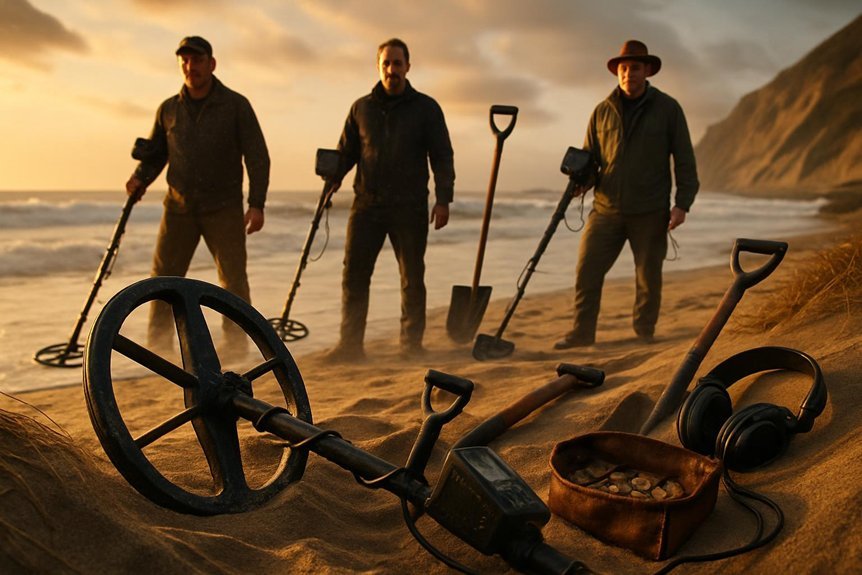
If you’re serious about finding deep targets, you’ll want gear that’s powerful, reliable, and built for long hunts, and I’ve tested several top contenders that fit the bill. I’ll walk you through four standout detectors—each excels in depth, features, or range—so you can match tools to terrain and goals; I even share a few field lessons I learned the hard way, and one surprise that changed how I hunt.
Minelab Manticore Waterproof Metal Detector with 11″ Double-D Coil
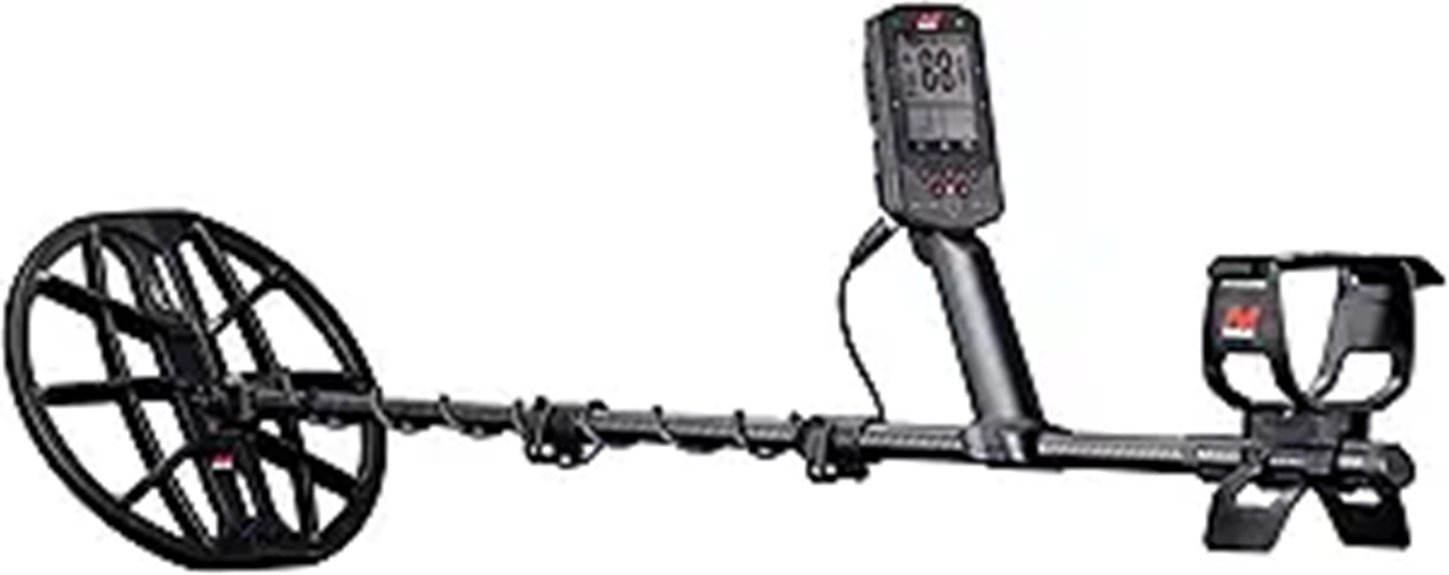
If you’re hunting deep, small, or hard-to-find targets and want a machine that doesn’t quit at the edge of the map, the Minelab Manticore with its 11″ Double-D coil is a smart choice—especially for serious hobbyists and pros who value raw power and precision. You’ll like its Multi-IQ+ tech, which packs 50% more power and runs simultaneous frequencies to reach deeper targets. It’s lightweight, waterproof to 16 ft, and folds down for travel, so you won’t tire on long hunts. The clear 2D ID, audio tweaks, and easy menus make learning fast, and users report major upgrades over older models.
Best For: Professional and serious hobbyist treasure hunters who want a lightweight, travel-friendly, high-power multi-frequency detector for deep, small, and hard-to-find targets in varied terrains including underwater.
Pros:
- Multi-IQ+ technology delivers ~50% more power and simultaneous multi-frequency performance for deeper and more accurate target detection.
- Lightweight, collapsible design with waterproofing to 16 ft (IP68) makes it comfortable for long searches and usable in water environments.
- Clear 2D target ID, rich audio controls, and intuitive menus speed learning and improve target discrimination.
Cons:
- Higher price point compared with entry-level detectors, making it a larger investment for casual users.
- Advanced features and settings may require time and study (or tutorials) to optimize for different conditions.
- The 11″ Double-D coil is excellent for depth and stability but can be less maneuverable in very tight or heavily trashy areas.
Metal Detector 1500m Long Range Rechargeable Treasure Finder for Gold & Silver
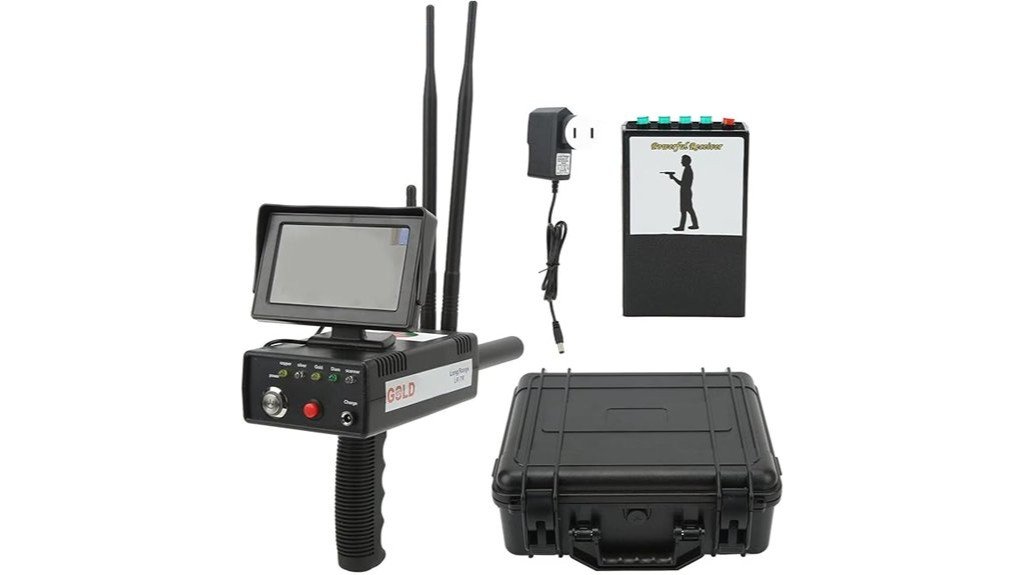
For hobbyists and serious prospectors who want to reach deep seams without hauling heavy gear, the Metal Detector 1500m Long Range Rechargeable Treasure Finder offers a striking blend of reach and convenience, and it’s especially well suited to anyone hunting for gold and silver across wide areas. You’ll appreciate its 1500m search range and claimed 50m depth, rechargeable detector and receiver, and adjustable length that keeps your shoulders happy on long searches. The 6 KHz frequency targets precious metals, while a microprocessor and self-test boost accuracy. Reviews are mixed, so expect a learning curve, but its power and portability are compelling.
Best For: hobbyist and serious prospectors who need long-range, deep-search capability for finding gold and silver across wide areas without heavy equipment.
Pros:
- Long advertised search range (1500m) and deep detection depth (50m) for covering large areas.
- Rechargeable detector and receiver with adjustable length for portability and comfortable extended use.
- Microprocessor-based calibration and self-test system aimed at improving sensitivity and stability.
Cons:
- Mixed customer reviews note poor instructions and variable build quality, implying a learning curve.
- Operating frequency of 6 KHz may limit performance on some target sizes and ground conditions compared with multi-frequency detectors.
- Price (~$400) and unclear warranty/support details may concern buyers seeking strong after-sales service.
Minelab X-Terra Elite Expedition Metal Detector with Coils, Headphones, Charging Cable & PRO-FIND 40 Pinpointer
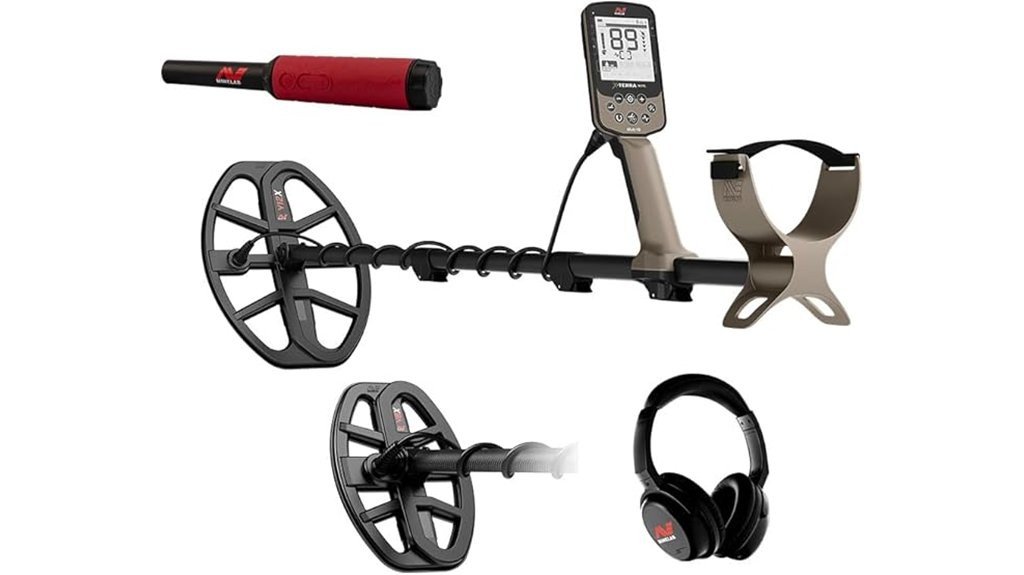
Think of the X-Terra Elite Expedition as your go-anywhere treasure partner: it’s built for serious beach and underwater hunters who want deep-target performance without lugging heavy gear, and its Multi-IQ multi-frequency tech lets you hunt different targets at once so you’ll spend more time finding treasure and less time wondering what that beep meant. You’ll appreciate the waterproof build to 16 ft, light 1.3 kg frame, and included V8X/V12X coils that cover wide ground, while the PRO-FIND 40 pinpointer zeroes in fast. With 119 Target IDs, clear all-tone audio, good battery life and solid reviews, it’s a reliable pick.
Best For: Serious beach and underwater treasure hunters who want a lightweight, waterproof multi-frequency metal detector with deep-target performance and included pinpointing accessories.
Pros:
- Multi-IQ multi-frequency tech for simultaneous, accurate detection across target types and ground conditions.
- Waterproof to 16 ft (5 m) and lightweight (1.3 kg), ideal for beach and underwater use without fatigue.
- Includes V8X and V12X coils plus PRO-FIND 40 pinpointer and headphones for a complete out-of-the-box setup.
Cons:
- Some users report a learning curve for optimal settings and ground balancing in varied soils.
- Higher-end features may be more than casual hobbyists need, increasing cost and complexity.
- Warranty and service depend on the manufacturer; customers should verify coverage and support options.
Nokta The Legend Waterproof Metal Detector for Adults (12″ Coil)
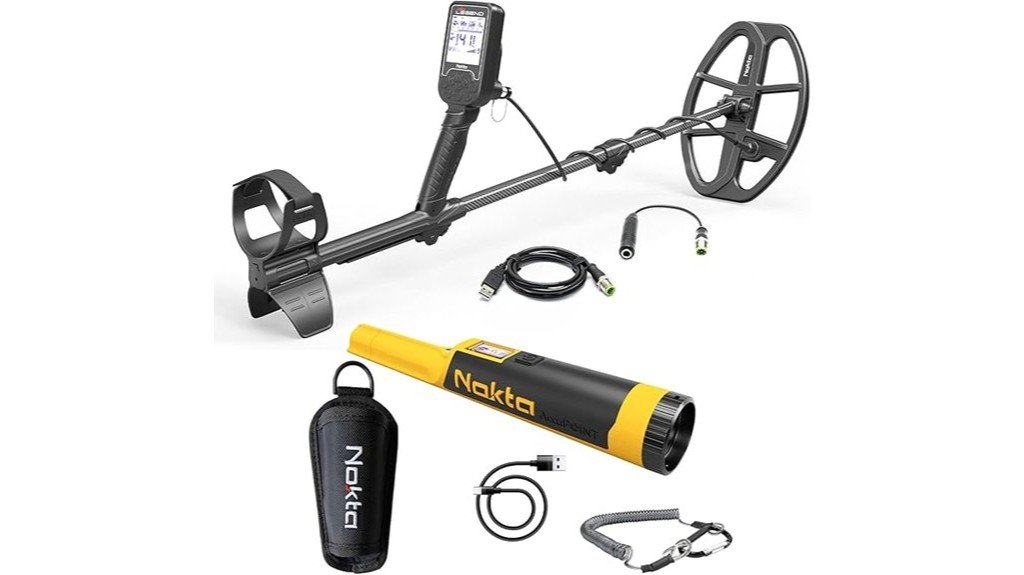
The Legend from Nokta serves as a powerful pick for treasure hunters who want a single machine that handles both deep targets and tricky ground, thanks to its pioneering simultaneous multi-frequency tech and a roomy 12-inch DD coil that boosts depth and target separation. You’ll appreciate its IP68 waterproofing to 10 ft and the lightweight 3-pound build that keeps you digging all day, while USB recharge gives up to 20 hours of runtime. It even hunts for small gold in mineralized soil and includes an Accupoint pinpointer, though watch for occasional quality-control quirks reported by a few users.
Best For: Experienced hobbyists and serious treasure hunters who want a versatile, waterproof detector that handles deep targets and mineralized ground with long battery life.
Pros:
- Simultaneous multi-frequency and 12″ DD coil for improved depth and target separation.
- IP68 waterproof to 10 ft and lightweight 3 lb design for comfortable use on land and underwater.
- Up to 20 hours USB-rechargeable runtime and includes an Accupoint pinpointer.
Cons:
- Some users report quality-control issues (e.g., dust behind the screen) on a minority of units.
- Larger 12″ coil may be less effective in very tight or trashy areas compared with smaller coils.
- Higher-end features can have a learning curve for complete beginners.
Factors to Consider When Choosing Metal Detectors for Deep Targets
When you’re hunting for a metal detector that reaches deep targets, pay attention to how far the unit can actually sense, the frequency and bandwidth it uses, and the coil size and type, because those things directly affect what you’ll find and how well you’ll find it. Also check how well the detector handles ground balance and how powerful its signal processing is, since mineralized soil or weak signals can hide good targets unless the machine compensates. I’ve learned this the hard way after a weekend of false signals—get the right combo of depth, frequency, coil, ground balance, and processing and you’ll save time and score more finds.
Detection Depth Capability
Because deep hunting often means standing in one spot for a long time, choosing a detector with real depth capability matters more than you might expect, and you’ll want to contemplate several technical and practical factors before you buy. Detection depth is the maximum reach where a machine reliably finds targets; some detectors can detect objects dozens of meters down in ideal conditions, though soil type and target size change that a lot. Look for units with advanced multi-frequency tech which improves sensitivity and discrimination for deep objects. Also weigh comfort—lighter, well-balanced designs reduce fatigue during long grids. Don’t forget waterproof ratings like IP68 if you plan to search submerged areas; I learned that the hard way once, and it saved a promising hunt.
Frequency and Bandwidth
You’ve already thought about depth and comfort, so now let’s look at how frequency and bandwidth affect what your detector actually hears underground, because those settings can make or break a long hunt. Frequency determines which targets you’ll pick up: lower frequencies like 6 kHz push deeper and suit larger targets, while higher frequencies around 12 kHz catch fine, highly conductive bits like gold or thin jewelry. Multi-frequency machines run several bands at once, giving you better discrimination and steadier performance in tricky, mineralized soils. Bandwidth affects sensitivity and response speed — wider bandwidth can speed up detection but may blur target precision. Being able to adjust frequency helps you tune for depth, small targets, or noisy ground, and I use it every outing.
Coil Size and Type
Although coil size and type might seem like just technical jargon, they’re the single biggest practical choice you’ll make for finding deep targets, so you’ll want to understand how different shapes, sizes, and construction change what your detector actually senses. Pick a larger coil when depth matters most — it pushes detection farther down — but remember bigger coils can miss small items and struggle in tight spots. DD coils give you steady ground coverage and handle rough, mineralized terrain better than concentric types, which can be more pinpoint-precise. Elliptical coils slip between rocks and roots and separate nearby targets more cleanly than round ones. Also, match frequency to goals: lower frequencies favor large conductive targets, while higher ones pick out tiny, non-ferrous bits. Waterproofing helps if you hunt wet areas.
Ground Balance Performance
When soil is loaded with minerals that chatter and mask faint signals, a detector’s ground balance becomes your best defense, and getting it right can mean the difference between a satisfying beep and a frustrating afternoon of digging up rocks. You’ll want a machine that tames mineral noise so small, deep targets don’t disappear into static, and advanced automatic ground balance is a huge help when you move between beaches, fields, and riverbanks. If you like control, pick a detector with customizable ground balance so you can fine-tune for heavy ironstone or black sand; I once found a tiny coin after dialing in settings on a stubborn patch. Good ground balance cuts false signals, boosts sensitivity to faint targets, and makes hunting faster and more fun.
Signal Processing Power
Ground balance helps quiet the ground so faint beeps stand out, but signal processing power is what actually teaches your detector to tell a whisper from background static, and that makes the difference when you’re hunting deep. You want a unit that crunches data fast, filters noise, and gives clear audio or visual cues so you won’t waste time on trash. Multi-frequency processing is a game-changer, letting the machine check several frequencies at once and boost your odds of finding deep, valuable targets; I remember switching to it and suddenly pulling coin hoards where I’d found zilch before. Strong processors also improve sensitivity and stability in rough soil, and customizable audio helps you tell iron from silver before you dig.
Battery Life & Weight
Since you can be out on the hunt for hours or even a full day, battery life and weight become the twin pillars that decide whether a long search turns into a triumph or a slog, and picking a detector that balances them will keep you digging longer and feeling better while you do it. You’ll want models offering long runtimes—some reach about 20 hours on a single charge—so you’re not forced to cut a promising day short. Aim for lightweight designs around 2.9–3.0 pounds to reduce arm strain and fatigue; I remember a marathon beach session where a lighter unit made all the difference. Prefer rechargeable batteries for convenience and savings, but recognize that heavier detectors sometimes bring extra power and deeper detection capabilities.
FAQ
How Do Weather Conditions Affect Deep-Target Detection Performance?
FAQs on Weather Conditions and Deep-Target Detection Performance
1. How does moisture impact deep-target detection?
Moisture can alter the conductivity of the ground, which affects the signal strength and noise levels. This can result in variable detection depth and sensitivity.
2. What role does temperature play in detection performance?
Temperature changes can influence the electrical properties of the ground, impacting how signals are received and interpreted by detection equipment.
3. How does mineralized ground affect detection?
Mineralization can create additional signal noise, making it harder to distinguish between targets and background interference, which can reduce detection accuracy.
4. What adjustments should be made in wet conditions?
In wet conditions, it’s essential to adjust the ground balance to account for increased conductivity, which may otherwise lead to false signals or missed targets.
5. Why is ground balance important?
Ground balance helps to filter out unwanted signals from the surrounding environment, allowing for clearer detection of deep targets.
6. How does frequency selection influence detection?
Different frequencies penetrate the ground to varying depths and can be affected by soil conductivity; selecting the appropriate frequency is crucial for optimizing detection performance based on conditions.
7. What is the significance of sweep speed in deep-target detection?
Sweep speed impacts the amount of ground covered and the time the detector spends over a target. Adjusting it can improve target identification in varying weather conditions.
8. Can weather conditions lead to false positives in detection?
Yes, changes in weather can create conditions that mimic the signals of actual targets, leading to false positives and complicating detection efforts.
9. How often should adjustments be made based on weather changes?
Adjustments should be made frequently, especially in rapidly changing weather conditions, to maintain optimal detection performance.
10. What is the best practice for detecting targets in adverse weather?
The best practice is to regularly assess ground conditions and make necessary adjustments to settings such as ground balance, frequency, and sweep speed for enhanced detection accuracy.
Can Metal Detectors Locate Relics Beneath Concrete or Pavement?
1. Can metal detectors find relics under concrete or pavement?
Yes, metal detectors can locate relics beneath concrete or pavement, but specific equipment is required.
2. What type of metal detector is best for this purpose?
Low-frequency, high-power detectors with large coils are most effective for detecting items under concrete or pavement.
3. Is patience necessary when using metal detectors on hard surfaces?
Absolutely, patience is crucial, as locating targets can take time and may require fine-tuning your technique.
4. What is ground balance, and why is it important?
Ground balance helps filter out unwanted signals from the ground itself, improving your detector’s ability to identify relics accurately, especially in challenging environments like concrete.
5. Are permits needed for metal detecting under pavement?
Yes, in many areas, you may need to obtain permits or permissions before conducting metal detection under pavement or concrete.
6. What is core drilling?
Core drilling is a method used to sample a small section of the concrete or pavement to confirm the presence of targets before extensive digging.
7. Can all metal detectors penetrate concrete effectively?
No, not all metal detectors are designed to penetrate concrete; specific models with adequate power and frequency settings are required.
8. How deep can metal detectors find relics beneath concrete?
The depth at which a metal detector can locate relics varies based on the device’s capability, the type of concrete, and the size of the relics.
9. Are small relics harder to detect under pavement?
Yes, smaller relics can be more challenging to detect, particularly under hard surfaces, due to signal attenuation and interference.
10. Do environmental conditions affect metal detecting under concrete?
Yes, factors such as moisture levels, temperature, and the type of concrete can influence the effectiveness of metal detecting in these conditions.
What Maintenance Extends a Detector’s Lifespan for Deep Searching?
FAQs on Extending a Detector’s Lifespan
1. How can I clean the coils of my detector?
Use a soft cloth to gently wipe the coils, removing dirt and debris. Avoid using harsh chemicals that may damage the surface.
2. Why is sealing electronics important?
Sealing protects the internal components from moisture and dust, which can lead to corrosion and functionality issues. Regularly check seals for wear and replace if necessary.
3. When should I replace the batteries?
Replace batteries at the first sign of reduced performance or if they are not holding a charge. Always use the recommended battery type to ensure optimal operation.
4. What is the best way to store my detector?
Store your detector in a dry, cool place to prevent damage from humidity and temperature extremes. A protective case can provide additional safety.
5. How often should I check cables and connectors?
Inspect cables and connectors regularly for signs of wear, fraying, or loose connections. Address any issues immediately to avoid further damage.
6. Is it necessary to update firmware?
Yes, updating firmware can enhance performance and fix bugs. Check the manufacturer’s website for the latest updates and installation instructions.
7. Can I use my detector in water?
Only use your detector in water if it is specifically rated for underwater use. Submerging a non-rated detector can lead to irreversible damage.
8. What are the signs of worn parts?
Look for unusual noises, reduced sensitivity, and physical damage. Regular servicing can help replace worn parts before they cause major issues.
9. How often should I service my detector?
It is recommended to service your detector annually or after heavy use. This can help identify potential problems early and extend the lifespan of the device.
10. What should I do if my detector is not functioning properly?
First, check the batteries and connections. If problems persist, consult the manual for troubleshooting tips or contact a professional for service.
Are There Legal Permits Required for Deep-Target Treasure Hunting?
FAQs on Legal Permits for Deep-Target Treasure Hunting
1. Do I need a permit for deep-target treasure hunting?
Yes, permits are often required. The need for a permit depends on local laws and regulations.
2. What types of land require a permit for treasure hunting?
Permits are typically needed for protected, archaeological, or private lands. Always check the specific regulations for the area you plan to hunt.
3. How do I obtain permission for treasure hunting on private land?
You must seek written permission from the landowner. It’s important to discuss your intentions and any potential impacts on their property.
4. Are there different laws in different states regarding treasure hunting?
Yes, laws can vary significantly from state to state. Always verify the specific regulations in your state before beginning your hunt.
5. What should I do if I find something valuable while treasure hunting?
If you find something valuable, you may need to report it to local authorities, depending on the laws in your area. Ownership rights can vary based on location.
6. Can I treasure hunt in national or state parks?
Generally, treasure hunting is prohibited in national and state parks without a special permit. Always check park regulations before attempting to hunt.
7. Is there a difference between treasure hunting and metal detecting?
While both involve searching for valuable items, metal detecting is a technique used in treasure hunting. Regulations may apply to both activities similarly.
8. What are the consequences of treasure hunting without a permit?
Hunting without the necessary permits can lead to fines, confiscation of equipment, or legal action. It’s essential to follow all local regulations to avoid penalties.
9. How can I find out about local treasure hunting laws?
You can research local laws through government websites, historical societies, or treasure hunting clubs. They often provide resources and guidance on regulations.
10. Are there specific permits for archaeological treasure hunting?
Yes, archaeological treasure hunting typically requires special permits due to the site’s significance. Always consult with relevant authorities if your hunt involves archaeological sites.
How Do Power Settings Impact Battery Life During Long Hunts?
1. How do power settings affect battery life in metal detectors?
Higher power settings increase battery drain, resulting in shorter hunt times. Lowering power settings can help extend battery life while still providing decent performance.
2. What happens to performance when I lower power settings?
Reducing power settings typically results in decreased depth and sensitivity. However, it allows for longer operation times, making it a worthwhile trade-off during extended hunts.
3. What is the best way to balance performance and runtime?
To achieve an effective balance, adjust the power settings to the lowest level that still meets your detection needs. Utilize fresh batteries or rechargeable packs to maximize your hunt duration.
4. How can fresh batteries improve my hunting experience?
Using fresh batteries ensures that your device operates at optimal performance levels, providing better sensitivity and depth. This can enhance your overall hunting experience and lead to better finds.
5. Are rechargeable battery packs a good option for long hunts?
Yes, rechargeable packs are a practical choice for long hunts as they can be used multiple times. They allow you to save money and ensure you have a reliable power source when needed.
6. What should I do if my battery runs low during a hunt?
If your battery is running low, consider lowering the power settings to conserve energy. If possible, switch to a spare or recharge the batteries during breaks to keep hunting longer.
7. How often should I change batteries during a hunt?
It’s best to monitor battery levels regularly and change them when they show signs of low power. This ensures your detector continues to perform at its best throughout the hunt.
8. Can I extend my hunt time by using lower sensitivity settings?
Yes, lowering sensitivity can help conserve battery life while still allowing you to detect targets effectively. This adjustment can significantly extend your hunt time without sacrificing too much performance.
9. Is it worth investing in high-capacity batteries for metal detecting?
High-capacity batteries can be worth the investment, as they provide longer use between changes. They help ensure that you can enjoy extended hunt sessions without frequent interruptions.
10. What are the drawbacks of using high power settings?
The main drawback of using high power settings is the rapid drain on battery life, which can cut short your hunting sessions. It’s important to find a balance to maintain both performance and runtime.
Final Thoughts
As you embark on your treasure-hunting journey, you might find yourself faced with a treasure trove of options when it comes to metal detectors. Let me paint a picture: imagine standing at the edge of a sprawling field, your heart racing with anticipation, and in your hand, a tool that promises to uncover secrets buried deep beneath the earth.
Among the four strong contenders, each brings something unique to the table. Picture yourself wielding Minelab’s multi-frequency powerhouse—its precision and depth are reminiscent of a seasoned treasure hunter who knows the terrain like the back of their hand. Then there’s the Legend, lightweight and USB-rechargeable, perfect for those long days when the sun seems to stretch on forever. I can almost hear the laughter of friends as they spend hours together, sharing stories and uncovering relics while the Legend hums contentedly in their hands.
If you’re more inclined to push the boundaries, the 1500m unit beckons with its long-range capabilities. Just be sure to inspect its build quality first; I’ve learned from my own experience that a thorough check of reviews can save you from unexpected surprises that might dull your excitement.
And if you’re seeking a blend of proven depth and advanced technology, consider the Manticore or X-Terra Elite. They’re like the wise mentors of the group, guiding you through the depths with confidence. With each beep and signal, you can almost feel the stories of the past calling out to be discovered. So, as you weigh your options, remember that the right metal detector is not just a tool; it’s your companion on the adventure of a lifetime.