
If you hunt in rocky or salty areas, you know standard detectors can misbehave, so you’ll want gear that stays steady in mineralized ground; I’ve tested models like the Nokta Triple Score and Minelab X‑Terra Elite, and they handle chatter and false signals much better, giving you clearer target sounds and fewer wasted digs—stick around to see which one fits your budget, water needs, and patience for learning its features.
Nokta Triple Score PRO Pack Metal Detector for Adults
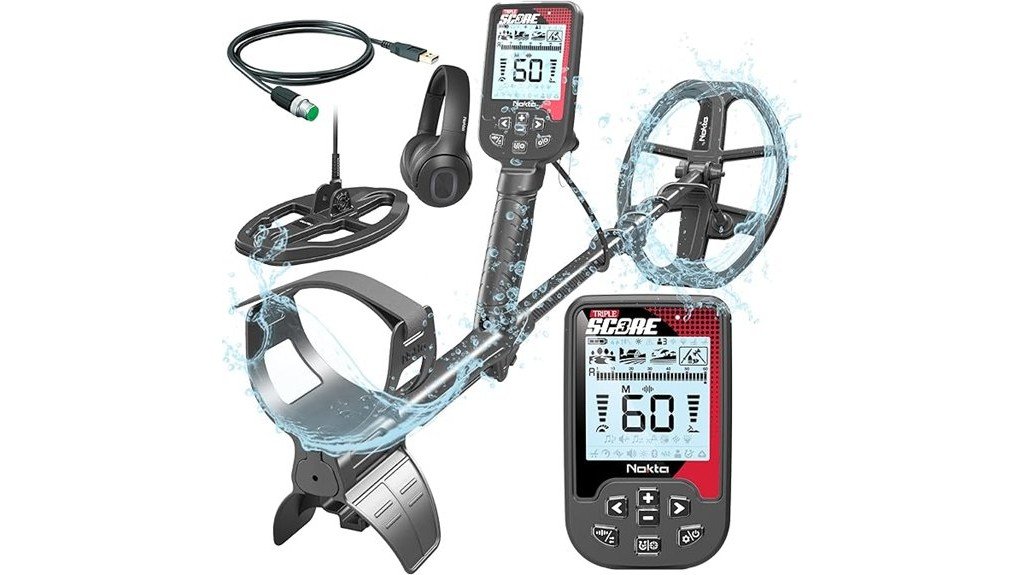
If you hunt in tough, mineral-rich soils or along salty beaches, the Nokta Triple Score PRO Pack is a smart pick because its multi-frequency tech keeps signals stable where single-frequency machines often struggle; I’ve used multi-frequency detectors on rocky lakeshores and felt the difference when targets stopped “ghosting” and started behaving like real finds. You’ll appreciate the lightweight carbon-fiber build and 2.6 lb balance, plus IP68 waterproofing to 16 ft for wading or diving, and a long 3250 mAh USB-rechargeable battery. Bluetooth, three search modes, and firmware updates make it versatile, though watch for reported battery and QC issues.
Best For: Hobbyists and serious treasure hunters who need a lightweight, fully waterproof, multi-frequency detector for beaches, mineralized soils, and underwater detecting.
Pros:
- Multi-frequency technology improves target stability and reduces ghosting in mineral-rich or salty environments.
- Lightweight carbon-fiber design (2.6 lb) with IP68 waterproofing to 16 ft and long 3250 mAh USB-rechargeable battery (up to ~12 hours).
- Bluetooth, three search modes, and firmware updates via USB add versatility and future-proofing.
Cons:
- Some users report quality-control issues and occasional defective units.
- Battery is internal with limited replacement options and potential heat-related concerns.
- Battery lifespan limited to ~300–500 charge cycles, requiring eventual replacement.
Minelab X-Terra Elite Expedition Metal Detector (Waterproof, Multi-IQ)
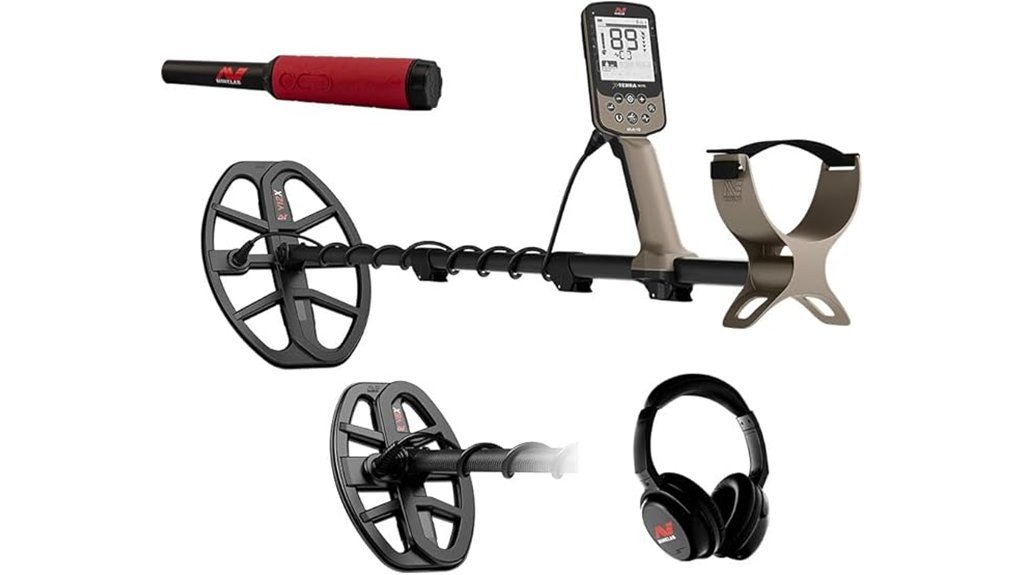
Hunters who want a reliable, all‑around detector for beaches, rivers, and rocky, mineral‑rich fields will find the Minelab X‑Terra Elite Expedition especially appealing, because its Multi‑IQ multi‑frequency system locks onto a wider range of targets than single‑frequency units and handles salt and mineralization with surprising grace. You’ll appreciate the waterproof build to 16 ft, lightweight 1.3 kg frame, and included V8X/V12X coils plus PRO‑FIND 40 pinpointer for precise digs. With 119 target IDs and clear all‑tone audio, you’ll sort trash from treasure faster; expect a brief learning curve on ground balance, then more finds and fewer false alarms.
Best For: Hunters and hobbyists who want a lightweight, waterproof, multi-frequency metal detector for beaches, rivers, and mineralized fields that reliably distinguishes trash from treasure.
Pros:
- Multi‑IQ multi‑frequency tech improves target detection across varied soils and saltwater conditions.
- Waterproof to 16 ft with included V8X/V12X coils and PRO‑FIND 40 pinpointer for versatile, ready‑to‑use searching.
- 119 Target IDs and all‑tone audio help quickly differentiate ferrous vs. non‑ferrous targets.
Cons:
- Some users report a learning curve for optimal ground balance and settings.
- Premium features and accessories may come at a higher price than basic single‑frequency detectors.
- Warranty details and support handled through manufacturer, which can vary by region.
Nokta The Legend Waterproof Metal Detector for Adults (The Legend + Accupoint)
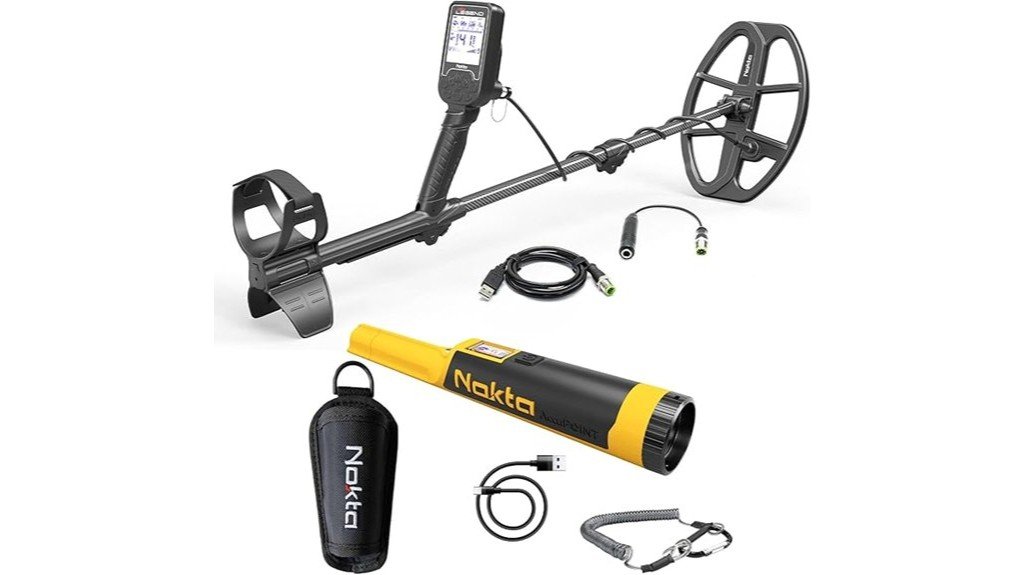
The Legend by Nokta is a great pick for detectorists who want a reliable, waterproof machine that handles mineralized ground and tiny gold nuggets without fuss, and its standout feature — simultaneous multi-frequency capability — helps you tune into tricky targets that single-frequency units often miss. You’ll appreciate the 12-inch DD coil, IP68 waterproofing to 10 ft, and up to 20 hours of USB-rechargeable battery life, which keeps you hunting longer. At three pounds it’s surprisingly light, and the included Accupoint pinpointer speeds recovery. Reviews praise ease of use, though watch for occasional quality-control dust behind the screen.
Best For: detectorists who want a lightweight, waterproof multi-frequency machine that performs well on mineralized ground and for finding small gold nuggets and submerged targets.
Pros:
- Waterproof to 10 ft (IP68) and lightweight (3 lbs), making it excellent for beach, wading, and long hunts.
- Simultaneous multi-frequency technology improves detection of tricky targets (small gold, deep or masked targets) compared with single-frequency units.
- Long USB-rechargeable battery life (up to 20 hours) and includes a 12″ DD coil plus Accupoint pinpointer for faster recoveries.
Cons:
- Some users report occasional quality-control issues, including dust behind the screen.
- Price and feature set may be overkill for casual hobbyists who only need a basic detector.
- Replacement parts/accessories for specific coils or repairs may be less accessible depending on region.
Garrett AT Gold Waterproof All-Terrain Gold Metal Detector with Pinpointer and Headphones
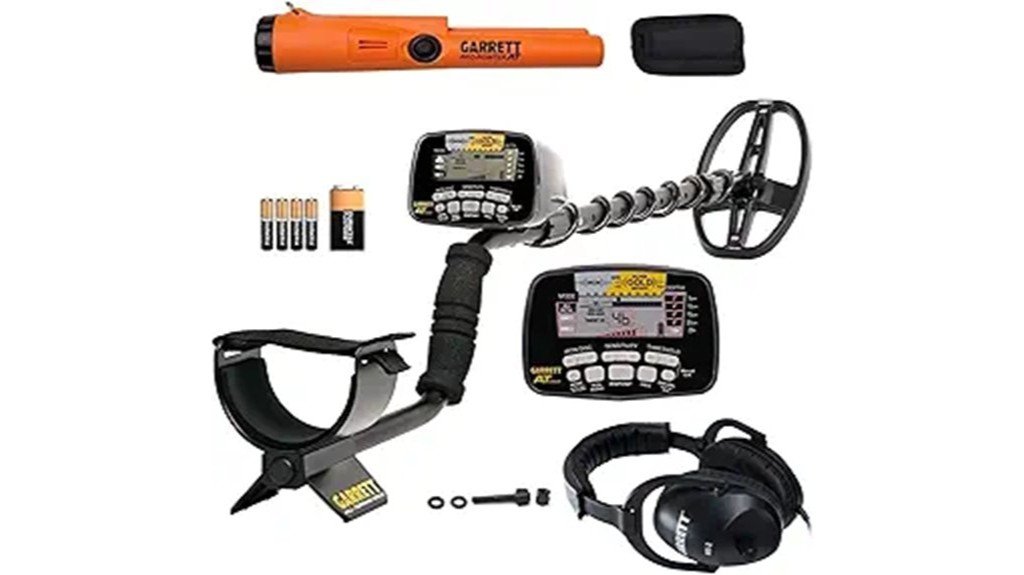
Garrett’s A.T. Gold is a rugged, made-in-USA detector that you’ll appreciate if you hunt small gold and jewelry in tough ground. It runs at 18 kHz with a 5″ coil, gives All Metal depth, and offers manual or automatic ground balance plus a Ground Balance Window to tame mineralized soil. Weighing about 6.8 pounds and waterproof to 20 feet, it collapses for travel and includes a Pro-Pointer AT, headphones, and four AA batteries. Users praise its ease for beginners and strong nugget performance, though saltwater use and non-waterproof stock headphones are common caveats.
Best For: Outdoor enthusiasts and prospectors seeking a rugged, beginner-friendly detector optimized for finding small gold, jewelry, coins, and relics in mineralized soil and freshwater environments.
Pros:
- Made in USA, waterproof to 20 feet with collapsible, lightweight design and included Pro-Pointer AT for fast recoveries.
- High-frequency 18 kHz operation, 5″ coil, and All Metal mode with manual/automatic ground balance (Ground Balance Window) for strong small-nugget sensitivity in tough ground.
- Long battery life (~25 hours on 4 AA batteries), easy single-handed controls, and positive user feedback for ease of use and performance.
Cons:
- Stock headphones are not waterproof and may need replacement for underwater or wet use.
- Not ideal for saltwater use; performance can be limited in salty beach conditions.
- Smaller 5″ coil gives pinpoint accuracy but reduces sweep coverage compared with larger coils, potentially slowing search of wide areas.
Factors to Consider When Choosing Metal Detectors for Mineralized Ground
When you’re shopping for a detector that can handle mineralized ground, pay close attention to features like ground balance options and mineral sensitivity control, because they let you tune the machine to reduce false signals. You’ll also want multi-frequency performance and effective noise cancellation tech to cut through interference, while choosing the right coil type and size affects depth and target separation—think wider coils for depth, smaller coils for detail. I’ve learned from muddy beach hunts that balancing these features makes the difference between hours of frustration and finding something worth keeping.
Ground Balance Options
Every detector you try will stumble on ground minerals unless you account for them, so understanding ground balance options is one of the most important steps for finding targets in mineralized soil. You’ll want manual ground balance if you like control, because it lets you fine‑tune the detector to local soil conditions and often pulls more depth and clearer signals from tricky spots. Automatic ground balance is great when you move between beaches, fields, and rocky patches, since it adapts on the fly and saves fuss. Look for a ground balance window too — seeing mineralization levels helps you make smarter adjustments. When set correctly, ground balance cuts false signals and helps you pick real finds from trash, which I’ve learned saves time and boosts finds.
Multi‑Frequency Performance
If you’ve learned to tame ground minerals with manual or automatic ground balance, the next step is figuring out how the detector itself handles different soils — and that’s where multi‑frequency performance matters. You’ll want a detector that uses simultaneous frequencies, because mixing several tones helps it adapt to salty or rocky ground and reduces mineral interference, so valuable targets don’t hide. Multi‑IQ-style systems boost sensitivity to tiny gold nuggets that single‑frequency units often miss, and they help tell ferrous junk from non‑ferrous finds, saving you time digging bottle caps. Look for models with firmware updates, too; I’ve watched an older unit improve noticeably after an update, and that keeps your machine getting smarter about mineralized ground.
Coil Type & Size
Because the coil is the part of the detector that actually “talks” to the ground, choosing the right size and shape matters more than you might expect, especially on mineralized soil where the ground itself tries to drown out weak signals. You’ll find larger coils push detection depth, but they often miss tiny targets and struggle in tight rocks. Small coils, around five inches or less, shine on mineralized ground, giving better separation and picking up small items you’d otherwise lose. Coil design matters too: Double‑D coils usually beat concentric types in salty or iron‑rich soils because they handle ground noise better. Elliptical coils help you work between boulders and along edges. Match coil size and type to the site’s mineralization for smarter, cleaner finds.
Mineral Sensitivity Control
Think of mineral sensitivity control as the metal detector’s volume knob for noisy ground, and you’ll see why it matters: on iron‑rich or salty soil the ground itself can roar so loud that small or deep targets get drowned out, so you’ll want a detector that lets you turn that roar down. You’ll look for adjustable ground balance so you can tune the machine to local conditions instead of fighting constant false signals. Multi‑frequency units help too, because running several frequencies at once can separate real targets from mineral chatter. Some models even include preset modes for highly mineralized areas, which saved me hours of frustration on a salty beach. Learn the soil you’ll hunt, then match sensitivity and mode for the best results.
Noise Cancellation Tech
A few smart noise‑cancellation features can make the difference between a frustrating day of constant false alarms and a productive hunt where you actually dig what you expect, so you’ll want to understand what those systems do and how they behave in mineralized ground. Noise cancellation helps filter the background chatter created by salty or rocky soils, giving you clearer audio and fewer phantom signals, which I learned matters after a long beach session. Advanced systems, especially those using adaptive multi-frequency tech, cancel interference while keeping real targets audible, so you won’t miss a coin because the ground screamed first. That clearer feedback reduces fatigue, keeps your focus sharp, and helps you judge depth and size more reliably during long hunts.
Battery & Power Management
While you’re out hunting in salty beach sand or rocky fields, battery life and smart power management can make the difference between a day of steady finds and hours spent waiting for a recharge, so it pays to choose a detector built to handle long, demanding sessions. Pick models that offer up to 20 hours of use and rechargeable lithium polymer packs you can top up via USB, which I love for overnight trips. Check for power modes that lower draw without killing sensitivity, and robust management systems that compensate when mineralized ground makes electronics work harder. Also think about battery access and heat exposure—easy swaps and cooling matter for longevity—so your detector stays reliable all season.
FAQ
Can Mineral Detectors Damage Archaeological Sites Legally?
1. Can metal detectors cause damage to archaeological sites?
Yes, metal detectors can damage archaeological sites if used improperly, such as digging recklessly or removing artifacts.
2. Are there legal regulations for using metal detectors on archaeological sites?
Yes, there are laws that govern the use of metal detectors on archaeological sites, and it is essential to adhere to these regulations to avoid legal consequences.
3. Do I need permission to use a metal detector on an archaeological site?
Yes, obtaining permission from the relevant authorities is mandatory before using a metal detector on any archaeological site.
4. What are non-invasive methods for using metal detectors?
Non-invasive methods involve searching the surface without digging or disturbing the ground, preserving the integrity of the archaeological site.
5. What should I do if I find an artifact while using a metal detector?
You must report any findings to the appropriate authorities to ensure proper handling and documentation of the artifact.
6. What are the potential legal penalties for damaging an archaeological site?
Legal penalties can include fines, confiscation of equipment, and possible criminal charges depending on the severity of the damage.
7. Are there specific sites where metal detecting is prohibited?
Yes, many archaeological sites are designated as protected areas where metal detecting is strictly prohibited to preserve cultural heritage.
8. What is considered reckless digging?
Reckless digging refers to any excavation that disturbs the soil without regard for the archaeological context, which can lead to significant damage.
9. Is it legal to keep artifacts found with a metal detector?
Keeping artifacts found without proper authorization is typically illegal, as they belong to cultural heritage and should be reported.
10. How can I ensure that my metal detecting activities are ethical?
To conduct ethical metal detecting, ensure you have the necessary permissions, use non-invasive techniques, and always report your findings to the authorities.
How Do Metal Detectors Affect Wildlife in Protected Areas?
1. How do metal detectors disturb wildlife habitats?
Metal detectors can disrupt habitats by introducing noise and human presence, which can be unsettling for local wildlife. This disturbance may lead to changes in animal behavior and habitat use.
2. What types of stress do animals experience due to metal detecting?
Wildlife may experience stress from the noise generated by metal detectors and the presence of humans in their environment. This stress can affect their feeding, breeding, and overall well-being.
3. In what ways can metal detecting damage vegetation?
When users dig to unearth items, they can damage vegetation and soil structure. This disturbance can hinder plant growth and affect the overall health of the ecosystem.
4. Why is it important to avoid protected areas when using metal detectors?
Protected areas are designated to conserve wildlife and their habitats. Using metal detectors in these zones can lead to unintended harm and disrupt conservation efforts.
5. What rules should metal detector users follow in natural areas?
Users should adhere to local regulations regarding metal detecting, which often prohibit it in protected areas. Following these rules helps safeguard wildlife and their habitats.
6. How can metal detector users minimize their impact on the environment?
Minimizing digging and conducting searches in non-sensitive areas can significantly reduce environmental impact. Users should also ensure they leave no trace after their activities.
7. What should users do with their finds from protected areas?
Users are encouraged to report any finds to the relevant authorities, especially if they are of historical or ecological significance. This practice helps preserve the integrity of protected areas.
8. Are there specific times when metal detecting is more harmful to wildlife?
Yes, metal detecting can be particularly harmful during sensitive periods, such as breeding or nesting seasons when wildlife is more vulnerable. Avoiding these times can help reduce stress on animal populations.
9. Can metal detecting lead to changes in animal behavior?
Yes, the presence of metal detectors and the associated human activity can alter animal behavior, causing them to flee or avoid certain areas, which can impact their natural habits.
10. What is the broader ecological impact of metal detecting in sensitive areas?
The broader impact includes potential declines in wildlife populations, disruption of ecological balance, and degradation of habitats, which can have long-term consequences for biodiversity.
Can Beginners Use Advanced Discrimination Settings Safely?
1. Can beginners use advanced discrimination settings?
Yes, beginners can use advanced discrimination settings safely with practice.
2. What should beginners do before using advanced settings?
Start with conservative presets to avoid missing valuable targets.
3. How can beginners test their settings?
Test your settings on known targets to evaluate their effectiveness and make adjustments.
4. How should adjustments be made?
Adjust your settings gradually to find the right balance for your specific environment.
5. Why is it important to pay attention to signals?
Visual and audible signals provide important feedback; ignoring them can lead to missed opportunities.
6. What is the risk of using advanced settings too aggressively?
Using advanced settings without careful adjustment can damage sites and lead to poor recovery rates.
7. How can beginners learn to balance rejects and recovery?
Through practice and experimentation, beginners can develop an understanding of how to balance rejecting unwanted targets while still recovering valuable finds.
8. Is practice necessary for safe usage of advanced settings?
Yes, consistent practice is essential for mastering advanced settings and ensuring safe usage.
9. Are there specific targets beginners should focus on?
Beginners should focus on known targets to build confidence before tackling more challenging finds.
10. How can beginners improve their skills over time?
Regularly testing different settings and learning from each outing will help build skills and confidence in using advanced discrimination.
What Maintenance Prevents Salt Corrosion Long-Term?
1. What should I do after using detectors in salty conditions?
Rinse the detectors with fresh water to remove any salt residue. This step is crucial in preventing long-term corrosion.
2. How should I dry the detectors after rinsing?
Make sure to dry the detectors thoroughly to eliminate any moisture that could contribute to corrosion. Use a soft cloth or allow them to air dry completely.
3. Is it necessary to remove batteries from detectors?
Yes, removing the batteries is important to prevent battery leakage and corrosion from occurring within the device. Always store batteries separately in a dry place.
4. What type of corrosion inhibitor should I use on coils and connectors?
Apply a suitable corrosion inhibitor specifically designed for electronic components. This will protect the coils and connectors from salt corrosion.
5. How should I store my detectors after cleaning?
Store the detectors in a dry, ventilated case to ensure they remain free from moisture and potential corrosion sources. Proper storage is key to maintaining their longevity.
6. How often should I inspect the seals of my detectors?
Regular inspection of the seals is recommended to ensure they are intact and functioning properly. Damaged seals can allow moisture and salt to enter, leading to corrosion.
7. What signs indicate corrosion on my detectors?
Look for discoloration, rust, or any unusual wear on the coils and connectors. Early detection is essential to mitigate further damage.
8. Can I use any type of fresh water for rinsing?
It is best to use clean, fresh water, preferably distilled, to avoid introducing minerals that could also lead to corrosion. Tap water may contain impurities that can be harmful.
9. How does ventilation help in preventing corrosion?
Proper ventilation helps to keep the storage environment dry and reduces humidity levels, which can contribute to corrosion. A well-ventilated case allows moisture to escape.
10. What is the importance of regular maintenance for detectors?
Regular maintenance, including rinsing, drying, and applying inhibitors, is crucial for preventing salt corrosion and ensuring the longevity of the detectors. Consistent care can extend their lifespan significantly.
Are There Local Laws About Magnet Fishing With Detectors?
1. Is magnet fishing legal everywhere?
No, magnet fishing is not legal in all areas. Some locations have specific regulations or outright bans.
2. Do I need a permit for magnet fishing?
In certain jurisdictions, a permit may be required for magnet fishing. Always check local regulations to determine if you need one.
3. Can I keep what I find while magnet fishing?
Many places have restrictions on keeping found items, often classifying them as public property. It’s important to research local laws regarding ownership of discovered objects.
4. What should I do if I’m unsure about local laws?
If you’re uncertain, it’s advisable to consult local authorities or governing bodies. They can provide guidance on the legal status of magnet fishing in your area.
5. Are there specific areas where magnet fishing is prohibited?
Yes, certain locations, such as protected waters or private property, may prohibit magnet fishing. Always verify if the area you plan to fish in is allowed.
6. What happens if I magnet fish without permission?
Engaging in magnet fishing without permission can lead to legal consequences, including fines or confiscation of equipment. Always obtain necessary permissions before you start.
7. Are there any safety regulations to follow while magnet fishing?
While specific safety regulations may vary, it’s important to practice general safety measures, such as wearing gloves and being aware of your surroundings.
8. Can I magnet fish in national parks?
Most national parks have strict regulations that likely ban magnet fishing to protect natural resources. Always check the park’s rules before attempting.
9. Is there a designated season for magnet fishing?
Some regions may have seasonal restrictions on magnet fishing to protect wildlife or for environmental reasons. Verify local guidelines for any seasonal rules.
10. Who can I contact for more information on magnet fishing laws?
Local fish and wildlife agencies or the city council can provide detailed information on magnet fishing regulations. They are the best sources for current laws and guidelines.
Final Thoughts
When it comes to searching for treasures in rocky or salty soils, you’ve got some fantastic options to choose from. It’s a bit like picking the right tool for a job; each detector has its own strengths that cater to different hunting styles and terrains. For instance, I remember the first time I took the Triple Score PRO Pack out to a beach littered with shells and salt. The multi-frequency stability it offered was impressive, allowing me to sift through the noise of the environment with ease.
Then there’s The Legend, which I recall using on a mineral-rich hillside. It handled the fluctuating ground conditions effortlessly, making me feel like I was in tune with the earth beneath my feet. Meanwhile, the X-Terra Elite Expedition’s Multi-IQ feature is a game changer; I was amazed at how it adapted as I moved from one site to another, revealing finds I might have missed otherwise.
And let’s not forget the AT Gold. I still remember the thrill of uncovering a tiny nugget in harsh salt flats, the kind of moment that makes your heart race. As you consider these detectors, think about your own budget and comfort level. It’s also important to remember that patience is key; some of my best discoveries came after spending time getting to know my machine and the land I was searching. Happy hunting!