
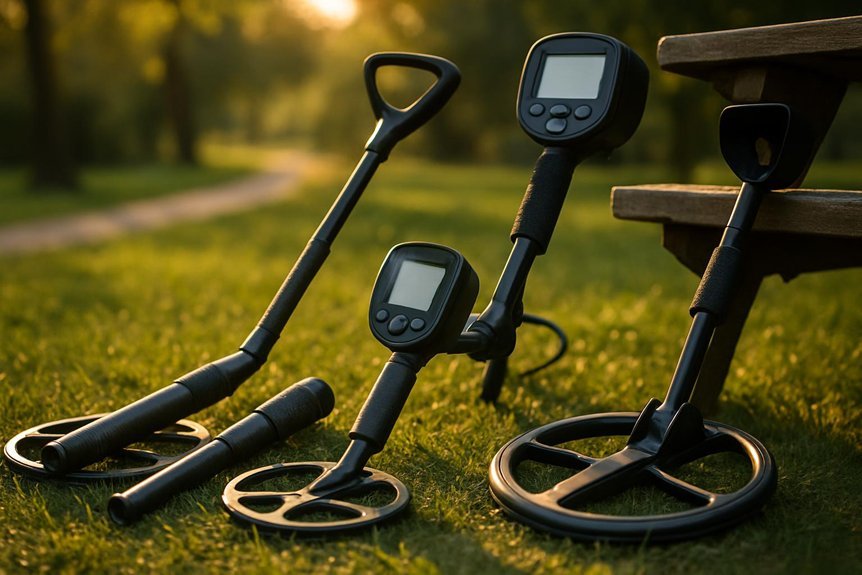
If you like wandering parks with a metal detector, you’ll want something light, accurate, and easy to use so you don’t get tired before the fun starts; I’ve tested a few models that fit that bill, from waterproof carbon‑fiber designs to budget-friendly trackers that still find coins and relics, and I’ll walk you through what makes each one a smart pick—plus the key features to check—so you can pick the right tool and get back to hunting without unnecessary gear headaches.
Nokta Simplex Ultra Waterproof Metal Detector with Carbon Fiber Shaft and 11” Search Coil
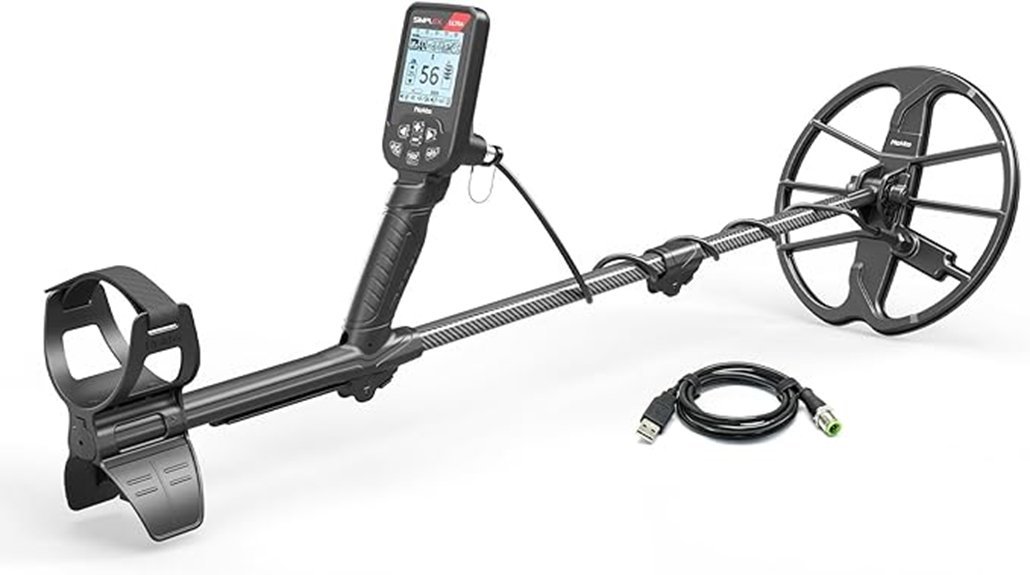
If you want a detector that’s rugged enough for puddles, ponds, or an unexpected dive, the Nokta Simplex Ultra is a great pick because it’s fully waterproof to 16 feet and built with a carbon fiber shaft that keeps it light and durable. You’ll appreciate the 11” coil’s balance and the whole unit’s 2.6 lb weight, which lets you hunt longer without tiring, and the shaft collapses to 25 inches for easy transport. The color LCD makes signals clear, controls are simple, and USB firmware updates mean your detector can get smarter over time. I’ve relied on it in wet parks.
Best For: outdoor enthusiasts and hobbyist treasure hunters who want a lightweight, durable, fully waterproof metal detector for land and shallow diving.
Pros:
- Fully waterproof to 16 ft (5 m) with a lightweight 2.6 lb carbon fiber shaft for comfortable, extended use.
- Collapsible shaft (25 in / 63 cm) and balanced 11″ coil make transport, storage, and pinpointing easy.
- Color LCD and simple controls with USB PC firmware updates keep the detector user-friendly and updatable.
Cons:
- 11″ coil may limit fine-depth discrimination in highly trashy or deep-target areas compared with larger or specialized coils.
- Advanced users may find some pro-level features or customization options lacking compared with high-end models.
- Reliance on USB/PC for firmware updates can be inconvenient for users without easy computer access.
NOKTA MAKRO Findx Metal Detector (11000875)
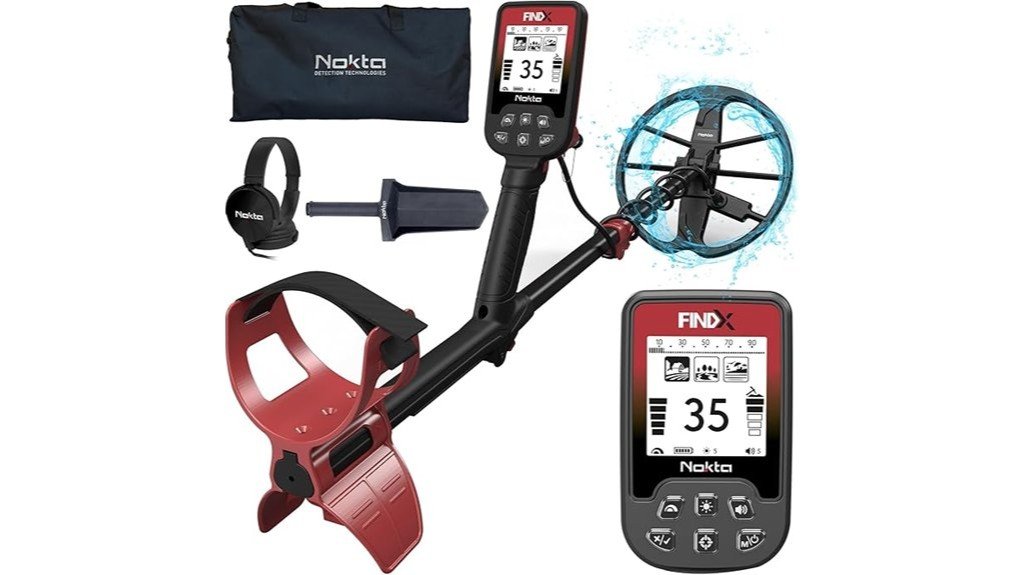
For anyone just getting into park detecting who wants something lightweight, simple, and reliable, the NOKTA MAKRO Findx stands out as a smart starter choice because it pairs a rugged aluminum build and an IP68 rating with just enough tech to find real targets without overwhelming you. You’ll appreciate its 1.2 kg weight, 27.94 cm coil, and 12-hour battery life, which let you hunt longer without fatigue, and the included storage bag keeps gear tidy. Beginners praise its quick learning curve and solid accuracy, though audio static appears for some; consider the FindX PRO if you want extra waterproofing and coil options.
Best For: Beginners and casual park detectorists seeking a lightweight, simple, and reliable starter metal detector with good battery life and rugged build.
Pros:
- Lightweight (1.2 kg) and easy to carry for long hunts, with a 12-hour battery life.
- Rugged aluminum construction with IP68 rating for excellent durability and waterproofing.
- Simple controls and quick learning curve make it ideal for new users; comes with a storage bag.
Cons:
- Audio performance can be inconsistent—some users report static or speaker noise.
- Limited coil options compared with upgraded models (users sometimes recommend the FindX PRO for more choices).
- Basic feature set may feel too simple for experienced detectorists wanting advanced discrimination and settings.
Nokta Findx Pro Metal Detector Complete Kit for Adults
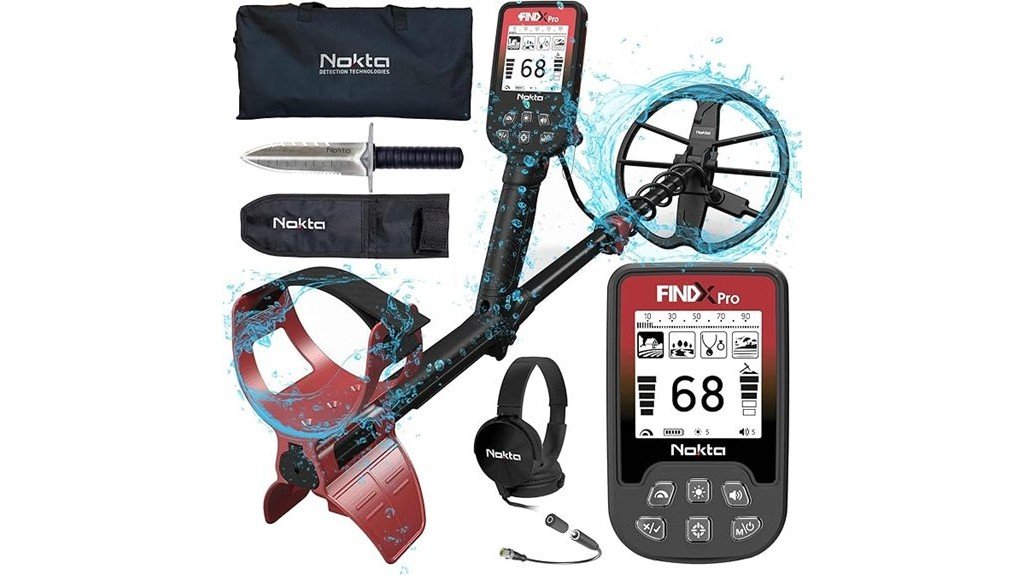
Heavy on features but light on fuss, the Nokta Findx Pro is a great pick if you’re a beginner or casual detectorist who wants reliable performance without a big price tag. You’ll appreciate its 1.2 kg frame, 11-inch coil, and IP68 waterproof rating that let you hunt parks, shores, and shallow water with confidence, while the USB recharge and 12-hour battery keep you going. The kit includes headphones, bag, and digger, and the backlit LCD and multiple modes simplify searching. Note the thin headphones and single frequency limits, but overall it’s excellent value for learning and light hobby use.
Best For: Beginners and casual detectorists who want a waterproof, easy-to-use metal detector with good value and long battery life for park, beach, and shallow water searching.
Pros:
- Lightweight, USB-rechargeable design with a 12-hour battery and IP68 waterproofing for versatile use.
- Comes as a complete kit (headphones, carrying bag, premium digger) with backlit LCD and multiple search modes for quick setup.
- Effective at finding small targets; good build quality and strong value for money for novice users.
Cons:
- Included headphones are low quality (thin wires, poor fit).
- Single frequency can limit performance in certain soil or mineralized beach conditions.
- Some initial learning curve for users moving up from higher-end detectors.
Bounty Hunter TK4 Tracker IV Metal Detector for Gold, Silver, Coins & Relics
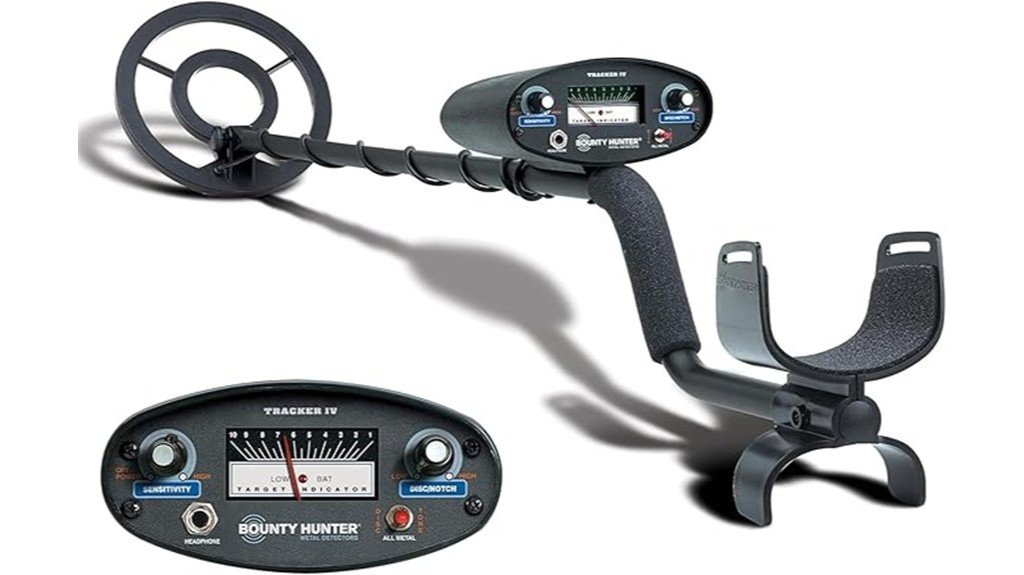
The Bounty Hunter TK4 Tracker IV is a great pick when you want a straightforward, work-ready detector that both kids and adults can use without getting frustrated, because it balances simple controls with real digging power. You’ll appreciate the three modes — all-metal, tone, and discrimination — which help you cut through trash while aiming for silver coins, jewelry, or relics. It’s lightweight, made in the USA, and uses an 8-inch waterproof coil so you can probe shallow water and damp sand, a feature that saved my cousin’s patience during a soggy beach hunt. Great gift potential, too.
Best For: Everyone from beginner hobbyists and kids to casual adult treasure hunters who want a simple, lightweight, and affordable detector for coins, jewelry, relics, and shallow-water beach hunting.
Pros:
- Simple, intuitive analog controls with three useful modes (all-metal, tone, discrimination) — easy for beginners.
- Lightweight, portable design with an 8-inch waterproof search coil for shallow water and damp sand detecting.
- Made in the USA and suitable as a gift or starter kit addition for families and hobbyists.
Cons:
- Basic feature set may be limiting for advanced users seeking high sensitivity or advanced discrimination options.
- Analog controls lack digital readouts or target ID numbers that more experienced detectorists may prefer.
- Not intended for deep-water use; coil is waterproof but other components are not fully submersible.
Factors to Consider When Choosing Metal Detectors for Parks
When you’re choosing a metal detector for park hunts, think about how weight and balance affect how long you can swing it without getting tired, because you want something that feels like an extension of your arm rather than a chore. Pick the right coil size for the areas you visit—smaller coils help you work tight spots around benches and trees, while larger coils search wide lawns faster and reach deeper targets—and pay attention to a detector’s stated depth capability so you don’t get disappointed when targets hide. Also make sure its discrimination settings are precise and it handles ground mineralization well, since good iron rejection and stable performance on mineralized soil will save you time and increase your finds (I learned that the hard way after a whole afternoon of false signals).
Weight and Balance
Comfort-and-control matter a lot when you’re out searching a park for coins or relics, so you’ll want a detector that feels like an extension of your arm rather than a clumsy weight to lug around; lighter models cut down on fatigue during long sessions, while a well-balanced machine—often around 2.6 lbs (1.2 kg)—gives you steadier sweeps and better pinpointing. You’ll notice the difference after an hour or two: a balanced detector lets you hold a steady arc, improves control, and helps you trace targets without jerking the coil. Look for adjustable or carbon fiber shafts, since they can shift the center of gravity toward your hand and reduce arm strain. Pay attention to weight distribution so you can cover more ground comfortably and enjoy longer hunts.
Coil Size Choice
Because coil size directly shapes what you’ll find and how fast you’ll cover ground, it’s one of the first decisions you should make before heading to the park. Pick an 8–11 inch coil for a strong all-around performance, since it balances depth and target separation, letting you sweep decent ground quickly without missing moderate-sized finds. If the picnic area looks like a magnet for bottle caps and pull-tabs, a 4–6 inch coil will help you zero in on small items and tease pieces apart in trashy spots, though you’ll work a bit slower. Think about the soil and what you expect to find, too — I once switched coils mid-hunt and instantly started pulling different treasures, so don’t be shy about experimenting.
Detection Depth Capability
Depth is the single trait that often decides whether you’ll uncover a buried coin or just clear grass, so it pays to understand what really controls how deep your detector can reach. Detection depth varies a lot—some units only sense a few inches, others reach over a foot—and that range shapes what you’ll find in a park. Coil size matters: bigger coils usually detect deeper but can miss tiny targets, while small coils catch coins better but don’t probe as far. Ground mineralization also affects depth; heavily mineralized soil can mask signals, so you’ll want a detector that handles noisy ground. Target size and adjustable sensitivity play roles too, letting you balance depth against false signals when you’re hunting.
Discrimination Settings Precision
When you’re scanning a crowded park, good discrimination settings are what stop you from digging up a dozen bottle caps for every coin, so learning how precise those filters are will save you time and patience. You’ll want a detector that lets you dial discrimination up or down, so you can block common junk like foil and bottle caps while still catching coins and jewelry. Precision varies by model; some detectors split metal types finely, others lump anything similar together, and that difference matters when trash and treasure sit inches apart. Advanced units offer multiple modes tailored to parks or specific targets, letting you customize on the fly. I’ve saved hours by refining discrimination—less digging, more finds.
Ground Mineralization Handling
One thing you’ll notice pretty quickly in park hunting is that the ground itself can fight back, and learning how your detector handles mineralized soil will save you hours of frustration; I’ve spent a weekend in a sandy, iron-rich patch where every beep screamed “treasure” but turned out to be hot rocks until I switched to a model with good ground balance. You’ll want a detector with adjustable ground balance or automatic compensation so mineralized pockets don’t bury weak targets or create false positives. Pay attention to frequency choices — lower or multi-frequency models often cope better in tricky soils, while high-frequency units can be more sensitive to small coins in clean ground. Practice tuning settings on different park areas so you learn what each detector ignores or finds.
Battery Life Expectancy
Because you’ll often spend hours wandering large parks, battery life matters more than you might think, and choosing the right power system can make the difference between finding that next coin and watching your detector go dark mid-hunt. Aim for models that promise 10–12 hours per charge or set of batteries so you won’t be cutting sessions short, and favor detectors with rechargeable packs for convenience and lower long-term cost. Lithium polymer batteries usually outlast alkalines and perform better in varied temperatures, which helps on chilly mornings. Keep an eye on battery health, carry a spare if swapping isn’t a hassle, and learn your detector’s power habits; I once missed a rare token because I ignored a slow-draining pack, and I don’t repeat that mistake.
Portability and Storage
After you’ve sorted out battery life so your detector won’t die mid-search, think about how you’ll carry and store the machine between outings; lugging a heavy, awkward unit across grassy hills will tire you faster than low batteries ever could. You’ll want a light model — around 2.6 lbs (1.2 kg) — to reduce shoulder and back strain during long hunts, and a retractable shaft that collapses to about 25 inches (63 cm) makes packing into a trunk or backpack painless. Carbon fiber shafts give you durability without extra weight, and compact dimensions help the detector fit into tight spaces. Finally, choose a unit with a storage bag or hard case to protect the coil and controls while you travel.
FAQ
Are Headphones Necessary for Metal Detecting in Parks?
1. Are headphones essential for metal detecting in parks?
No, headphones aren’t strictly necessary, but they are highly recommended.
2. What benefits do headphones provide while metal detecting?
Headphones help you hear faint signals that might otherwise be missed and reduce ambient noise.
3. How do headphones affect my interaction with others while detecting?
Using headphones allows you to avoid disturbing others around you, making your activity more considerate in public spaces.
4. Can headphones help with battery life during metal detecting?
Yes, headphones can help preserve battery life by reducing the volume of the detector’s speaker.
5. Will I detect more accurately with headphones?
Yes, wearing headphones can enhance your ability to detect signals accurately by minimizing distractions.
6. Are all types of headphones suitable for metal detecting?
While any headphones can be used, those specifically designed for outdoor use or with noise-canceling features are ideal.
7. What type of headphones should I choose for metal detecting?
Look for headphones that are comfortable, durable, and compatible with your metal detector.
8. Is it possible to use wireless headphones for metal detecting?
Yes, many metal detectors support wireless headphones, offering greater freedom of movement.
9. Can I use earbuds instead of full headphones?
Yes, earbuds are an option, but they may not block out ambient noise as effectively as full headphones.
10. Should I invest in high-end headphones for metal detecting?
While not mandatory, investing in quality headphones can enhance your overall experience and signal clarity.
Do I Need a Permit to Metal Detect in Public Parks?
1. Do I need a permit for metal detecting in public parks?
Typically, you do not need a permit for casual metal detecting in many public parks.
2. Are there exceptions to the no-permit rule?
Yes, some parks may require permission or prohibit metal detecting altogether, so it’s essential to check local rules.
3. What should I check before metal detecting in a park?
Always review park regulations and any applicable historic preservation laws to ensure compliance with local policies.
4. Can I dig while metal detecting in public parks?
Many parks have specific rules regarding digging; some may prohibit it, while others may allow it with restrictions.
5. Is artifact removal allowed in public parks?
Most public parks do not permit the removal of artifacts, so it’s crucial to confirm the rules before proceeding.
6. What happens if I metal detect without permission?
Metal detecting without permission in prohibited areas can lead to fines or confiscation of your equipment.
7. Are there specific parks that are known for metal detecting?
Some parks are more metal detecting-friendly than others; researching local hobbyist groups can provide insights on the best locations.
8. Is there a difference in rules between state and local parks?
Yes, state parks may have different regulations compared to local parks, so it’s important to check the specific guidelines for each.
9. Can I metal detect on the beach?
Beach regulations vary widely; some public beaches allow metal detecting, while others may have restrictions, so checking local laws is essential.
10. What tools do I need for metal detecting in public parks?
A metal detector and digging tools are essential, but be sure to have a method for filling in holes if digging is permitted.
How Noisy Are These Detectors in Urban Park Settings?
1. How loud are metal detectors in urban parks?
Metal detectors are generally quiet, producing soft beeps and occasional stronger tones when detecting targets.
2. Can I adjust the volume of my metal detector?
Yes, most metal detectors allow you to adjust the volume settings to suit your preference.
3. What is discrimination on a metal detector?
Discrimination is a feature that helps you filter out unwanted metals, allowing you to focus on valuable targets while reducing noise from less desirable finds.
4. Will using a metal detector disturb other park visitors?
Given their adjustable volume and tone settings, metal detectors can be used discreetly to minimize disturbance to passersby.
5. Are there different tones for different types of metals?
Yes, many detectors offer various tones for different metals, helping users identify targets without needing to dig every signal.
6. Is it legal to use metal detectors in urban parks?
You should check local regulations, as laws regarding metal detecting can vary by location and park.
7. What should I do if I find something valuable?
If you discover a valuable item, it’s best to report it to park authorities to ensure proper handling and ownership protocols are followed.
8. Can I use my metal detector near playgrounds or picnic areas?
It’s advisable to avoid using metal detectors too close to playgrounds and picnic areas to ensure the safety and enjoyment of other park users.
9. How can I minimize attracting unwanted attention while detecting?
By adjusting the volume, using discrimination settings, and choosing less crowded times for detecting, you can minimize attention from others.
10. What types of targets will I likely encounter in urban parks?
Urban parks often yield a mix of coins, jewelry, and other metal items, as well as trash that can be filtered out using discrimination settings.
11. Are there specific metal detectors designed for urban use?
While many detectors can be used in urban settings, some models are specifically designed for better performance in trashy areas, with advanced discrimination and tone features.
What Batteries Are Best for Extended Detecting Sessions?
1. What type of batteries are recommended for extended detecting sessions?
Rechargeable lithium-ion packs are the best option for extended detecting sessions due to their lightweight nature and long-lasting charge.
2. Why are lithium-ion packs preferred over other battery types?
Lithium-ion packs hold charge longer and are less likely to slow you down during your detecting activities, making them ideal for long outings.
3. How can I ensure I have enough power for a full day of detecting?
Carrying a spare lithium-ion pack and a compact charger will ensure you have enough power to keep hunting throughout the day.
4. What should I consider when choosing a spare battery?
Look for a spare battery that is compatible with your equipment, lightweight, and has a high capacity to maximize your detecting time.
5. Is it necessary to carry a charger during detecting sessions?
Yes, having a compact charger allows you to recharge your spare battery on the go, ensuring you can continue your session without interruptions.
6. How long do lithium-ion batteries typically last during detecting?
The duration a lithium-ion battery lasts can vary based on usage, but they generally provide several hours of power, allowing for extended detecting sessions.
7. Can I use disposable batteries for detecting?
While disposable batteries can be used, they may not last as long or be as cost-effective as rechargeable lithium-ion packs for extended sessions.
8. What is the advantage of using rechargeable batteries over disposable ones?
Rechargeable batteries are more environmentally friendly, cost-effective in the long run, and provide consistent power for your detecting equipment.
9. How should I maintain my lithium-ion batteries?
To maintain your lithium-ion batteries, store them in a cool, dry place, avoid full discharges, and charge them regularly to ensure longevity.
10. Are there any specific brands of lithium-ion packs recommended for metal detecting?
While many brands offer quality lithium-ion packs, it’s best to choose those specifically designed for your detecting equipment for optimal performance.
11. What is the impact of battery weight on detecting performance?
Lightweight battery packs can enhance comfort and mobility, allowing you to focus on detecting without the burden of heavy equipment.
Can I Use These Detectors on Wet Grass or Muddy Areas?
FAQ: Using Detectors on Wet Grass or Muddy Areas
1. Can I use metal detectors on wet grass?
Yes, many metal detectors can be used on wet grass, but it’s essential to choose a model with good weatherproofing.
2. What features should I look for in a detector for muddy areas?
Look for detectors with a sealed coil and robust weatherproofing to ensure they can handle wet conditions effectively.
3. Is it safe to use non-waterproof models on wet grass?
While you can use non-waterproof models, it’s advisable to avoid fully submerging them in water to prevent damage.
4. How should I care for my metal detector after using it in wet conditions?
After using your detector in wet grass or muddy areas, be sure to wipe and dry all equipment thoroughly to maintain its functionality.
5. Will wet conditions affect the performance of my metal detector?
Wet conditions may influence the detector’s sensitivity, but a well-designed model should still perform adequately.
6. Is there a risk of damaging my detector in muddy areas?
Yes, there is a risk if the detector is not waterproof or designed for harsh conditions, so always check the specifications.
7. Can I use my detector after it rains?
Yes, you can use your detector after it rains, provided it is weatherproof and you take care to dry it afterward.
8. What should I do if my detector gets muddy?
If your detector gets muddy, clean it with a damp cloth and ensure all components are properly dried to avoid corrosion.
9. Are there specific brands known for weatherproof detectors?
Some brands specialize in weatherproof models; it’s best to research and read reviews to find one that suits your needs.
10. How can I tell if my detector is suitable for wet conditions?
Check the manufacturer’s specifications for waterproof ratings and weatherproof features to determine its suitability for wet environments.
Final Thoughts
When it comes to park detecting, you have some fantastic options at your fingertips. Imagine strolling through your local park, the sun shining, as you swing your detector effortlessly. The featherlight Simplex Ultra makes this a reality—you hardly even notice you’re carrying it! Then there’s the full-featured Findx Pro, which feels like having a treasure map in your hands, guiding you to hidden gems. And let’s not forget the trusty TK4 Tracker IV, a reliable companion that’s been with many hobbyists on countless adventures.
As you weigh your choices, think about what matters most to you. Do you plan to hunt near water? The waterproofing on the Simplex Ultra might be just what you need. Or maybe you’re keen on digging up larger treasures; in that case, pay attention to coil size. Battery life is another crucial factor—nothing’s worse than running out of juice mid-detecting; I’ve had that happen, and trust me, it’s a buzzkill. And let’s talk about discrimination; learning how to filter out junk can save you a lot of time and frustration.
With the right metal detector in hand, you’ll find yourself focusing more on uncovering those cool finds instead of wrestling with heavy gear. Picture yourself pulling out a vintage coin or a unique piece of jewelry, all while enjoying the great outdoors. That’s what it’s all about!