
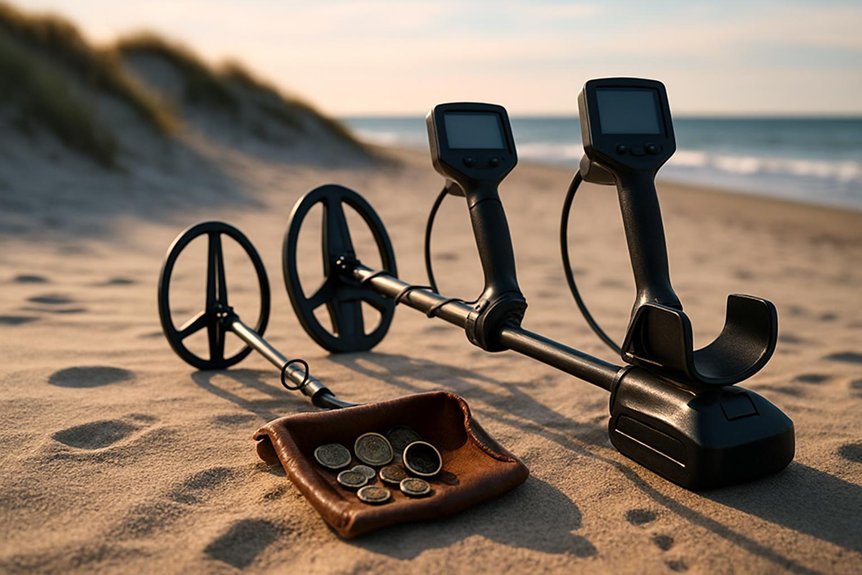
If you’re just getting into treasure hunting, you’ll want a detector that tells you what’s worth digging and what’s not, without a steep learning curve. I’ve tested models that balance clear discrimination, comfy controls, and solid battery life—so you spend more time finding coins and less time guessing. Here are four beginner-friendly picks that make good targets obvious, perform well in different soils, and won’t frustrate you on your first few hunts—keep going to see which fits your budget.
Garrett ACE 300 Metal Detector for Adults with Waterproof Coil and Headphones
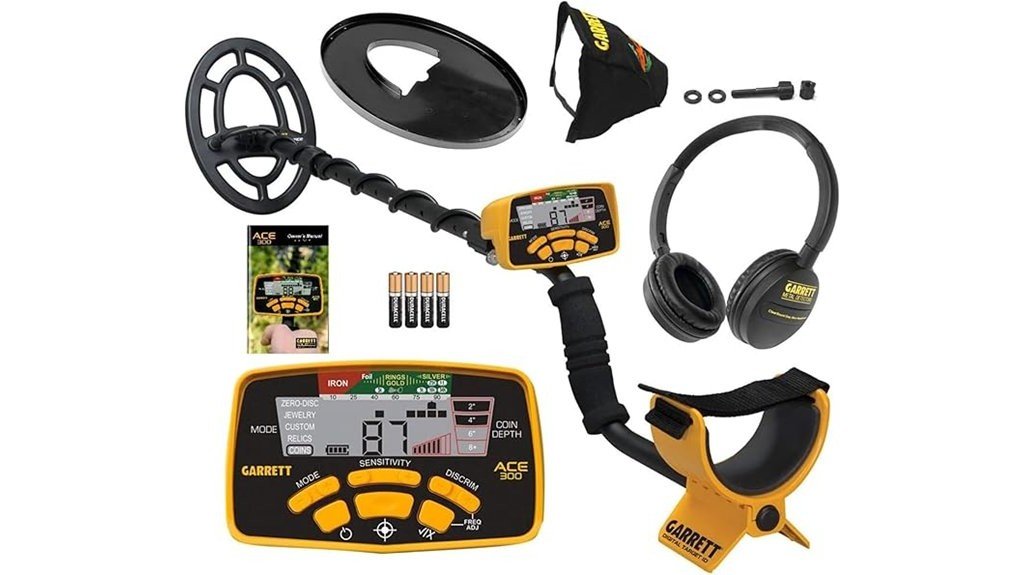
If you’re just getting started with metal detecting and want a reliable, easy-to-use machine, the Garrett ACE 300 is a smart pick that’s built with beginners in mind and grown-ups who don’t want to fuss with complicated gear. You’ll appreciate the numeric Digital Target ID, which gives a clear 0–99 readout so you can judge conductivity quickly, and the improved Iron Resolution that helps separate coins from rusty junk. The waterproof coil and included ClearSound headphones mean you can hunt near water and still hear signals, while pinpointing and adjustable frequency cut down interference, making your outings more productive.
Best For: Adults and beginner hobbyists who want an easy-to-use, reliable metal detector for shorelines, parks, and general treasure hunting.
Pros:
- Waterproof searchcoil and included ClearSound headphones let you hunt near water and hear signals clearly.
- Numeric Digital Target ID (0–99) and improved Iron Resolution provide clearer target discrimination for quicker ID of coins vs trash.
- Electronic pinpointing and adjustable frequency reduce interference and make locating targets easier.
Cons:
- Intended as a beginner/entry-level model, so it may lack some advanced features sought by experienced detectorists.
- Comes with basic accessories; serious users may want upgraded headphones or aftermarket coils.
- Numeric ID and discrimination aren’t perfect—some targets may still require digging to confirm.
Nokta Findx Pro Metal Detector (Waterproof, USB Rechargeable)
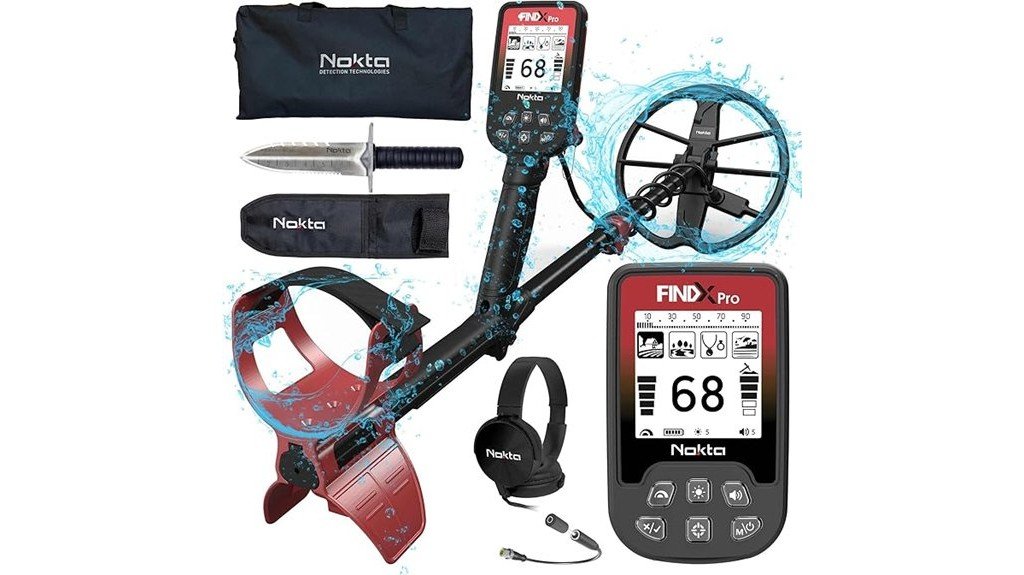
For beginners who want a reliable, take-anywhere detector without breaking the bank, the Nokta Findx Pro stands out for its waterproof IP68 rating and USB-rechargeable battery that gives you about 12 hours of search time — so you can spend a whole day at the beach or creek without worrying about charging. You’ll appreciate its lightweight, professional build, 11-inch coil, and backlit LCD for easy reading, plus modes for Field, Park, Jewelry, and Beach. It comes as a full kit, and users report quick setup and good small-target detection. Watch for thin headphone wires and occasional beach interference, but overall it’s great value.
Best For: Beginners and casual detectorists who want a waterproof, USB-rechargeable, budget-friendly detector for beach, park, and general use.
Pros:
- Lightweight, professional build with IP68 waterproofing and an 11-inch coil for versatile land and water detecting.
- USB-rechargeable battery gives about 12 hours runtime and a backlit LCD for easy reading.
- Comes as a complete kit (headphones, carrying bag, premium digger) with quick setup and good small-target detection.
Cons:
- Included headphones are low quality (thin wires, poor fit).
- Single frequency can struggle in certain conditions and users report occasional beach interference (black sand).
- Some initial learning curve for users moving up from higher-end models.
Nokta Simplex Lite Metal Detector with 9.5” Waterproof DD Search Coil
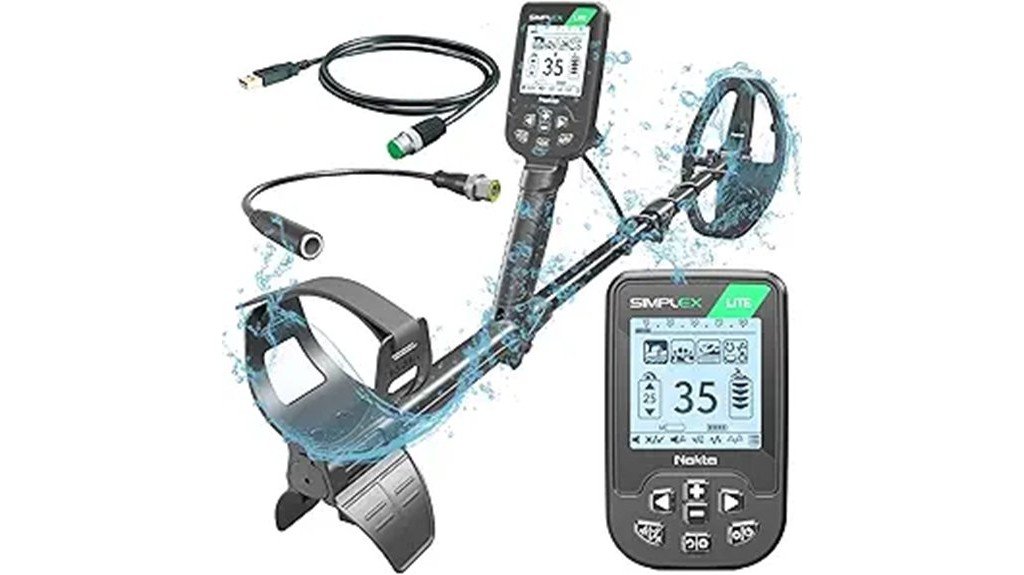
The Nokta Simplex Lite stands out as a top pick for beginners who want a reliable, ready-to-go detector without breaking the bank, thanks to its 9.5” waterproof DD search coil and a roomy 12-hour rechargeable battery that keeps you hunting longer. You’ll appreciate the lightweight, adjustable shaft and simple controls that make assembling and learning quick, and the waterproof coil lets you search beaches or shallow water confidently. It reads coins, scrap, and small finds well at around 7 KHz, includes pinpointing, and supports firmware updates via USB, though packaging and update quirks are worth noting.
Best For: Beginners and budget-conscious hobbyists who want a lightweight, waterproof metal detector with good battery life and simple controls for beach, shallow-water, and general coin/scrap hunting.
Pros:
- 9.5” waterproof DD search coil and IP65 rating allow beach and shallow-water use.
- Lightweight, adjustable shaft and simple controls make it easy to assemble and use.
- 12-hour rechargeable battery, pinpoint feature, and USB firmware updates add convenience and longevity.
Cons:
- Some users report discomfort during extended use (may require added arm padding).
- Occasional packaging issues on delivery and potential for surface scratching of components.
- Firmware update process and mixed manual information can be confusing for some users.
NOKTA MAKRO Findx Metal Detector (11000875)
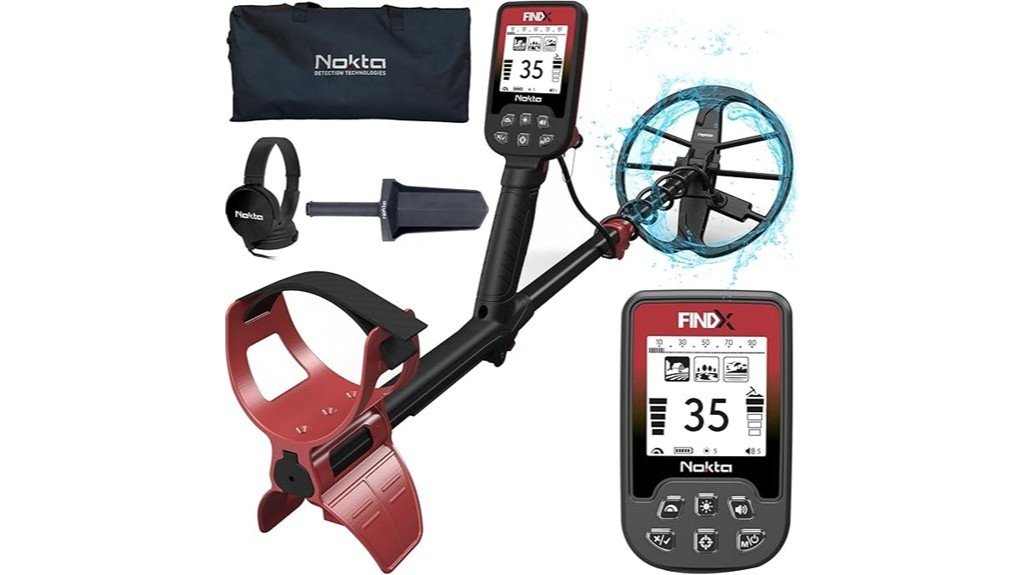
Think of the NOKTA MAKRO Findx as your first reliable treasure-hunting partner: it’s lightweight, user-friendly, and built to get beginners excited about metal detecting without overwhelming them. You’ll appreciate the 1.2 kg aluminum build, long 12-hour battery life, and durable IP68 rating that handles damp parks and puddles, while the 27.94 cm coil balances coverage and precision. Owners praise its quick learning curve and accuracy—some found targets within ten minutes—though a few mention speaker static. It includes a storage bag and battery, and many recommend the FindX PRO only if you need deeper waterproofing or smaller coils.
Best For: Beginners and casual hobbyists seeking a lightweight, easy-to-use, and reliable entry-level metal detector for park and shallow-water searching.
Pros:
- Lightweight (1.2 kg) aluminum build with simple controls—quick learning curve for new users.
- Long 12-hour battery life and IP68 rating for protection against damp conditions and puddles.
- Comes with a 27.94 cm coil, storage bag, and included Li‑Po battery—good out-of-the-box value.
Cons:
- Not as deeply waterproof or flexible in coil options as the FindX PRO (limits some underwater or deep searches).
- Some users report static/noise issues with the speaker/audio performance.
- Manual/language support may be limited; warranty details provided only upon request.
Factors to Consider When Choosing Metal Detectors for Beginners With Discrimination
When you’re choosing a metal detector with discrimination, start by thinking about how accurate the Target ID is and whether the discrimination settings are simple enough to learn quickly, because those two things decide how often you’ll get excited for a real find instead of a rusty bottle cap. Pay attention to coil type and frequency too, since a larger coil can cover ground faster but a smaller or higher-frequency coil will often find small coins and jewelry more reliably, and the detector’s ground balance features determine how well it ignores mineralized soil. I’ve learned from a few afternoons of frustrating signals that a machine with easy tuning and clear ID numbers saves time and keeps the hobby fun as you get better.
Target ID Accuracy
A clear digital target ID readout, often shown as a number from 0 to 99, can make a huge difference when you’re just starting out with a metal detector, because it tells you how conductive a buried object is and helps you decide whether to dig or keep moving. You’ll rely on that number to learn which signals usually mean coins, pull tabs, or iron, and as you gain experience a reliable display speeds up decisions and keeps you from digging every old nail. Look for models with precise numeric scales and improved iron resolution so unwanted trash doesn’t steal your time; I once ignored a low iron reading and found a cool button instead. Better target ID makes outings more rewarding and less frustrating.
Discrimination Settings Ease
You’ve already seen how a clear target ID readout helps you tell a coin from a nail, and discrimination settings build on that same idea by letting you choose what the detector ignores so you can focus on the good stuff. You’ll want a simple numeric scale, usually 0–99, so you can learn which ranges mean coins or trash, and a bright display helps you remember fast. Improved iron resolution separates junk from gems better, which saved me hours of digging once I stopped chasing bottle caps. Non-motion modes let you pinpoint targets without waving constantly, making finds less frustrating when you’re starting out. Look for intuitive controls and clear visuals, because an easy setup keeps you detecting longer and enjoying every beep.
Coil Type Effects
Because the coil is the detector’s “feet on the ground,” it has a huge say in what you’ll find and how easily you can tell coins from trash, so it’s worth getting to know the trade-offs early on. Coil size matters: larger coils cover more ground and reach deeper targets, but they can miss small, closely spaced items that a small coil will pick out and separate. Coil shape and type also steer results — DD coils give broader ground coverage and handle mixed-metal sites well, concentric or round coils offer uniform sensitivity, and elliptical coils can thread through trashy areas to separate targets better. Waterproof, IP68-rated coils add flexibility if you want to hunt shallow water or wet sand.
Frequency and Performance
Since frequency is basically the detector’s voice, you’ll want to know how pitch changes what it can hear: lower kilohertz settings punch deeper and find larger objects more easily, while higher kilohertz settings tune into tiny targets like coins and jewelry with greater sensitivity. For beginners, a detector around 5–15 kHz gives you balanced performance across many metal types and sites, so you don’t get overwhelmed. Multi-frequency models are especially helpful — they listen at several pitches at once, improving discrimination and helping you separate junk from valuables. Remember that ground mineralization can affect performance, with high frequencies sometimes struggling in mineral-rich soils, so lower frequencies often work better there. Try different settings and trust what your ears tell you.
Ground Balance Needs
When you’re hunting for coins or relics, getting the ground balance right can make the difference between a steady stream of true targets and a lot of frustrating chatter, so it’s worth learning how it works and what to look for in a beginner detector. Ground balance filters soil mineralization so your detector hears metal, not rocks, and many entry-level models offer automatic or manual options so you can choose ease or control. In heavily mineralized spots, proper balancing cuts false signals and helps separate good targets from iron trash, which I learned after a messy summer of digging bottle caps. A detector with adjustable ground balance lets you fine-tune performance to each site, boosting success and making detecting more enjoyable and less guesswork.
Depth and Sensitivity
Although depth and sensitivity can seem like technical jargon at first, they’re the two settings that really decide how much treasure you actually find, and learning how they work will save you from a lot of pointless digging. You’ll want a detector that reaches at least several inches—some models can find objects up to 8 inches deep depending on soil and metal type—so you don’t miss buried coins or relics. Adjust sensitivity to tune out junk and highlight valuables; higher frequency picks up small coins and jewelry, while lower frequency better detects larger items like gold. Use discrimination and numeric or audio cues to filter targets, and rely on electronic pinpointing to zero in once you get a strong signal, cutting down digging time.
Ease of Use
Now that you know how depth and sensitivity affect what you find, think about how easy the detector will be to use during those long, exciting hunts; you don’t want a machine that makes simple tasks feel like rocket science. Look for an intuitive interface so you can change modes and discrimination without blinking, and choose a lightweight model that won’t turn your arm into jelly after an hour. Quick setup and a clear manual get you detecting faster, which I appreciate from experience — nothing kills momentum like puzzling over parts. Adjustable shafts help the detector fit your height, preventing strain and improving sweep control. Most importantly, discrimination controls should be simple and clear, letting you ignore junk and focus on likely treasures with confidence.
Battery and Power
Because a detector’s power system is the engine behind every beep and discrimination decision, you’ll want to pick one that keeps you hunting without constant battery drama, and I’ve learned that the difference between a full day of finds and an early trip home is often just the battery choice. Aim for models that deliver around 12 hours of continuous use so you’re not cutting a promising hunt short, and favor USB rechargeable units for easy top-ups from a power bank or car. Remember battery weight affects comfort, so lighter packs make long searches easier. Reliable power keeps discrimination steady, and detectors with multiple battery options give you flexibility for weight, runtime, and field charging.
FAQ
How Do I Maintain and Clean My Metal Detector?
1. How should I clean the coil of my metal detector?
After every use, make sure to clean the coil thoroughly. This helps maintain its performance and prevents dirt buildup.
2. What is the best way to clean the shaft and control box?
Use a damp cloth to wipe down both the shaft and control box. Ensure that they are completely dry afterward to prevent moisture damage.
3. Should I remove the batteries after each outing?
Yes, it’s advisable to remove the batteries when the metal detector is not in use. This helps prevent corrosion and extends the lifespan of the batteries.
4. How can I check for damage to cables and seals?
Inspect the cables and seals visually before and after each use. Look for any signs of wear, fraying, or cracks that could affect performance.
5. Is lubrication necessary for moving parts?
Lightly lubricating moving parts is recommended as needed. This can enhance functionality and prevent stiffness or wear over time.
6. What type of cloth should I use for cleaning?
A soft, damp cloth is ideal for cleaning the shaft and control box. Avoid abrasive materials that could scratch the surfaces.
7. How often should I perform maintenance on my metal detector?
Regular maintenance should be conducted after each use and before long outings. Consistent upkeep ensures optimal performance.
8. Can I use any cleaning solution on my metal detector?
It’s best to use just water or a mild cleaning solution specifically designed for electronics. Harsh chemicals can damage the detector’s components.
9. What should I do if I find damage during my inspection?
If you discover any damage to cables or seals, it’s important to address it immediately. Repair or replace damaged parts to ensure your metal detector functions properly.
10. How can I prevent moisture damage to my detector?
Always ensure that the metal detector is dry after cleaning and avoid exposing it to wet conditions. Store it in a dry place when not in use.
11. What is the importance of cleaning my metal detector?
Regular cleaning and maintenance help preserve the functionality and longevity of your metal detector. It ensures better performance and more successful treasure hunting experiences.
Can Metal Detectors Find Jewelry Buried Deep Underwater?
1. Can metal detectors locate jewelry underwater?
Yes, metal detectors can find jewelry buried underwater. However, the effectiveness depends on the type of detector used.
2. What type of metal detector is best for underwater use?
A submersible metal detector is essential for underwater searches. It is specifically designed to function well in wet conditions.
3. Does the size of the coil matter when detecting underwater?
Yes, the appropriate coil size can enhance detection capabilities. Larger coils can cover more ground, while smaller coils are better for pinpointing specific items.
4. Is it difficult to recover jewelry from deep water?
Recovering jewelry from deep water can be challenging due to factors like strong currents and depth limitations. Experience and technique play a crucial role in successful recovery.
5. What environmental factors can affect detection?
Mineralized sand and underwater currents can interfere with metal detection. These factors may reduce the accuracy and effectiveness of your search.
6. Do I need special training to use an underwater metal detector?
While not mandatory, training can significantly improve your skills and effectiveness. Understanding how to operate the detector in various conditions is beneficial.
7. How deep can I detect jewelry underwater?
The detection depth varies by detector model and coil size. Generally, submersible detectors can identify targets several feet below the surface.
8. Is patience important when searching underwater?
Yes, patience is crucial when searching for jewelry underwater. It may take time to locate items, especially in challenging conditions.
9. Can I use regular metal detectors in shallow water?
Some regular metal detectors can be used in shallow water, but they may not be as effective or safe as submersible models. Always check the specifications before use.
10. What should I do if I find jewelry underwater?
If you find jewelry underwater, ensure it’s safe to retrieve it. Consider local laws regarding treasure hunting and ownership before taking it.
Are Metal Detecting Clubs Worth Joining for Beginners?
1. What are the benefits of joining a metal detecting club as a beginner?
Joining a metal detecting club provides valuable experience and local knowledge that can enhance your skills. You also gain access to group hunts and exclusive permissions to search in various locations.
2. Will I receive mentorship in a metal detecting club?
Yes, many clubs offer mentorship opportunities where experienced members share their insights and techniques. This guidance can significantly improve your detecting abilities.
3. How can a club help with metal detecting settings?
Clubs often have members who are knowledgeable about discrimination settings and other technical aspects of metal detectors. They can share tips that help you optimize your equipment for better results.
4. Is there a social aspect to joining a metal detecting club?
Absolutely! Clubs foster camaraderie among members, making metal detecting a more enjoyable and engaging experience. You’ll meet like-minded enthusiasts who share your passion.
5. Are group hunts beneficial for beginners?
Group hunts are particularly beneficial for beginners as they provide a supportive environment to learn from others. You can observe different techniques and strategies in action.
6. Can joining a club make metal detecting safer?
Yes, participating in a club can enhance safety as members often look out for one another during hunts. This communal approach can alleviate concerns about being in unfamiliar areas alone.
7. What kind of local knowledge can I gain from a metal detecting club?
Members often share knowledge about local history, hotspots for detecting, and where to find permissions for hunting. This insider information can lead to more productive outings.
8. Do clubs offer access to exclusive permissions for detecting?
Many clubs have established relationships that provide access to private lands or historical sites not available to solo hunters. This can significantly increase your chances of making valuable finds.
9. How does joining a club accelerate learning for beginners?
Being part of a club allows beginners to learn from the experiences of seasoned hunters quickly. Sharing tips and techniques within the group can speed up the learning curve.
10. Are there any costs associated with joining a metal detecting club?
Most clubs require a membership fee, which can vary based on the organization. These fees often support club activities and events, and the benefits gained can outweigh the costs.
11. How often do clubs meet or organize events?
Clubs typically have regular meetings and organize events such as group hunts, workshops, and educational sessions. The frequency can vary, but many clubs are active throughout the year.
Do Metal Detectors Work Near Power Lines or Phone Towers?
FAQ 1: Do metal detectors work near power lines?
Yes, metal detectors can operate near power lines, but users may experience interference that leads to false signals.
FAQ 2: How do power lines affect metal detector performance?
Power lines can create electromagnetic interference, reducing the metal detector’s sensitivity and accuracy.
FAQ 3: What can I do to mitigate interference from power lines?
To reduce interference, try moving further away from the power lines, changing the detector’s frequency, or utilizing ground balance and notch filters.
FAQ 4: Can metal detectors be used near phone towers?
Metal detectors can be used near phone towers, but similar to power lines, they may pick up interference that results in unreliable readings.
FAQ 5: What type of interference can I expect near phone towers?
Phone towers can emit signals that interfere with metal detectors, leading to false positives and decreased effectiveness.
FAQ 6: Is there a specific distance to maintain from power lines or phone towers?
While there isn’t a universal distance, moving at least several meters away from these sources can significantly improve detection performance.
FAQ 7: Will all metal detectors experience interference near power lines or phone towers?
Most metal detectors will be affected by nearby power lines or phone towers, but the degree of interference can vary based on the detector’s technology and settings.
FAQ 8: Are there metal detectors designed to minimize interference?
Some advanced metal detectors come with features specifically designed to filter out electromagnetic interference, making them more effective in challenging environments.
FAQ 9: What settings should I adjust if I encounter interference?
Adjusting the frequency settings, utilizing ground balance features, and applying notch filters can help minimize interference from power lines and phone towers.
FAQ 10: Can I still find valuable items near power lines or phone towers?
While it is possible to find valuable items near these sources, be prepared for potential false signals and reduced sensitivity, which may require extra patience and skill in detecting.
What Legal Permissions Are Required for Treasure Hunting on Private Land?
FAQs on Legal Permissions for Treasure Hunting on Private Land
1. Do I need permission to treasure hunt on private land?
Yes, you must obtain written permission from the landowner before conducting any treasure hunting activities on private property.
2. What laws should I follow while treasure hunting?
You need to adhere to local and state laws that govern treasure hunting, which may vary by location, so it’s essential to research the specific regulations in your area.
3. Are there any permits required for treasure hunting?
Depending on the state or local jurisdiction, you may need to obtain specific permits to legally treasure hunt, so check with local authorities.
4. What are posted restrictions in relation to treasure hunting?
Respect any posted restrictions on the property, such as no trespassing signs or specific areas where treasure hunting is prohibited.
5. Can I remove items I find while treasure hunting?
You must have explicit consent from the landowner regarding the removal of any finds; otherwise, you could be charged with theft.
6. What should I do if I find something valuable?
Report your findings to the landowner as per your agreement and local laws, as there may be legal obligations regarding valuable discoveries.
7. What are the consequences of treasure hunting without permission?
Treasure hunting without the landowner’s consent can lead to trespass charges and potential legal action against you.
8. Is verbal permission enough for treasure hunting?
It’s advisable to obtain written permission from the landowner to prevent any misunderstandings or legal issues later on.
9. Do I need to inform local authorities about my treasure hunting activities?
While not always required, informing local authorities can be beneficial, especially if your activities involve specific permits or if you’re hunting in regulated areas.
10. What if the landowner is not present?
You must wait for the landowner’s written permission before proceeding, as hunting without it can lead to legal repercussions.
Final Thoughts
As you embark on your treasure hunting journey, you’ve stumbled upon four fantastic starter detectors that help you differentiate between trash and treasure. Picture yourself on a sunny afternoon, the breeze gently rustling the leaves, as you decide which detector suits you best. Consider your budget, the likelihood of encountering wet hunting spots, and how much tech you’re comfortable with.
I remember my first time out with the ACE 300—its lightweight design made it feel almost like an extension of my hand. I was standing in a park, feeling the excitement build as I swung the detector back and forth. With every beep, my heart raced in anticipation, and I quickly learned to trust its discrimination features. Then there was that day at the beach with my waterproof Nokta, where the sound of waves crashing around me only added to the thrill. I dug up coins and a few unexpected treasures, all while the sun glinted off the water.
With each outing, practice becomes second nature, and before you know it, you’ll find yourself making rewarding discoveries sooner than you ever imagined. So grab your gear, head out, and let the adventure begin!