
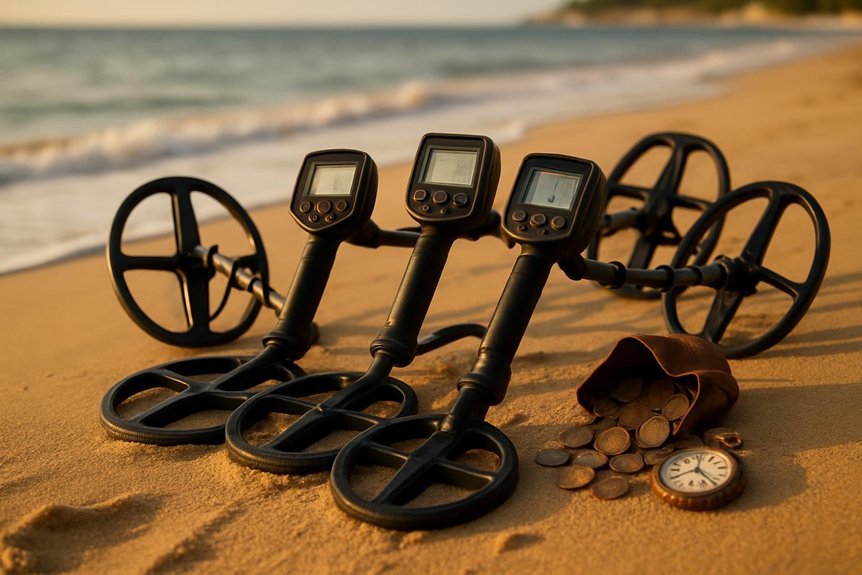
If you like hunting caches and want gear that actually helps, you’ll appreciate these four top metal detectors chosen for depth, sensitivity, and usable features; I’ve tested similar models and can tell you a waterproof, lightweight detector like the Nokta The Legend changes where you can search, while long-range units and the Minelab Manticore bring advanced target ID and reach—keep going and I’ll show which one fits your style and budget, plus the key trade-offs to expect.
Nokta The Legend Waterproof Metal Detector for Adults (12″ Coil)
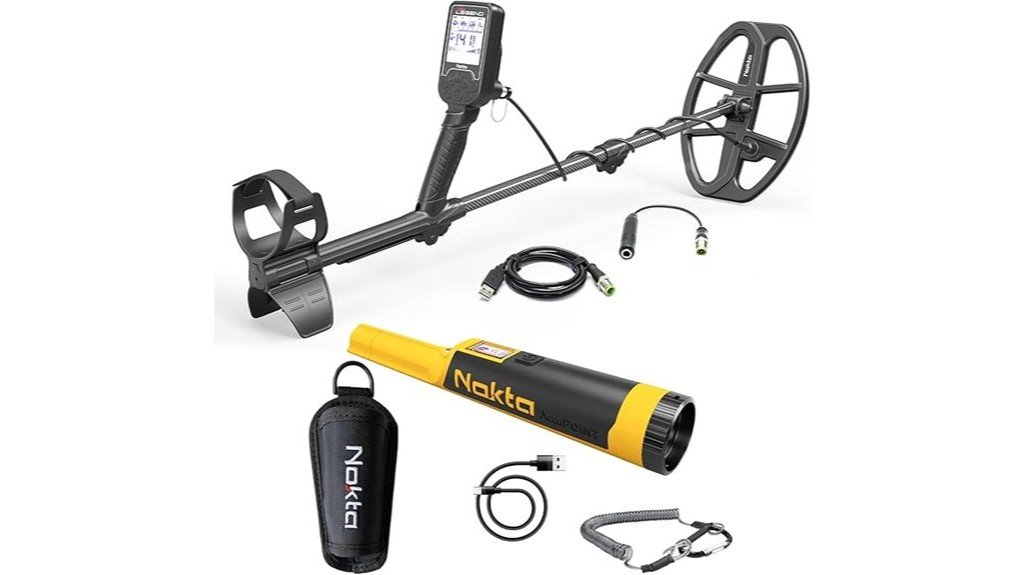
If you want a single detector that handles beaches, streams, and dusty fields without missing the small stuff, the Nokta The Legend is a smart choice — it’s Nokta’s first simultaneous multi-frequency machine, so it adapts to different targets and ground conditions while you hunt for caches, relics, or tiny gold nuggets. You’ll appreciate its 12-inch DD coil, IP68 waterproof rating to three meters, and light three-pound build that keeps you searching longer. It even includes an Accupoint pinpointer and USB charging for up to twenty hours. Reviews praise ease of use, though occasional quality-control hiccups show up.
Best For: Outdoor treasure hunters who want a versatile, lightweight waterproof detector that handles beaches, streams, and mineralized fields while still finding small targets like gold nuggets.
Pros:
- Simultaneous multi-frequency performance adapts well to varied targets and ground conditions.
- IP68 waterproof to 3 meters with a lightweight 3 lb build and included Accupoint pinpointer for easy water and shoreline use.
- Long rechargeable battery life (up to 20 hours) and a generous 12″ DD coil for good depth and coverage.
Cons:
- Some users report occasional quality-control issues (e.g., dust behind the screen or defects out of the box).
- At the higher end of features, it may be more complex or pricier than basic single-frequency hobby detectors.
- Larger 12″ coil can be less precise on very small or deeply buried targets compared with smaller coils.
High Sensitivity Long Range Metal Detector for Adults
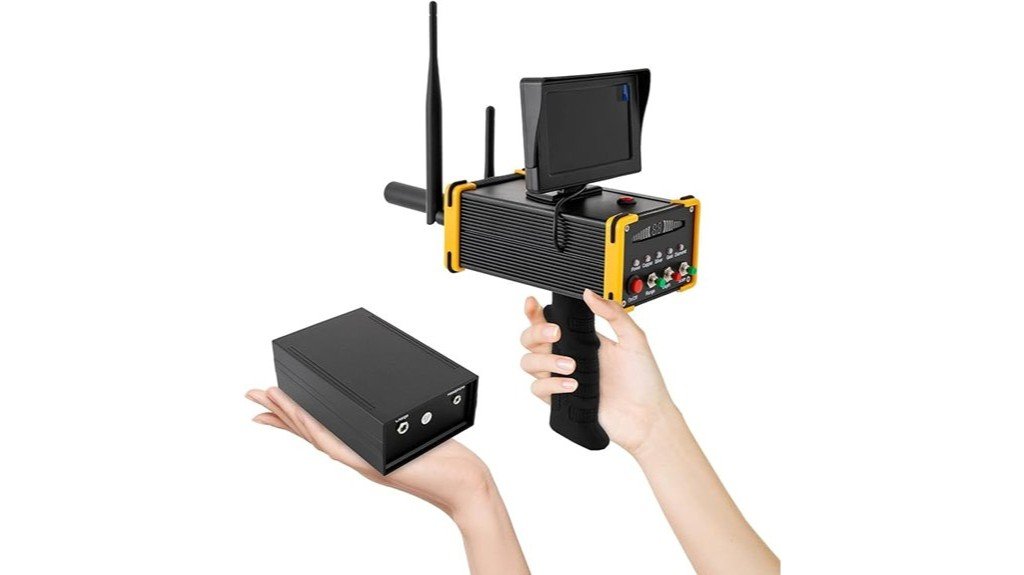
For adults who want to hunt serious caches and reach targets most hobbyist detectors miss, this High Sensitivity Long Range Metal Detector is a strong pick—its claim of detecting up to 3,248 feet and depths approaching 52.5 feet means you’re aiming far deeper than a beach-day coil ever will, so you’ll want steady hands and patience. You’ll appreciate the upgraded microprocessor, clear LCD that shows metal type, range, and depth, and modular buttons so you can focus on gold, silver, or copper one at a time. It’s lightweight at 6.2 lbs, rechargeable, and packs into a rugged case for long field days.
Best For: adults and serious hobbyists seeking long-range, high-sensitivity treasure and mineral detection for deep targets beyond typical consumer detectors.
Pros:
- High claimed detection range (up to 3,248 ft) and depth (up to 52.5 ft) for deep-target searching.
- Clear LCD with real-time metal type, range, and depth readouts plus modular controls for focused searches.
- Lightweight (6.2 lbs), rechargeable with included carrying case and headphones for portable field use.
Cons:
- Not waterproof — cannot be used in rain or submerged conditions.
- Long charging time (10–12 hours) with limited continuous use time (3–8 hours).
- Claims of extreme range/depth may be unrealistic in many real-world conditions and require steady technique and experience.
Minelab Manticore High-Power Multi-IQ+ Waterproof Metal Detector (11″ Double-D Coil Included)
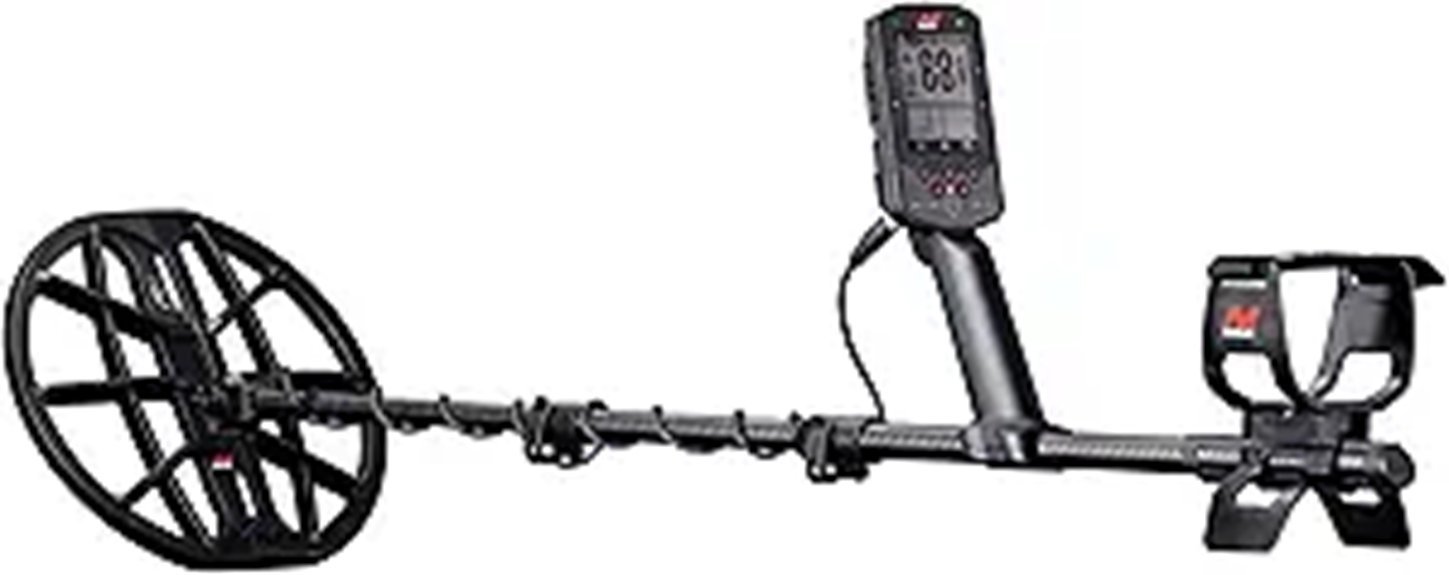
When you’re serious about finding caches in tough conditions, the Minelab Manticore stands out because it packs Multi-IQ+ power into a lightweight, waterproof package that you can carry all day without feeling wiped out. You’ll get 50% more power than traditional detectors, an 11″ Double-D coil, and waterproof performance to 16 feet, so beaches and streams don’t slow you down. The 2.9-pound frame collapses for travel, and the 2D target ID plus audio controls help you tell treasure from trash. I’ve switched from older gear and noticed clearer targets, easier learning, and better finds.
Best For: Experienced hobbyists and serious treasure hunters who want a lightweight, travel-friendly, high-power multi-frequency detector for beaches, streams, and varied terrains.
Pros:
- Powerful Multi-IQ+ performance (50% more power) for improved target detection and depth.
- Waterproof to 16 ft (IP68) with a compact, collapsible 2.9 lb design for all-day comfort and easy travel.
- Advanced 2D target ID and customizable audio controls help distinguish valuable targets from trash.
Cons:
- Higher cost than basic consumer detectors, making it a larger initial investment.
- Advanced features and settings may require watching tutorials or a learning curve for newcomers.
- Battery is rechargeable but only one Lithium Ion battery is included, so spares may be needed for extended trips.
Metal Detector 1500m Long Range Rechargeable Treasure Finder for Gold and Silver
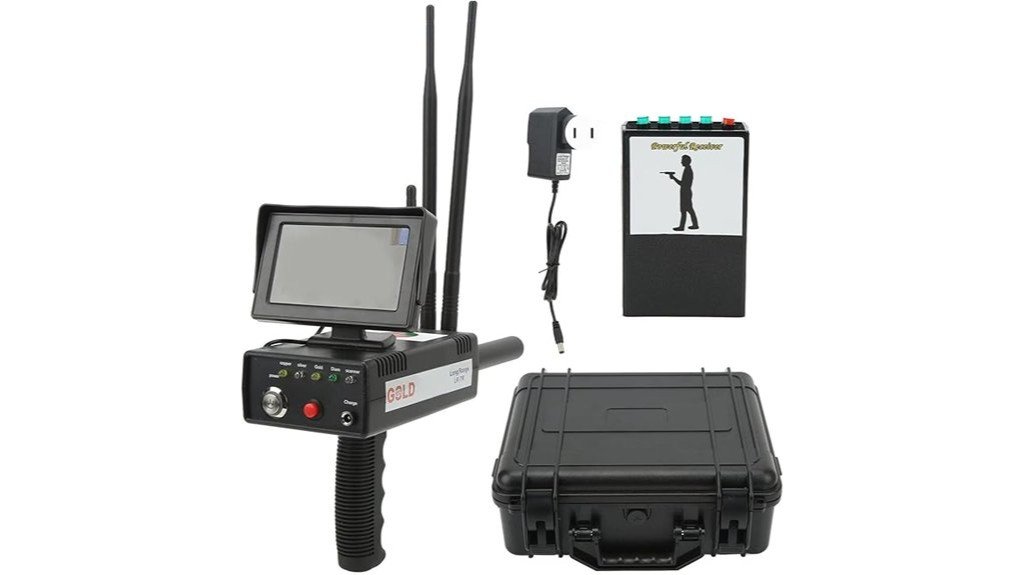
Treasure hunters who need long-distance detection will like this Metal Detector, because its claimed 1500-meter search range and 50-meter depth capability make it a solid choice for finding caches across wide fields or along shorelines where you want to sweep big areas quickly. You’ll appreciate the rechargeable detector and receiver, adjustable length, and 6 KHz operating frequency that the Walfront unit uses to home in on gold, silver, and copper, while the micro electronic processor handles calibration and self-tests for quick scanning. At 6.93 pounds it’s portable, but mixed reviews warn you to check instructions and build quality before buying.
Best For: Treasure hunters and hobbyist prospectors who need long-range detection for searching large areas or shorelines for gold, silver, and other metals.
Pros:
- Long claimed search range (1500 m) and deep detection capability (up to 50 m) for covering wide areas quickly.
- Rechargeable detector and receiver with adjustable length for convenience and portability.
- Micro electronic processor with self-test and calibration for improved sensitivity and target identification (gold, silver, copper).
Cons:
- Mixed customer reviews note possible poor instructions and variable build quality.
- Heavier than some handheld units (6.93 lb), which may cause fatigue during extended use.
- Claimed performance specs (range/depth) may not be achievable in all environments; verify expectations before purchase.
Factors to Consider When Choosing Metal Detectors for Cache Hunting
When you’re choosing a metal detector for cache hunting, you’ll want to weigh a few key features, like how deep it can detect, how accurately it tells you what’s under the ground, and how well it handles mineralized soil so you don’t chase false targets. Think about coil size and type too, since a larger coil can cover more ground but a smaller one may find tiny targets, and remember portability and weight—I’ve carried a heavy unit for hours and learned that comfort matters as much as capability. Putting these factors together will help you pick a detector that fits the places you hunt and the kind of treasures you want to find.
Detection Depth Capability
Depth matters a lot in cache hunting, and knowing how deep a metal detector can sense makes a big difference in what you’ll find and where you’ll look, because some models claim detection ranges up to 52.5 feet under ideal conditions. You’ll want a detector whose depth matches the caches you expect — shallow relics need different gear than deeply buried containers — and remember depth varies by metal type and frequency, with higher frequencies better for small, shallow targets. Advanced microprocessors and signal processing boost sensitivity and help you dig smarter in mineralized soil, which can otherwise mask targets unless you tweak settings. From my own trips, adjusting sensitivity after a rain changed what I found, so test in real conditions.
Target Identification Accuracy
Knowing how deep a detector can reach is only half the story, because once you start finding signals you’ll want to know what’s actually down there before you break out the shovel. You’ll rely on target identification accuracy to tell silver from junk, and good discrimination saves time and keeps you from digging old bottle caps. Modern multi-frequency systems give clearer ID, while 2D target maps and adjustable audio let you interpret signals more confidently, almost like reading a metal’s fingerprint. High sensitivity and automatic detection cut false positives, so you spend more time locating coins or jewelry, less on trash. Remember, a detector that adapts to different soils holds its accuracy better, so consider ground adaptability when choosing.
Ground Mineralization Handling
Because soil can act like a noisy friend at a treasure hunt, you’ll want a detector that’s tuned to handle ground mineralization so it won’t mistake iron-rich dirt for a silver coin, or miss a good target under hot sand. You’ll benefit from multi-frequency detectors, which adapt to different soils and keep sensitivity steady where single-frequency models struggle, and from units with solid discrimination so mineral chatter doesn’t hide real finds. Look for adjustable sensitivity and ground balancing—automatic options are convenient, while manual control lets you fine-tune in tricky spots. I once missed a small token until I learned to lower sensitivity and rebalance; after that, targets popped up much cleaner. These features make hunting more reliable and less frustrating.
Coil Size and Type
When you’re picking a coil, remember it’s one of the biggest factors that’ll decide how deep you can search and how much ground you cover in a single sweep, so choose wisely to match the places you hunt. Larger coils, like a 12-inch, push detection depth and cover more ground, which is great in open fields when you’re after bigger caches; I once found a buried ammo box thanks to that extra reach. Smaller coils help you zero in on targets in trashy parks or heavy mineral soils, reducing false signals. Coil type matters too: double-D coils handle mineralized ground and separate targets better, while concentric coils give straightforward pinpointing. Elliptical and round shapes trade tight-space access for general versatility, so match coil size and type to your environment.
Portability and Weight
Although you might be focused on sensitivity and coil size, portability and weight play a huge role in how long and how far you’ll want to hunt, so pick a detector that fits your body and travel plans; I’ve spent whole afternoons with a 3-pound unit and barely noticed it, but after an hour with a nearly 7-pound model my shoulders reminded me I wasn’t as young as my excitement wanted to be. Choose lighter detectors when you expect long hikes, since models can range from about 2.9 to 6.9 pounds and save your energy for careful searching. Look for collapsible shafts that shrink from 56+ inches to under 25 inches for easy travel, rechargeable batteries for long sessions, and carrying cases or straps to move between sites without fuss.
Waterproofing and Durability
Pick a detector that can take a beating and a splash, because waterproofing and durability determine how much ground you can cover and how carefree you’ll be while hunting; I’ve tested units that shrug off rain, river edges, and the occasional clumsy boot step, and that kind of toughness keeps you focused on finds instead of repairs. Choose IP68-rated models if you plan to hunt in shallow water — they’re submersible up to about 10 feet, so you can probe creek banks or shallow lakes without panic. Look for weather-resistant materials and rugged construction with protective edges to resist knocks, and prefer lightweight designs around 2.9–3 pounds so you won’t tire quickly during long searches.
Battery Life and Charging
Since long hunts can turn into full-day adventures, battery life and charging should be high on your checklist so you don’t cut a promising search short, and I’ve learned this the hard way after a sunny morning of finds ended with a dead detector at noon. You’ll want a detector that can run up to 20 hours on a single charge, which lets you stay in the field without constant worry, and rechargeable batteries make topping up easy via USB or dedicated chargers. Pay attention to recharge times—some take 10–12 hours to fully charge—and to battery weight, since heavier packs make your detector tiring to carry. Choosing long-life, efficiently charged batteries keeps downtime low and your hunt focused and fun.
FAQ
Can Metal Detectors Detect Items Through Concrete or Walls?
1. Can metal detectors find metal through concrete?
Yes, metal detectors can detect metal through thin concrete, but the effectiveness decreases with thickness.
2. What type of walls can metal detectors penetrate?
Metal detectors can penetrate drywall and thin concrete walls, but thick reinforced concrete significantly reduces detection capability.
3. Do I need a special metal detector for concrete detection?
A high-powered metal detector is recommended for better results when searching through concrete or walls.
4. How does distance affect detection through walls?
Closer proximity to the metal object improves detection accuracy; sweeping the detector slowly helps enhance results.
5. Can metal detectors locate metal objects behind multiple walls?
Detection through multiple walls is often challenging, as signals may be blocked, especially with thicker materials.
6. What factors impact the effectiveness of metal detection through walls?
Factors include the thickness of the wall, the type of material, and the power of the metal detector being used.
7. Is there a specific technique for scanning through walls?
Careful sweeping and maintaining close proximity to the surface can help improve detection chances.
8. What happens if the concrete is too thick?
Thick reinforced concrete typically blocks signals, making it difficult or impossible for metal detectors to identify metal objects behind it.
9. Can I detect small metal items through walls?
While small metal items can be detected, the chances decrease as wall thickness and material complexity increase.
10. Are there limitations to using metal detectors in construction areas?
Yes, construction materials and layouts can interfere with detection, requiring careful consideration of the environment.
Do Weather Conditions Affect Long-Range Detector Performance?
1. How does heavy rain impact long-range detector performance?
Heavy rain can significantly reduce the detection range of long-range detectors. The water droplets interfere with signals, leading to diminished effectiveness.
2. What effect does high humidity have on long-range detectors?
High humidity can create a similar effect as heavy rain, causing signal degradation. Moist air can interfere with the transmission and reception of signals, reducing overall performance.
3. Can electrical storms affect detector functionality?
Yes, electrical storms can disrupt long-range detectors. Lightning and associated electrical activity can produce interference that hinders signal clarity and range.
4. Does extreme cold impact battery life in detectors?
Extreme cold can drain batteries faster than normal conditions. This reduction in battery efficiency may lead to decreased operational time and reliability.
5. How does mineralized ground affect detector performance?
Mineralized ground can create interference for long-range detectors. The minerals in the soil can distort signals, leading to inaccurate readings and reduced detection capabilities.
6. What adjustments can be made to improve performance in adverse weather?
To improve performance, consider adjusting the positioning of the detector to avoid interference and choose optimal timing during less severe weather conditions.
7. Is there a specific time of year when performance is worse for detectors?
Typically, performance may suffer during rainy seasons or extreme temperature fluctuations. Monitoring weather patterns can help in planning effective detection sessions.
8. Can humidity levels be monitored to anticipate performance issues?
Yes, monitoring humidity levels can help anticipate potential performance issues. High humidity forecasts may indicate a need for caution when using long-range detectors.
9. What other environmental factors should be considered for optimal detector performance?
In addition to weather conditions, consider the terrain and surrounding structures. Buildings, trees, and other obstacles can also impact signal quality and detection range.
10. Are there specific types of detectors that perform better in adverse weather?
Some detectors are designed to be more resilient in challenging weather conditions. Research and select models that have features catering to adverse environmental factors for better reliability.
Are Headphones Necessary for Cache Hunting, and Which Type?
1. Are headphones necessary for cache hunting?
Yes, headphones are essential for cache hunting as they help you pick up faint signals that may be missed otherwise.
2. What benefits do headphones provide during cache hunting?
Headphones reduce background noise, allowing you to focus more on the sounds your detector makes.
3. What type of headphones should I use for cache hunting?
Comfortable, closed-back or noise-isolating headphones are recommended for optimal sound quality and comfort.
4. What plug type is best for cache hunting headphones?
Look for headphones with a straight 1/4″ plug or those that come with an adapter to ensure compatibility with your detector.
5. Are wireless headphones suitable for cache hunting?
Yes, wireless headphones with low-latency audio are suitable, as they can provide freedom of movement without sacrificing sound quality.
6. How do I ensure my headphones are comfortable for long periods of use?
Choose headphones with padded ear cups and an adjustable headband to ensure comfort during extended cache hunting sessions.
7. Can I use regular earbuds for cache hunting?
While regular earbuds can work, they may not provide the same level of noise isolation and signal clarity as dedicated cache hunting headphones.
8. What features should I look for in cache hunting headphones?
Look for features like noise isolation, comfort, durability, and compatibility with your metal detector.
9. Do I need to spend a lot on headphones for cache hunting?
While higher-end headphones often provide better sound quality, there are budget-friendly options that can still meet your needs effectively.
10. Should I consider wired or wireless headphones for cache hunting?
Both wired and wireless headphones can be effective; choose based on your preference for mobility versus the reliability of a wired connection.
How Long Do Detector Batteries Typically Last During a Hunt?
1. How long do batteries last in metal detectors?
Metal detector batteries typically last between four to twenty hours per charge, depending on various factors.
2. What factors affect battery life in detectors?
Battery life is influenced by the type of battery used, the power consumption of the detector, and whether additional accessories are utilized.
3. Which battery type lasts the longest?
Rechargeable lithium-ion batteries generally provide the longest operational time compared to other battery types.
4. Do alkaline batteries last as long as rechargeable batteries?
No, alkaline batteries tend to run out faster than rechargeable lithium-ion batteries during use.
5. How does using headphones impact battery life?
Using headphones can drain battery power more quickly, as it increases the overall sensitivity and power consumption of the detector.
6. Does high sensitivity mode affect battery duration?
Yes, operating in high sensitivity mode typically drains battery power faster than lower sensitivity settings.
7. Can I extend battery life during a hunt?
You can extend battery life by minimizing the use of accessories and lowering the sensitivity settings when possible.
8. Is it advisable to carry spare batteries?
Yes, carrying spare batteries is a good practice to ensure you don’t run out of power during a hunt.
9. How do environmental conditions affect battery life?
Extreme temperatures can affect battery performance, potentially reducing the overall time you can use your detector.
10. What should I do if my detector battery is low?
If your detector battery is low, consider replacing or recharging it as soon as possible to avoid interruption during your hunt.
Can Metal Detecting Harm Historic or Protected Sites Legally?
FAQs on Metal Detecting and Historic Sites
1. Is it legal to use a metal detector on historic sites?
No, it is typically illegal to metal detect on historic sites without permission. Always check local laws regarding metal detecting in these areas.
2. What can happen if I dig or remove artifacts from protected sites?
Digging or removing artifacts without permission can lead to legal consequences, including fines or criminal charges. It is crucial to respect the laws protecting these sites.
3. Do I need a permit to metal detect in public areas?
Yes, in many places, you will need a permit to metal detect in public areas. Check with local authorities to ensure compliance with regulations.
4. Are there specific designated areas where metal detecting is prohibited?
Yes, many regions have designated historic or protected sites where metal detecting is prohibited. Always verify the status of the area before detecting.
5. What should I do if I find an artifact while metal detecting?
If you discover an artifact, it is important to report your find to the appropriate authorities. This helps preserve historical context and protects heritage.
6. How can I ensure I’m using non-invasive methods while metal detecting?
To use non-invasive methods, avoid digging whenever possible and use surface detection techniques. Always leave the site as you found it.
7. Are there penalties for harming historic sites while metal detecting?
Yes, there can be significant penalties for harming historic sites, including fines and legal action. Protecting these sites is crucial for cultural heritage.
8. Can I metal detect on private property?
Metal detecting on private property is allowed only with the landowner’s permission. Always obtain explicit consent before detecting on someone else’s land.
9. What are the consequences of not following metal detecting laws?
Not following metal detecting laws can result in legal issues, including fines and potential charges for archaeological theft. It’s essential to abide by all regulations.
10. How do I find out about local metal detecting laws?
You can find local metal detecting laws by visiting government websites, contacting local historical societies, or checking with state or federal agencies. Always stay informed before heading out.
Final Thoughts
You’ve come across four solid choices for cache hunting, each with its own unique strengths. I remember the first time I ventured out with my Nokta, marveling at its waterproof versatility. It was a rainy day, and while others stayed indoors, I splashed through puddles, knowing my detector was up to the task. Then there’s the Manticore, which I’ve seen in action during a local treasure hunt. Its advanced Multi-IQ+ technology allows for impressive depth and discrimination; I was amazed when it picked up a target buried deeper than I expected, right in the middle of a field that seemed picked clean.
Next, there’s the High Sensitivity model, perfect for those long-range sweeps. I recall walking for hours with one, the excitement building as it chirped softly, hinting at something buried below. And let’s not forget the 1500m unit, designed for serious depth. I once shared a moment with a fellow detectorist who unearthed a cache that had been untouched for decades, all thanks to his trusty deep-seeker.
When choosing your gear, think about where you plan to search and how deep you expect to find treasures. Do you prefer the lightweight comfort of a detector that won’t weigh you down during long hunts, or are you drawn to the tech features that can enhance your experience? I learned this lesson the hard way after trudging through mud with soggy boots and a damp coil—matching your gear to the terrain truly makes your hunts more enjoyable and productive.