
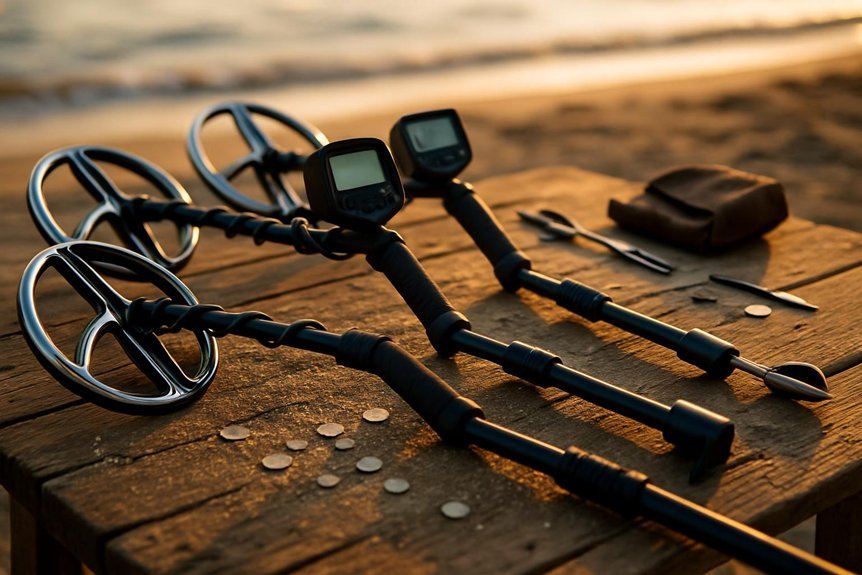
If you want to pull deep silver coins from the ground, you’ll need a detector that blends power, precision, and ease of use, and I’ve tested the ones that fit the bill. You’ll see options that suit beginners who want clear target ID and veterans who need multi-frequency muscle and waterproofing, plus tips on coils and settings that really matter — stick around and I’ll show which models keep finding coins when others give up.
Garrett ACE 300 Metal Detector for Adults
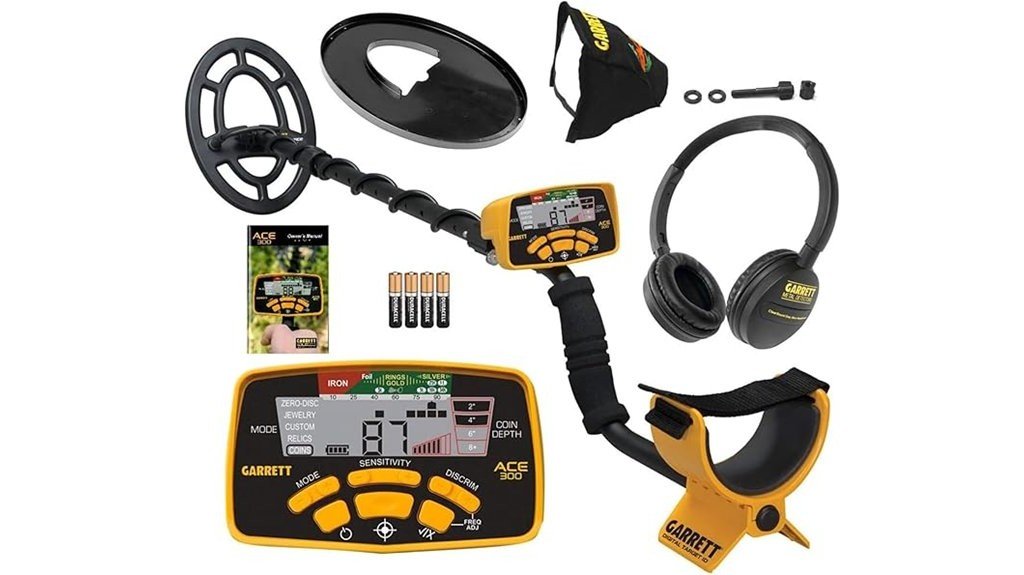
Who is the Garrett ACE 300 really for, and why might it become your go-to when you’re hunting silver coins? You’ll find it suits adults who want reliable, easy-to-use gear without sacrificing performance, and it often turns up solid silver thanks to its numeric Target ID (0–99) that helps you judge conductivity more precisely. You’ll like the improved Iron Resolution that separates junk from valuable finds, while adjustable frequency keeps signals cleaner in crowded spots. The waterproof coil, ClearSound headphones, and pinpoint mode make locating targets straightforward, and I once dug a silver dime minutes after switching modes.
Best For: Adults seeking an easy-to-use, reliable metal detector that balances beginner-friendly features with enough precision for finding silver coins and other valuable targets.
Pros:
- Numeric Target ID (0–99) and improved Iron Resolution help distinguish silver and other high-conductivity targets from iron trash.
- Waterproof coil, ClearSound headphones, and electronic pinpointing make detecting and locating targets straightforward in varied conditions.
- Adjustable frequency reduces interference in crowded areas, improving performance in popular detecting spots.
Cons:
- Geared toward adults and general detecting—advanced users may find high-end features or multi-frequency performance lacking.
- Included accessories (headphones, coil cover) are basic; serious users may upgrade for comfort or durability.
- Non-motion all-metal pinpoint mode is useful for location but lacks some advanced target separation options found on premium models.
Nokta Triple Score PRO Pack Metal Detector for Adults
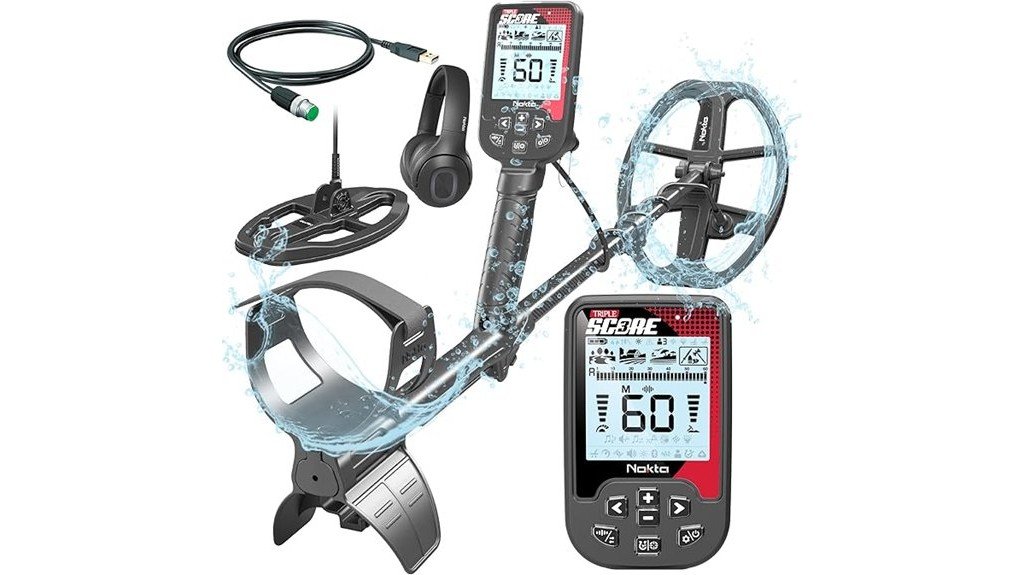
If you’re after a detector that handles beaches, streams, and backyards without breaking a sweat, the Nokta Triple Score PRO Pack is a great choice because it’s fully waterproof to 16 feet and runs multiple frequencies for better silver-coin detection in noisy soils. You’ll appreciate its 2.6 lb carbon-fiber build, comfy grip, and Bluetooth that links to apps for clearer signals, while the 3250 mAh battery gives up to 12 hours per charge. I’ve used it in salty sand and muddy creeks; it’s accurate, user-friendly, and includes an extra coil and headphones, though watch for occasional QC and battery-access issues.
Best For: hobbyists and serious treasure hunters who want a lightweight, fully waterproof, multi-frequency detector for beaches, streams, and varied terrains.
Pros:
- Fully waterproof to 16 ft (IP68) and lightweight (2.6 lb) for comfortable use in water and on land.
- Multi-frequency tech and Bluetooth connectivity improve accuracy and allow app integration for clearer signals.
- Long 3250 mAh rechargeable battery (up to 12 hours) with included extra coil and headphones for immediate use.
Cons:
- Occasional quality-control reports and some defective units noted by users.
- Battery accessibility and potential heat-exposure concerns may complicate replacement/maintenance.
- Battery lifespan limited to ~300–500 charge cycles, which may require eventual replacement.
Nokta The Legend Waterproof Metal Detector for Adults (12″ Coil)
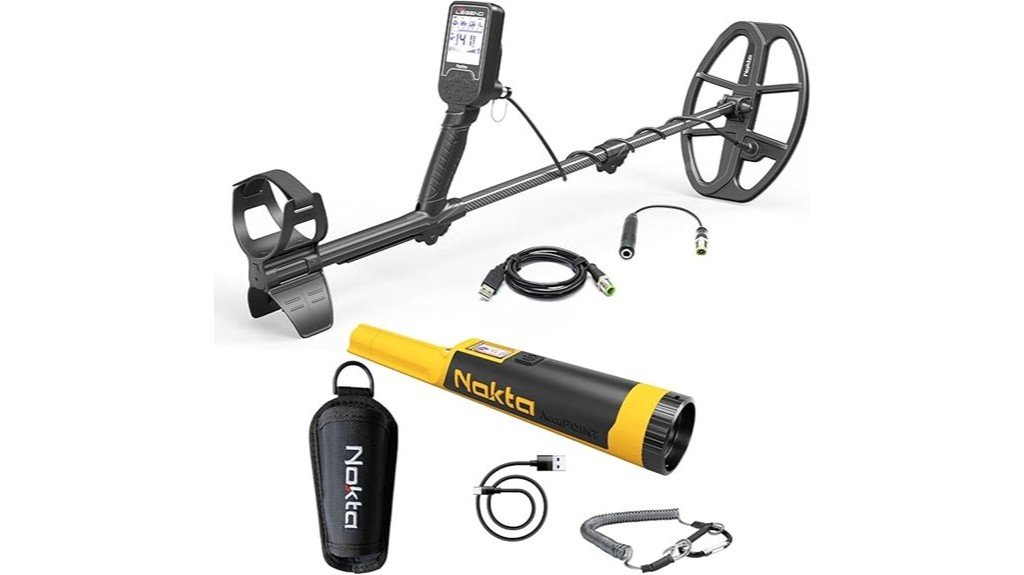
For anyone hunting silver coins along beaches, parks, or old homesteads, the Nokta The Legend stands out because it combines waterproof performance with a 12-inch DD coil that balances depth and pinpoint accuracy, so you’ll spend more time finding targets and less time guessing what the beep meant. You’ll appreciate its simultaneous multi-frequency tech that adapts to tough grounds and small targets, plus IP68 waterproofing to three meters for wet sand or shallow dives. At three pounds with USB charging and a handy Accupoint pinpointer, it’s user-friendly; buyers praise its performance, though check units for screen dust or QC hiccups.
Best For: Enthusiasts and hobbyist treasure hunters who need a lightweight, waterproof detector that balances depth and pinpoint accuracy for beaches, parks, and mineralized fields.
Pros:
- Waterproof IP68 rating to 3 meters, allowing use in wet sand, shallow dives, and rainy conditions.
- Simultaneous multi-frequency technology and 12″ DD coil provide good performance on both small targets (like gold) and deeper coins.
- Long USB-rechargeable battery life (up to ~20 hours) and included Accupoint pinpointer for faster recoveries.
Cons:
- Some users report occasional quality-control issues (e.g., dust behind the screen) on certain units.
- At 12″ coil size, it’s a compromise—good all-rounder but not as pinpoint-accurate in cluttered areas as smaller coils or as deep-reaching as larger coils.
- Higher-end features and accessories may increase the overall cost compared with basic entry-level detectors.
Minelab Manticore High-Power Multi-IQ+ Waterproof Metal Detector (11″ Double-D Coil)
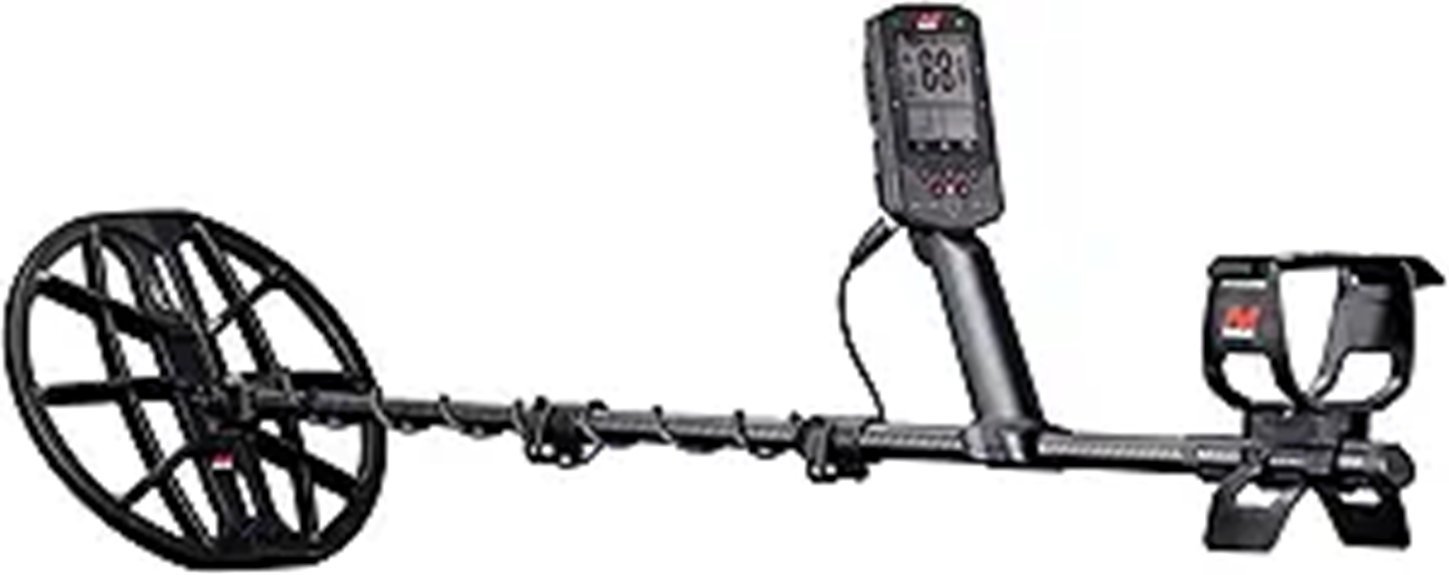
The Minelab Manticore is a powerhouse that’s great for serious coin hunters who want high sensitivity and clear target ID without lugging around heavy gear; its Multi-IQ+ tech, which delivers about 50% more power than older models, helps you home in on small silver coins even in trashy or mineralized ground. You’ll appreciate the 11″ Double-D coil, waterproofing to 16 ft, and a lightweight 2.9 lb frame that lets you hunt longer without fatigue. Intuitive menus, rich audio options, and a 2D target map make decoding signals easier, and the battery life and three-year warranty seal the deal.
Best For: Serious coin and relic hunters who want a lightweight, high-power, waterproof multi-frequency detector with advanced target ID and rich audio for use in trashy or mineralized conditions.
Pros:
- Multi-IQ+ technology delivers ~50% more power and superior sensitivity to small targets in difficult ground.
- Lightweight (2.9 lb), collapsible design and 11″ Double-D coil for comfortable, extended searching and good ground coverage.
- Waterproof to 16 ft (IP68), intuitive menus, 2D target ID map and customizable audio for clearer target discrimination.
Cons:
- Higher-end price compared with basic detectors, making it a larger initial investment.
- 12 kHz operating frequency may be less optimized for very deep high-conductivity targets compared with some single-frequency machines.
- Some users may need to watch tutorials and tweak settings to get the best performance, adding a learning curve.
Factors to Consider When Choosing Metal Detectors for Deep Silver Coins
When you’re hunting for deep silver coins, a few key features make all the difference: how deep the detector can reach, the frequency options it offers, and the size and type of coil you pair with it. You’ll also want reliable ground balance so salty or mineral-rich soil doesn’t mask targets, and precise target ID so you’re not wasting time on junk — I learned that the hard way after switching from a small mono coil to a larger concentric and suddenly started finding coins I’d missed for years. Think of these factors together, because a detector that balances depth, frequency flexibility, coil choice, ground handling, and clear ID will give you the best shot at pulling up old silver.
Detection Depth Capability
Although you might expect all metal detectors to work the same, detection depth can differ a lot and it’s one of the first things you should check if you’re hunting for deep silver coins. You’ll find high-end models that regularly reach around 12 inches, while basic units often stop at 4–6 inches, so think about how deep you want to search before buying. Coil size matters — larger coils cover more ground and usually find deeper targets, though they can be clumsy in tight spots. Soil mineralization also affects depth; highly mineralized ground can mask signals, so pick detectors that let you adjust ground balance. Remember that silver coins, being relatively large and conductive, show up deeper than tiny, low-conductivity bits.
Frequency Configuration Options
Because frequency controls how a detector “listens” to the ground, you’ll want to pay close attention to frequency configuration when hunting for deep silver coins, especially if you’re tackling mineralized soils or crowded beaches where signals get messy. You’ll find lower frequencies push deeper and pick up larger, buried targets, while higher frequencies tease out small silver pieces and help tell metals apart, so choosing around 5–15 kHz often gives the best balance. Multi-frequency machines that run several tones at once are especially useful in trashy or mineral-heavy spots, and adjustable-frequency models let you dodge interference from electronics or radio noise. Learn how frequency relates to depth, and you’ll pick a detector that really boosts your recovery rate.
Coil Size and Type
If you pick the right coil size and type, you’ll notice a dramatic difference in how deep and cleanly you find silver coins, and that choice often matters more than the detector model itself. You’ll want larger coils, around 10–15 inches, to cover ground faster and reach deeper targets, especially when you’re hunting for older, buried silver. Coil type matters too: DD coils offer better target separation in trashy spots while keeping depth, whereas concentric coils can give a touch more sensitivity. Think about shape — elliptical coils help you work between roots and rocks, round coils usually dig deeper — and pick a waterproof coil if you plan to hunt wet sand or shallow water, so moisture won’t ruin your day.
Ground Balance Performance
When you’re hunting for deep silver coins in ground that looks ordinary but hides a lot of mineral trouble, ground balance performance becomes one of the most important things to check on a detector, because it decides whether you hear a clear coin signal or just a noisy hum; I’ve spent afternoons on beaches where a good ground balance turned faint silver targets into loud, unmistakable beeps while a poorly balanced machine kept me digging up rocks and frustration. You’ll want a detector that handles mineralization smoothly so faint coin signals don’t vanish into static, and you’ll appreciate models with automatic ground balance for quick changes, or manual controls when you want fine tuning. Stability in heavy mineral soils is essential, and specialized ground-balance modes help you adapt to different terrains and depths.
Target Identification Precision
After you’ve got ground balance sorted so faint silver signals actually sing instead of sounding like a bucket of nails, the next big thing you’ll want to focus on is how well a detector tells you what’s under the coil — target identification precision. You want a clear digital ID scale, usually 0–99, that hints at conductivity so you can spot likely silver versus junk, and discrimination features that slice iron from coins without throwing out real targets. Multi-frequency units help by reading signals across conditions, cutting interference when you’re on mineralized ground, and accurate pinpoint modes let you zero in without tearing a hole in the lawn. I’ve learned to trust crisp IDs and iron resolution; they save time and get you to those deep silver coins faster.
Audio Response Quality
Because good ears can make or break a hunt, you’ll want a detector whose audio response gives you a clear, sensible picture of what’s under the coil, especially when you’re chasing deep silver coins that whisper instead of shout. You’ll appreciate customizable audio options, since changing frequencies and tones helps you learn the distinct sound of silver versus junk, and you’ll find multi-frequency models especially useful because they tighten signals and cut interference from other metals. Pay attention to how tones change with depth and size — a steady pitch might mean a small target, while modulation can signal a deeper, larger coin — and look for units that tie audio to visual target ID maps, which reinforce what your ears tell you so you dig smarter, not harder.
Waterproof and Durability
Although you’ll often dream of finding a glinting silver coin at the water’s edge, you’ll want a detector that can actually survive the splash and the slog, so waterproofing and tough construction become must-have features for serious hunts; an IP68 rating means the unit can be submerged safely to a specified depth, which is invaluable if you’re probing surf zones, river shoals, or puddle-filled park trenches. You’ll also want waterproof coils and sealed housing to keep mud and salt from corroding electronics, and carbon-fiber shafts help cut weight while resisting knocks and scrapes when you’re climbing rocks or bushwhacking. A rugged design keeps sensitive parts safe in rough terrain, and when you choose built-in toughness over cheap plastic, you’ll spend more time detecting and less time fixing gear.
Battery Life and Power
Waterproofing keeps your detector working when you’re wading into surf or brushing away mud, but you’ll also want power that lasts as long as your patience for the hunt; battery life and the way a detector uses power determine how many hours you can search for deep silver coins without scrambling for a wall outlet. Look for models that deliver long runtimes—some reach about 20 hours on a single charge—so you can follow a promising signal without rushing. Rechargeable Lithium Polymer packs save money and the planet, often lasting 300–500 cycles, and USB charging adds flexibility on long trips. Lighter detectors reduce fatigue, helping you search longer, while multi-frequency tech improves efficiency by cutting interference, stretching battery life during tough, deep hunts.
FAQ
Can Metal Detectors Find Silver Coins Buried Under Concrete?
FAQ 1: Can metal detectors locate silver coins under concrete?
Yes, metal detectors can find silver coins buried under concrete. However, the effectiveness depends on the detector’s specifications.
FAQ 2: What type of metal detector is best for finding coins under concrete?
A detector with good depth sensitivity is ideal. Look for one that operates at low frequencies and has a large coil.
FAQ 3: Why is a low-frequency coil important for detecting coins under concrete?
Low-frequency coils penetrate through materials like concrete more effectively, increasing the chances of detecting buried coins.
FAQ 4: How does ground balance affect detection?
Proper ground balance helps the detector filter out interference from the surrounding soil and concrete, improving sensitivity to weak signals.
FAQ 5: What sweeping technique should be used for best results?
A slow, methodical sweep is recommended when searching for coins under concrete. This allows the detector to pick up faint signals more effectively.
FAQ 6: How deep can metal detectors typically find coins beneath concrete?
The detection depth varies by detector but can often reach several inches beneath concrete, depending on the model and settings.
FAQ 7: Is patience required when using a metal detector?
Yes, patience is crucial when searching for weak signals, especially under challenging surfaces like concrete.
FAQ 8: Can all metal detectors find silver coins under concrete?
No, not all metal detectors are created equal. Only those with the right specifications, such as depth sensitivity and suitable coils, will be effective.
FAQ 9: Are there specific settings I should adjust on my metal detector?
Adjusting the ground balance and sensitivity settings can improve detection capabilities. Experimenting with these settings may yield better results.
FAQ 10: Should I expect to find coins easily under concrete?
Finding coins under concrete is not guaranteed and may require thorough searching and the right equipment. Be prepared for a potentially lengthy process.
Do Seasonal Ground Conditions Affect Deep Coin Detection?
FAQ on Seasonal Ground Conditions and Deep Coin Detection
1. How do wet soils affect deep coin detection?
Wetter soils enhance conductivity, which can lead to increased noise when detecting deep coins. This can make it more challenging to distinguish between signals.
2. What impact do mineralized soils have on detection?
Mineralized soils can also boost conductivity, further complicating the detection process. This may require adjustments in your detecting equipment to manage the increased noise.
3. How does dry ground influence signal detection?
Dry ground tends to reduce the signal range when detecting deep coins. As a result, you may need to recalibrate your equipment for optimal performance.
4. What is the effect of frozen ground on detection capabilities?
Frozen ground can significantly hinder deep coin detection because it restricts the soil’s conductivity. This may lead to weaker signals and necessitate changes in sensitivity settings.
5. Why is sandy ground considered different for detection?
Sandy ground typically offers lower mineralization, which can decrease noise levels. However, it may also limit the depth at which coins can be detected.
6. How should I adjust my sensitivity settings in wet conditions?
In wetter conditions, consider lowering sensitivity to reduce noise interference while still detecting deep coins effectively. This helps maintain clarity in your signals.
7. What is the importance of discrimination settings in varying ground conditions?
Adjusting discrimination settings can help filter out unwanted signals caused by ground conditions. This is crucial for isolating deep coin signals in challenging environments.
8. Should I change my coil choice based on ground conditions?
Yes, selecting the right coil can optimize detection based on ground conditions. For example, a larger coil may work better in open, dry areas, while a smaller coil could be beneficial in mineralized or wet soils.
9. How often should I recalibrate my equipment for seasonal changes?
It’s advisable to recalibrate your equipment each season, especially if there are significant changes in ground conditions. This ensures you maintain optimal detection capabilities.
10. Can seasonal changes impact coin detection strategies?
Absolutely, seasonal changes can necessitate different detection strategies. Being aware of how ground conditions affect your equipment will help you adjust techniques for better results.
How Do I Legally Prospect on Private or Public Land?
1. Do I need permission to prospect on private property?
Yes, you must obtain written permission from the landowner before prospecting on private property to ensure you are legally allowed to search.
2. What laws should I check for public land prospecting?
You should review local, state, and federal laws that govern prospecting on public lands, as these can vary significantly depending on the location.
3. Are permits required for prospecting on protected sites?
Yes, if you plan to prospect in protected areas, you will need to secure the appropriate permits as required by law.
4. What should I know about burial and artifact laws?
It is crucial to follow laws related to burial sites and artifacts, as disturbing such sites can lead to legal consequences and fines.
5. How can I find out about posted restrictions on public lands?
Check for any posted signs or consult local land management agencies, as they provide information on restrictions that may apply to specific areas.
6. What are cleanup rules I should follow while prospecting?
You are responsible for cleaning up any area where you prospect, which includes removing trash and restoring the site to its natural condition.
7. Are there specific tools or equipment I need to prospect legally?
While specific tools can vary, ensure that your equipment complies with any regulations that may apply to the area you’re prospecting.
8. Can I prospect in national parks?
No, prospecting is typically prohibited in national parks, so always check regulations for any particular park before planning to prospect there.
9. What if I accidentally uncover artifacts while prospecting?
If you find artifacts, you should report them to the appropriate authorities, as there may be laws governing their handling and ownership.
10. Is there a difference between prospecting on state land versus federal land?
Yes, state and federal lands have different regulations and requirements, so it’s essential to understand the specific laws governing the type of land you plan to prospect on.
Can I Use These Detectors to Find Gold Jewelry?
1. Can I use metal detectors to find gold jewelry?
Yes, metal detectors can be used to locate gold jewelry.
2. Do all metal detectors have the same sensitivity for gold?
No, sensitivity to small gold items can vary significantly among detectors.
3. What features should I look for in a metal detector for gold?
Look for a detector with good iron discrimination and adjustable frequency to enhance your chances of finding gold.
4. Are smaller coils better for detecting gold jewelry?
Yes, smaller coils are more effective for detecting small items like gold jewelry.
5. What is iron discrimination in metal detectors?
Iron discrimination allows you to filter out unwanted signals from iron objects, helping you focus on valuable finds like gold.
6. Can I find gold rings with a standard metal detector?
Yes, a standard metal detector can find gold rings, but its effectiveness depends on the specific model and features.
7. Does the type of ground affect gold detection?
Yes, the type of ground can impact detection, as mineralized soil may interfere with the detector’s performance.
8. Is it necessary to have advanced features for finding gold?
While not strictly necessary, advanced features like adjustable frequency can significantly improve your success in finding gold.
9. What is the best frequency for detecting gold?
Higher frequencies are generally better for detecting small gold items, as they are more sensitive to smaller targets.
10. Can I use a beginner-level detector to find gold?
While a beginner-level detector can find gold, it might not have the sensitivity or features needed for optimal detection of small gold jewelry.
What Maintenance Keeps Waterproof Detectors Functioning Long-Term?
1. How often should I clean my waterproof detector after use?
It’s recommended to clean seals and shafts after each water use to ensure optimal performance and prevent debris buildup.
2. What should I do after rinsing my detector with fresh water?
After rinsing, dry the detector thoroughly to prevent moisture from causing damage or corrosion.
3. How can I maintain the O-rings on my detector?
Regularly lubricate the O-rings to ensure a proper seal and prevent leaks, especially after cleaning.
4. What should I check regarding the battery contacts?
Inspect the battery contacts for any signs of corrosion or damage to ensure a secure connection that allows the detector to function properly.
5. How can I ensure that all caps are secure?
Periodically tighten all caps to maintain waterproof integrity and prevent water from entering sensitive components.
6. What should I do if a seal is damaged?
Replace damaged seals promptly to maintain the waterproof capabilities of your detector and prevent water-related issues.
7. How should I store my waterproof detector when not in use?
Store your detector in a dry, cool place to avoid exposure to extreme temperatures and humidity that can affect its components.
8. How often should I schedule professional inspections for my detector?
Schedule periodic professional inspections to ensure that all components are functioning correctly and to address any potential issues before they worsen.
9. Can I use any lubricant on O-rings?
Use only manufacturer-recommended lubricants to avoid damaging the O-rings or compromising their effectiveness.
10. What should I look for during a visual inspection of my detector?
During visual inspections, check for cracks, wear, and any signs of water intrusion to catch potential problems early.
11. Is it necessary to rinse my detector after using it in saltwater?
Yes, always rinse your detector with fresh water after using it in saltwater to prevent salt buildup and corrosion on sensitive parts.
Final Thoughts
You’ve just been introduced to four impressive metal detectors that are perfect for unearthing those elusive deep silver coins. Now, the fun begins as you decide which one aligns best with your style and budget. Maybe you’re drawn to Garrett’s user-friendly clear ID, reminiscent of that time you found your first coin and felt the thrill of discovery. Or perhaps Nokta’s lightweight multi-frequency tech speaks to your adventurous spirit, like the day you ventured into that old park and stumbled upon hidden treasures.
If you value heavy-duty waterproofing, you might picture yourself wading through a river, the cool water splashing around your ankles while you search for long-lost relics. And then there’s Minelab’s power and control, which could remind you of those moments when you just knew you had a good signal, and the anticipation built as you began to dig.
As you embark on this journey, trust your instincts and don’t hesitate to experiment with different coils and settings. Remember that weekend when you practiced in your yard? You learned more in those few hours than you ever thought possible from reading alone. The excitement of each beep and signal will soon have you improving in no time. Embrace the adventure and happy hunting!