
If you’re new to treasure hunting, these four metal detectors make getting started simple and affordable, with reliable coils, easy controls, and features that grow with your skills. I’ve spent weekends testing models like the Garrett ACE 300 and Nokta Simplex Lite, and they strike a good balance between power and ease. You’ll learn to spot coins, relics, and jewelry fast — and once you get a signal, you’ll want to keep going.
Garrett ACE 300 Metal Detector for Adults
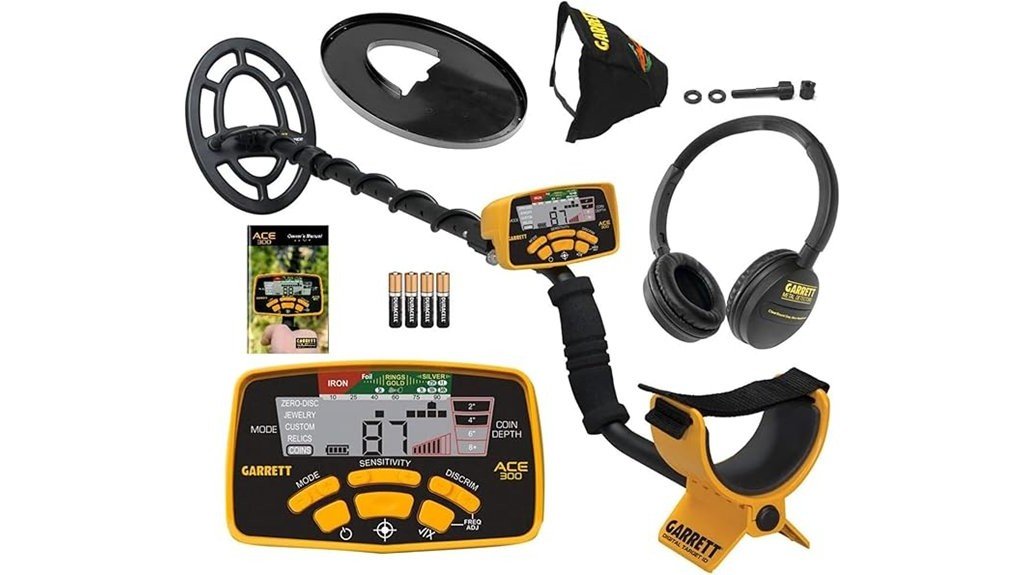
If you’re an adult just getting into treasure hunting, the Garrett ACE 300 is a reliable starter machine that puts useful pro-level features within easy reach, like its crisp numeric Target ID so you can tell a coin from a soda tab before you dig. You’ll find the numeric 0–99 Target ID and improved iron resolution help you focus on coins and jewelry, and the adjustable frequency cuts interference when beaches or parks are busy. The waterproof coil and ClearSound headphones make testing easy, and I liked how the pinpoint mode saved time locating items precisely — practical, simple, and built to last.
Best For: Adults new to treasure hunting who want a reliable, easy-to-use metal detector with pro-level features like numeric Target ID and pinpointing.
Pros:
- Numeric 0–99 Target ID and improved iron resolution help distinguish coins and jewelry from trash.
- Waterproof coil and included ClearSound headphones make field testing and beach hunting convenient.
- Electronic pinpointing and adjustable frequency simplify accurate locating and reduce interference in crowded areas.
Cons:
- Designed for adults; may be less comfortable or adjustable for younger users.
- Not fully waterproof (coil is waterproof but control housing is not), limiting extended underwater use.
- Lacks some advanced features found on higher-end Garrett models (e.g., multi-frequency operation).
DR.ÖTEK Metal Detector for Adults (MTXR-Red)
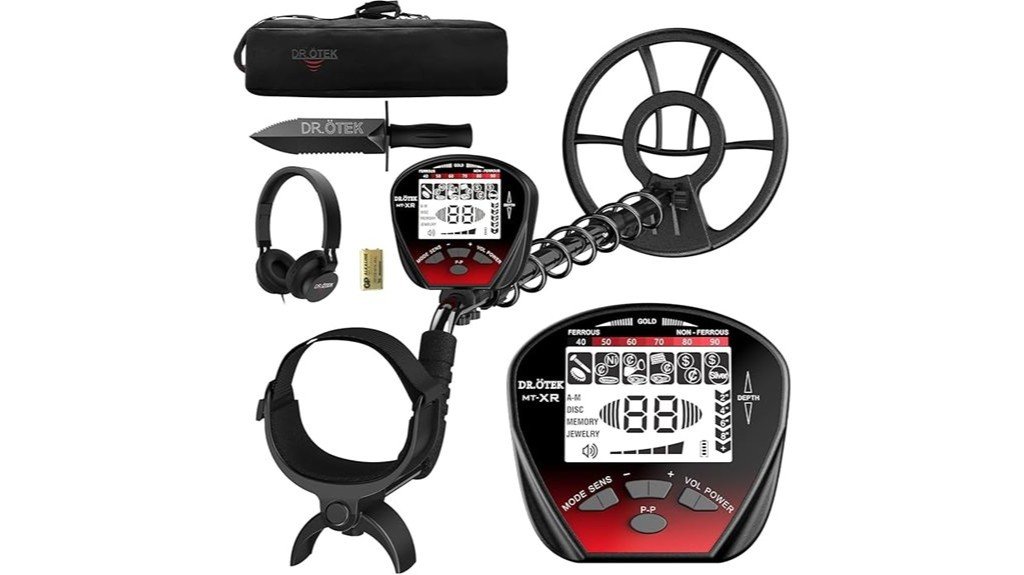
Think of the DR.ÖTEK MTXR-Red as your first reliable treasure-hunting partner: it’s built for adults who want a balance of easy learning and real performance, especially if you’re heading to the beach or a river where wet conditions matter. You’ll like the five advanced modes—All Metal, DISC, Memory, Jewelry, Pinpoint—that help you separate coins from junk, and the new DSP chip boosts accuracy and speed noticeably. The 10” IP68 waterproof coil lets you hunt shallow water, the big backlit LCD keeps info clear, and the lightweight, adjustable setup fits long days. It’s a solid starter kit with good reviews.
Best For: adults and beginner hobbyists who want an easy-to-use, beach- and shallow-water-capable metal detector for casual treasure hunting and family outings.
Pros:
- New-generation DSP chip and five modes (All Metal, DISC, Memory, Jewelry, Pinpoint) deliver improved accuracy, sensitivity, and faster response.
- 10” IP68 waterproof search coil, large backlit LCD, and lightweight adjustable design make it comfortable and effective for beach/river hunting.
- Comes as a complete kit (bag, shovel, headphones, 9V battery), simple assembly, and strong user ratings for ease of use and results.
Cons:
- Control box is not waterproof and sensitivity must be lowered in seawater to avoid interference.
- Discrimination can struggle in areas with high metal content, causing false signals.
- Plastic frame may be less durable in cold conditions, and serious treasure hunters may prefer more advanced models.
Nokta Findx Pro Metal Detector Complete Kit for Adults
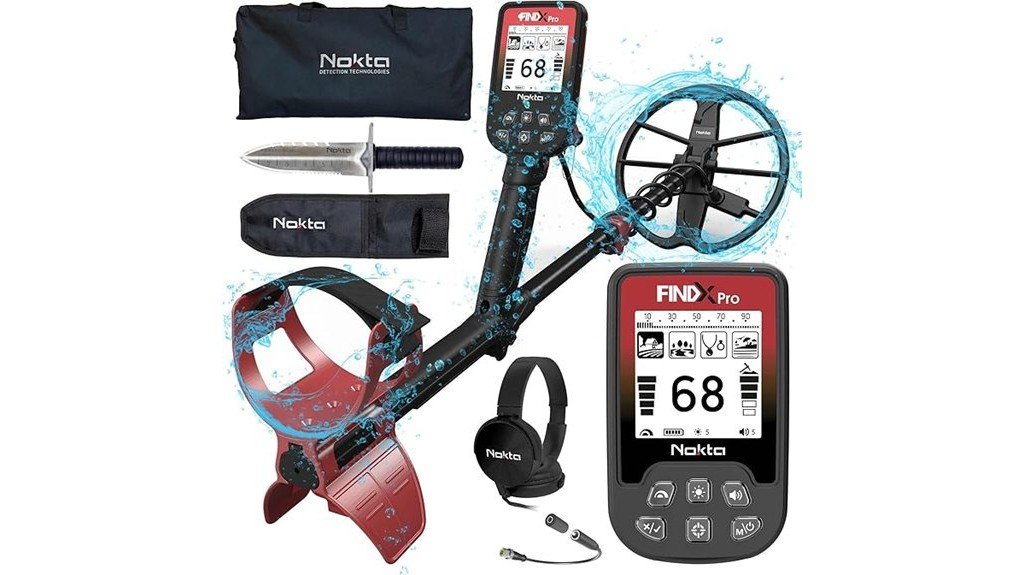
You’ll appreciate the Nokta Findx Pro if you’re a beginner who wants a serious, ready-to-go detector that won’t weigh you down, because its lightweight, USB-rechargeable design and 11-inch coil make it easy to carry and effective at finding coins, jewelry, and small gold both on land and in shallow water. You’ll get a backlit LCD, four useful modes—Field, Park, Jewelry, Beach—and a complete kit with headphones, bag, and a premium digger, so you can start fast. It’s IP68 waterproof, runs about 12 hours, and users praise its value, though headphones and single-frequency limits are worth noting.
Best For: beginners and casual hobbyists who want a lightweight, waterproof, USB-rechargeable metal detector kit that’s ready to use for coins, jewelry, and shallow-water finds.
Pros:
- Lightweight, USB-rechargeable design with ~12-hour battery life and an 11″ coil for good coverage.
- IP68 waterproof build and four detection modes (Field, Park, Jewelry, Beach) suitable for land and shallow water use.
- Complete kit includes backlit LCD, headphones, carrying bag, and premium digger — great value for beginners.
Cons:
- Included headphones are low quality (thin wires, poor fit).
- Single-frequency operation can limit performance in some soil or black-sand beach conditions.
- Some learning curve for users upgrading from higher-end, multi-frequency detectors.
Nokta Simplex Lite Metal Detector with 9.5” Waterproof DD Search Coil
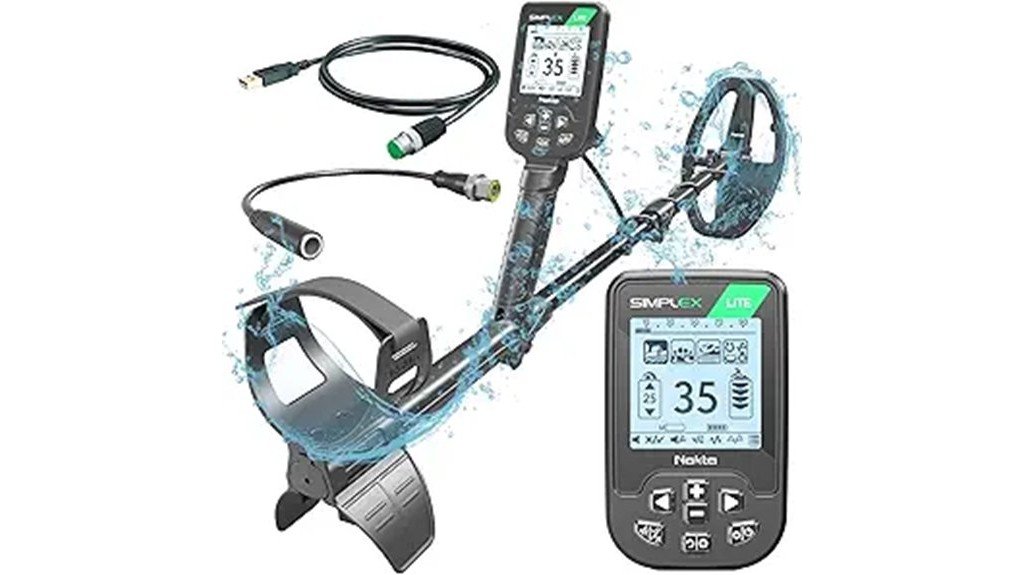
For beginners who want a no-fuss start in metal detecting, the Nokta Simplex Lite stands out as a dependable all-rounder, especially because its 9.5” waterproof DD search coil and IP65 rating let you confidently hunt on beaches and in shallow water without worrying about short circuits. You’ll appreciate its lightweight 2.6-pound frame, adjustable shaft, and bright display that now works better at night, plus a 12-hour rechargeable battery. Modes like beach and underwater simplify settings, and pinpointing makes finds obvious. Some users pad the arm cup for comfort, but overall it delivers solid value and real results.
Best For: Beginners and beach/coastal hobbyists who want an easy-to-use, waterproof metal detector with good battery life and solid value.
Pros:
- Lightweight (2.6 lb) with an adjustable shaft and 9.5” waterproof DD coil, ideal for beach and shallow-water hunting.
- Long 12-hour rechargeable battery and bright display improved for night use.
- Simple modes (beach, underwater, all-metal) and pinpoint feature make it beginner-friendly.
Cons:
- Some users report arm cup discomfort during extended use (may need extra padding).
- Packaging and cosmetic scratching issues reported on delivery.
- Occasional firmware update difficulties and limited depth (typical finds up to ~8 inches).
Factors to Consider When Choosing Beginner Metal Detectors
When you’re choosing a beginner metal detector, you’ll want to think about how deep it can find things and how accurately it tells you what those things are, because that affects whether you’ll keep hunting or get frustrated. Consider features like discrimination and iron rejection to avoid digging up junk, pick the right coil size and type for the ground you’ll search, and check waterproofing and overall durability so your detector can handle puddles or a sandy beach trip. I’ve learned from muddy afternoons and salty shorelines that a machine built to match your places and patience makes the hobby far more fun.
Detection Depth Capability
One of the first things you’ll want to understand about metal detectors is how deep they can actually sense targets, because that directly affects what kinds of finds you’ll have a shot at digging up; many beginner models reliably pick up coins and small relics down to about 10 inches, while larger coils and better soil conditions can push that range further. You’ll find coil size matters a lot: bigger coils generally reach deeper but can miss small junk close to the surface, while smaller coils give finer detail. Soil type and mineralization also change performance, so wet sand or highly mineralized ground might reduce depth. Most entry-level detectors include a depth readout, which helped me avoid needless holes on my first outings. Think about where you’ll hunt when choosing.
Target Identification Accuracy
Depth tells you how deep a detector can sense, but knowing what’s under the coil matters just as much — otherwise you’ll be digging a lot of iron and disappointment. You want a machine that gives clear digital target ID, a numeric readout that hints at conductivity so you can judge whether that beep means a coin or a nail. Better iron resolution separates trash from treasure, so you spend less time frustrated and more time finding keepsakes. Pinpointing tools are lifesavers, letting you zero in on an object without widening the hole like a raccoon. Some models offer multiple modes and adjustable frequencies to cope with noisy sites and nearby detectors, which sharpens ID accuracy. I’ve learned these features make your hunts smarter and more fun.
Discrimination & Iron Rejection
A good discrimination system can make your detecting trips feel less like a treasure hunt and more like smart work, letting you skip the bottle caps and focus on coins, jewelry, or relics that actually matter. Discrimination lets your detector tell valuable metals from trash, and iron rejection boosts that by filtering stubborn iron signals common in parks or old lots, so you spend less time digging junk. Many beginner models show numeric target IDs, helping you decide whether to dig or move on, and adjustable discrimination settings mean you can fine-tune searches for beaches, fields, or coin-hunting areas. Better discrimination cuts false signals and keeps detecting fun; I’ve learned that dialing settings thoughtfully saves time and finds more keepers.
Coil Size & Type
Pick the coil size and type carefully, because that choice will shape where you can hunt and what you’ll actually find—I’ve learned that the right coil turns a frustrating day of digging bottle caps into a steady stream of real targets. Choose a larger coil when you want more depth and faster coverage across open fields, since big coils reach deeper and sweep more ground per pass. Go smaller, around 5–8 inches, when you’re working trashy parks or tight spaces because they’re more sensitive and help separate good targets from junk. Consider coil shape and type too: DD coils handle mineralized soil and give better ground coverage, while elliptical coils fit into narrow spots. Match coil size and type to your typical hunting spots.
Waterproofing & Durability
You’ve already seen how the right coil can make the difference between finding coins and digging up bottle caps, but if you’re planning to hunt at beaches, streams, or on rainy days, waterproofing and durability matter just as much as coil choice; I learned this the hard way after ruining a promising weekend by dunking a non-waterproof detector in a shallow creek. Look for IP ratings like IP68 if you expect full submersion, and remember a waterproof search coil lets you sweep shallow water and wet sand without panic. Durability matters too: sturdy plastics, sealed seams, and solid shafts resist bumps and weather. Lightweight is nice for long hunts, but balance it with robust build quality, and check user reviews to see how models hold up over time.
Battery Life & Power
Since long hunts can wear you out faster than a stiff backpack, battery life and power should be high on your checklist when picking a beginner metal detector; I learned this the hard way when a promising six‑hour beach search turned into a half‑hour scramble to find a charger. You’ll want a detector with reliable run time—many rechargeables manage around 12 hours—so a full day of detecting isn’t ruined by a dead pack. Lithium polymer batteries often last longer than AA setups, but check availability and replacement ease, since uncommon cells can be a real nuisance. Remember that battery type affects weight and balance and that cold, wet, or rough terrain can shorten performance, so choose a power system that fits how and where you’ll hunt.
Comfort & Adjustability
Although a shiny coil and fancy settings might catch your eye, comfort and adjustability are what keep you out in the field longer and enjoying the hunt, not aching at the end of the day. You’ll notice fatigue fast if a detector doesn’t fit, especially when you’re new and enthusiastic to cover ground, so pick one under about 3 pounds to reduce arm and back strain. Look for adjustable shafts so you can set length for your height and stand with better posture, and test ergonomic grips and armrests — they make long sessions feel easier. Padded arm cups are a small luxury that really helps on multi-hour hunts. I learned this after a sore-armed afternoon; comfort matters more than you think.
FAQ
Can I Use These Detectors on Private Property Without Permission?
1. Can I use a detector on private property?
No, you cannot use a detector on private property without the owner’s permission.
2. What should I do before using a detector on someone’s property?
You must obtain explicit consent from the property owner and respect their wishes.
3. Is verbal permission enough to use a detector?
While verbal permission is a start, it is advisable to secure written permission to avoid any misunderstandings.
4. What are the potential legal issues of using a detector without permission?
Using a detector without permission can lead to trespassing charges or other legal issues, depending on local laws.
5. Are there any local laws I should be aware of regarding detector use?
Yes, laws can vary by location, so it’s essential to familiarize yourself with local regulations regarding detector use on private property.
6. What if the property owner is not available to ask?
If the owner is unavailable, it is best to wait until you can get permission rather than assuming you can use the property.
7. Can I use a detector at historical sites or parks?
Historical sites and parks often have specific regulations, so check with local authorities for rules regarding detector use in those areas.
8. What happens if I detect something valuable on private property without permission?
Anything found on private property without permission typically belongs to the property owner, and you may face legal consequences for taking it.
9. How can I find the property owner to ask for permission?
You can often find property owners through local government records, real estate listings, or by simply asking neighbors.
10. What is considered ‘trespassing’ in relation to detector use?
Trespassing occurs when you enter private property without permission, which includes using a detector without the owner’s consent.
Do Metal Detectors Interfere With Pacemakers?
1. Do metal detectors interfere with pacemakers?
Most metal detectors are safe and won’t interfere with pacemakers, but it’s essential to be cautious.
2. What should I do if I have a pacemaker and need to use a metal detector?
Avoid close and prolonged exposure to metal detectors, and consult your cardiologist for personalized advice.
3. Are there specific types of metal detectors that are safer for pacemaker users?
While most standard metal detectors are considered safe, it’s best to check with your healthcare provider regarding specific models.
4. What guidelines should I follow to minimize risks when using metal detectors?
Follow the user manual of your metal detector and adhere to the pacemaker manufacturer’s guidelines for safety.
5. Can I pass through security metal detectors at airports with a pacemaker?
Generally, walk-through metal detectors are safe, but inform security personnel about your pacemaker to ensure they use alternative screening methods if necessary.
6. What should I do if I experience symptoms while near a metal detector?
If you notice any unusual symptoms, such as dizziness or palpitations, move away from the metal detector immediately and consult your doctor.
7. Are handheld metal detectors safe for pacemaker patients?
Handheld metal detectors are usually safe, but it’s advisable to limit time spent close to them and discuss with your healthcare provider.
8. What precautions can I take before using a metal detector?
Before using a metal detector, consult your cardiologist and review the guidelines provided by your pacemaker manufacturer.
9. Is there any specific distance I should maintain from metal detectors?
While no specific distance is universally recommended, keeping a reasonable distance and avoiding prolonged exposure is prudent.
10. Can I still use metal detectors for hobbies like treasure hunting?
Yes, you can engage in hobbies like treasure hunting with metal detectors, but take necessary precautions to ensure your safety.
What Batteries Are Safest for Beach Detecting?
1. What type of batteries are best for beach detecting?
Lithium AA batteries and rechargeable NiMH AAs are the best choices for beach detecting. They are stable, lightweight, and perform well in various environmental conditions.
2. Why are lithium AA batteries preferred for beach use?
Lithium AA batteries are preferred because they handle temperature changes and resist corrosion effectively. This makes them ideal for sandy and salty environments.
3. Are rechargeable batteries suitable for beach detecting?
Yes, rechargeable NiMH AAs are suitable for beach detecting. They provide consistent power and are eco-friendly since they can be reused multiple times.
4. What problems can occur with alkaline batteries at the beach?
Alkaline batteries can leak when exposed to saltwater and high temperatures, potentially damaging your equipment. They are also heavier and less efficient for outdoor use.
5. How can I protect my batteries from corrosion at the beach?
To protect your batteries from corrosion, store them in sealed cases and ensure the contacts are rinsed after exposure to saltwater. This helps to prevent damage and prolongs battery life.
6. Should I worry about battery weight when beach detecting?
Yes, battery weight can impact the overall portability of your detecting equipment. Lightweight options like lithium AA or NiMH AAs are recommended for easier handling.
7. How do temperature changes affect battery performance at the beach?
Extreme temperature changes can reduce battery efficiency and lifespan. Lithium AA batteries are designed to perform well in a wide range of temperatures, making them more reliable for beach conditions.
8. What maintenance is required for batteries used in beach detecting?
Regularly check the battery contacts for corrosion and clean them if necessary. After a day at the beach, rinse the batteries with fresh water and dry them thoroughly.
9. Can I use regular household batteries for beach detecting?
It’s not advisable to use regular household alkaline batteries for beach detecting due to the risk of leakage and reduced performance in harsh conditions. Stick to lithium or rechargeable options.
10. How should I store batteries when not in use for beach detecting?
Store your batteries in a cool, dry place and in a sealed case to prevent moisture exposure. Keeping them away from direct sunlight and extreme temperatures will help maintain their longevity.
Can I Connect Headphones or Bluetooth to These Models?
1. Can I connect headphones to these models?
Yes, many models come with dedicated headphone jacks for easy connection.
2. Do any models support Bluetooth headphones?
Yes, several models feature built-in Bluetooth functionality for wireless headphone connectivity.
3. How can I avoid corrosion when using headphones?
To prevent beach corrosion, use waterproof wired headphones or sealed wireless options.
4. What should I check before connecting headphones?
Review the specifications of each detector to confirm compatibility with headphones or Bluetooth devices.
5. Are all models compatible with Bluetooth devices?
No, not all models support Bluetooth; check the individual specs to find out.
6. Can I use both wired and wireless headphones?
Yes, depending on the model, you can use either wired or wireless headphones as long as they are compatible.
7. Is there a specific type of headphone recommended for beach use?
Waterproof wired headphones or sealed wireless options are recommended for beach use to prevent corrosion.
8. Do I need any special adapters for headphone connection?
Some models may require specific adapters, so it’s essential to check the specifications for any necessary accessories.
9. What types of headphones are best for outdoor use?
Headphones designed for outdoor use, especially those that are waterproof or sweat-resistant, are ideal.
10. Are there any performance differences between wired and wireless headphones?
Yes, wired headphones typically offer better sound quality and lower latency, while wireless headphones provide convenience and mobility.
Are Detector Warranties Transferable to Secondhand Buyers?
FAQs on Detector Warranties and Their Transferability
1. Are most detector warranties transferable to secondhand buyers?
Generally, no. Most warranties are not transferable.
2. Are there any manufacturers that allow warranty transfers?
Yes, some manufacturers permit transfers if you register the sale or provide proof of purchase.
3. What should I do to improve the chances of transferring a warranty?
Keep the original paperwork and check the specific brand’s policy regarding warranty transfers.
4. Is there a standard process for transferring a warranty?
The process varies by manufacturer, so it’s essential to refer to their specific guidelines.
5. What type of proof is usually needed for a warranty transfer?
Typically, a receipt or proof of purchase is required to validate the transfer.
6. Can I transfer a warranty if I don’t have the original paperwork?
Without original paperwork, transferring a warranty may be challenging, so it’s best to keep all documentation.
7. Where can I find the warranty policy for my detector?
The warranty policy can usually be found in the product manual or on the manufacturer’s website.
8. Are warranties valid for the original buyer only?
Most warranties are designed for the original buyer, limiting coverage for subsequent owners.
9. What happens if a warranty is not transferable?
If a warranty is not transferable, the secondhand buyer will not be able to claim any benefits under that warranty.
10. Is there a benefit to registering a warranty immediately after purchase?
Yes, registering the warranty promptly can sometimes facilitate easier transferability to future owners.
Final Thoughts
You’re all set to embark on your treasure-hunting adventure with confidence. These four detectors offer simple controls, solid performance, and cater to various budgets and terrains, allowing you to choose one that aligns with your goals and comfort. I still remember my very first find with a basic model—a rusty button buried in the dirt. It may have seemed insignificant, but to me, it felt like uncovering a hidden gem. That little victory sparked a thrill that I still chase today. As you learn the ropes and head out regularly, you’ll experience those exhilarating moments too. So, stay curious, embrace the process, and remember: patience is key. Each outing brings new discoveries, and the joy is truly in the hunt.