
If you’re serious about finding lost treasure, you’ll want a detector that’s accurate, deep, and built to last, and I’ll walk you through four top-tier models that pros reach for; I’ve tested similar gear myself and learned that coil size, multi-frequency tech, and ground balance make a night-and-day difference, so whether you hunt relics on beaches or coins in fields, knowing what to prioritize will save you hours and missed finds — let’s start with the gear that delivers real results.
Minelab X-Terra Elite Expedition Metal Detector with Coils, Headphones, Charging Cable & PRO-FIND 40 Pinpointer
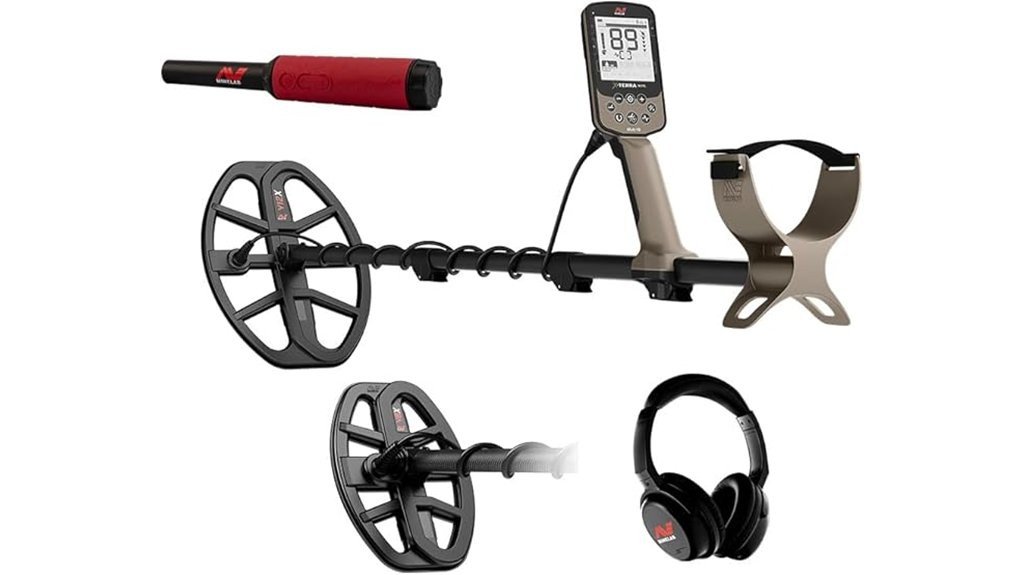
If you’re a serious treasure hunter who wants a detector that performs just as well on a rocky shoreline as it does in shallow water, the MINELAB X-Terra Elite Expedition is built for you — think of it as the go-anywhere tool for finds big and small. You’ll appreciate its Multi-IQ multi-frequency tech, which hunts different signals at once, and the 119 Target IDs that help you tell trash from treasure. It’s waterproof to 16 feet, light at 1.3 kg, and comes with two coils, headphones, charger, and a PRO-FIND 40 pinpointer, so you’ll be ready for serious digs.
Best For: Serious treasure hunters and beach/underwater enthusiasts who need a lightweight, waterproof, multi-frequency detector for varied terrain and saltwater conditions.
Pros:
- Multi-IQ multi-frequency technology and 119 Target IDs improve accuracy and recovery rates across mixed soils and saltwater.
- Fully waterproof to 16 ft (5 m) with included V8X/V12X coils, headphones, charger, and PRO-FIND 40 pinpointer—ready for beach and shallow-water hunting.
- Lightweight (1.3 kg) and well-reviewed (4.9/5 from 55 reviews) for comfortable, reliable all-terrain use.
Cons:
- Advanced features and ground-balancing may require a learning curve for beginners.
- Premium feature set and accessories may come at a higher price than basic entry-level detectors.
- Warranty handled through manufacturer—service/turnaround times can vary depending on location.
Nokta The Legend Waterproof Metal Detector for Adults (The Legend + Accupoint, 12″ Coil)
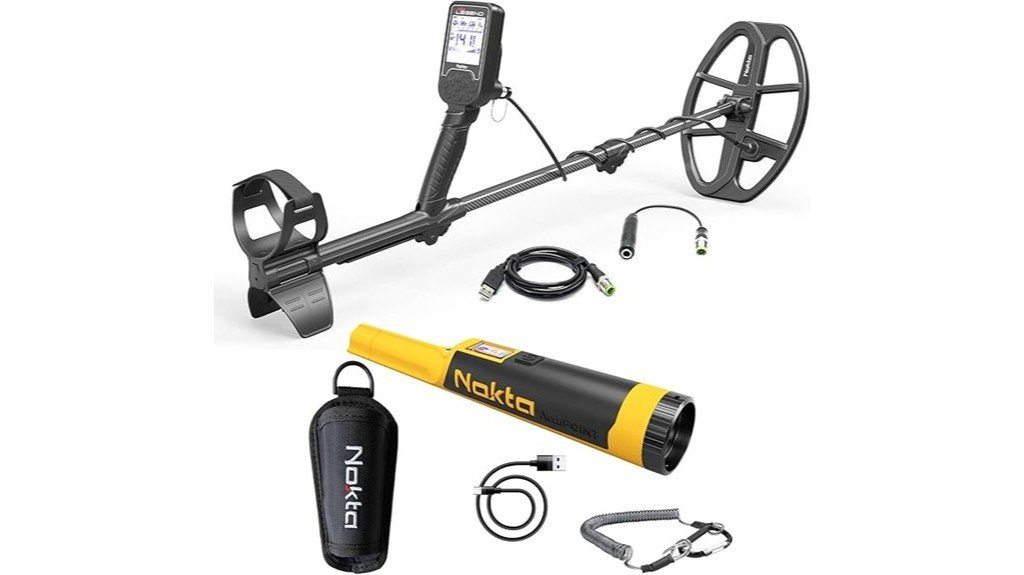
For treasure hunters who want a single detector that handles both beach dives and mineralized gold fields, the Nokta The Legend makes a strong case: it blends Nokta’s first simultaneous multi-frequency technology with true waterproofing to 10 feet, so you’ll pick up everything from tiny gold nuggets in rocky soil to relics under shallow water without swapping gear. You’ll appreciate the 12″ DD coil, 3-pound lightweight build, and up to 20 hours of USB-rechargeable runtime, plus the included Accupoint pinpointer. Users praise its ease and versatility, though a few report quality-control quirks like dust behind the screen.
Best For: Treasure hunters and hobbyists who want a single, lightweight detector that performs well on beaches, in shallow water, and in mineralized gold fields.
Pros:
- Waterproof to 10 ft (IP68) for beach and shallow dive use, with a USB-rechargeable battery lasting up to ~20 hours.
- Simultaneous multi-frequency technology and 12″ DD coil provide strong performance on small gold and varied targets in difficult ground.
- Includes Accupoint pinpointer and is lightweight (~3 lbs), making it user-friendly for extended detecting sessions.
Cons:
- Some users report quality-control issues (e.g., dust behind the screen) on a minority of units.
- More advanced multi-frequency features may have a learning curve for complete beginners.
- Relatively large 12″ coil can be less maneuverable in very tight or heavily trashy areas compared with smaller coils.
Nokta The Legend Metal Detector Pro Package with Multiple Coils and Multi-Frequency Support
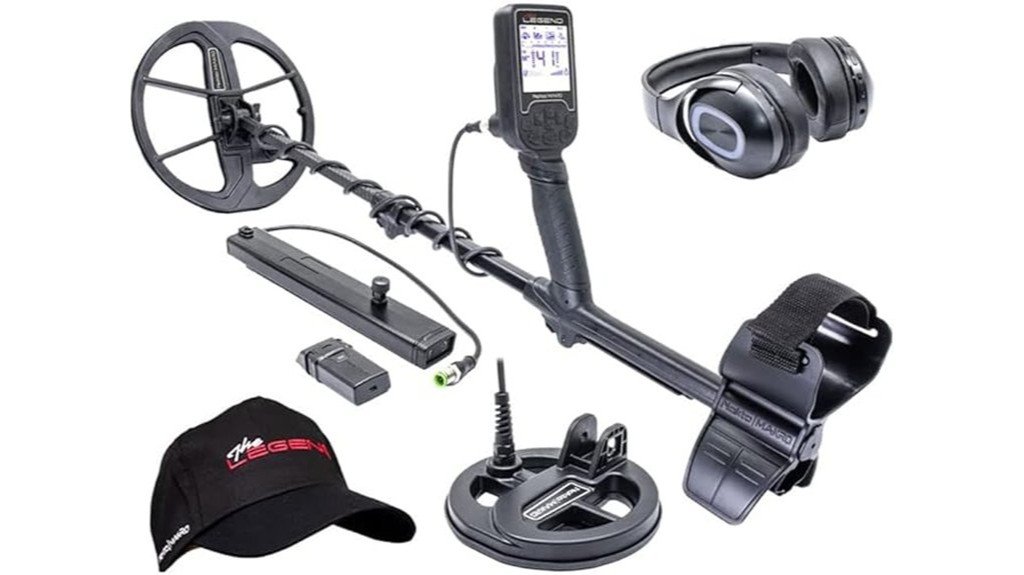
The Nokta The Legend Pro package shines as a smart choice for serious hobbyists and weekend treasure hunters who want a machine that grows with their skills, thanks to its multi-frequency capability and dual-coil setup that handle everything from tiny gold flakes to larger relics. You’ll appreciate the 6″ and 11″ DD coils, multi and single-frequency options up to 40kHz, and IP68 waterproofing that lets you hunt beaches or shallow water without worry. Battery life easily lasts a full day, controls suit beginners and pros, and the Pro bundle’s extra battery and headphones make it a solid investment.
Best For: Serious hobbyists and weekend treasure hunters who want a versatile, upgradeable metal detector capable of finding everything from tiny gold flakes to larger relics in parks, beaches, and shallow water.
Pros:
- Multi-frequency support (including up to 40kHz) and two DD coils (6″ and 11″) for excellent target versatility and coverage.
- IP68 waterproofing and long battery life allow full-day detecting in wet conditions like beaches and shallow water.
- Intuitive controls with modes for beginners and advanced 60-tone discrimination for experienced users; Pro package adds extra battery and quality headphones.
Cons:
- Headphone durability reported as an issue by some users after a few years of use.
- Heavier overall weight (3.32 kg / 7.3 lbs) may be tiring for extended handheld use, especially for shorter users.
- Pro package is pricier than the basic kit, which may deter budget-conscious buyers despite the added accessories.
Minelab Manticore High-Power Multi-IQ+ Waterproof Metal Detector (11″ Double-D Coil Included)
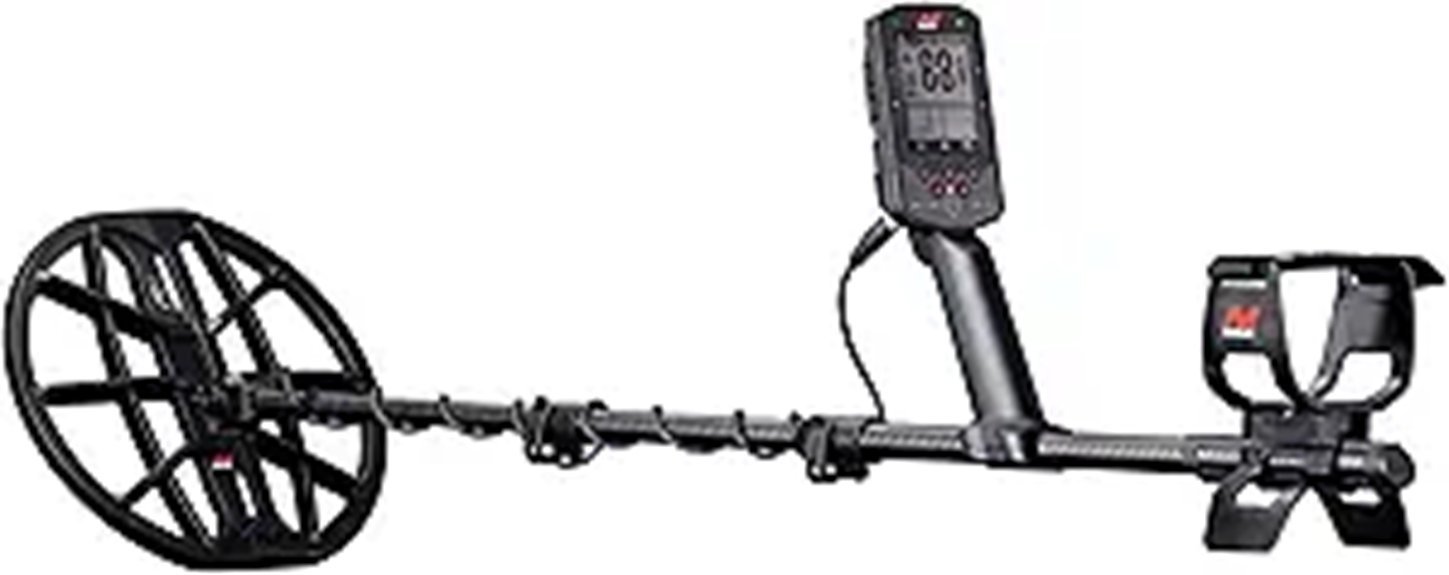
Treasure hunters who want a serious step up in power and precision will love the Minelab Manticore, because its Multi-IQ+ tech delivers 50% more punch than many older machines and helps you pull valuable targets out of noisy ground like a magnet for details. You’ll get an 11″ Double-D coil, a lithium-ion battery, and a lightweight, waterproof body you can carry all day without complaining. The 2D target ID, rich audio controls, and 10 search modes make discrimination simple, while collapsible length and intuitive menus speed learning. Owners say it outperforms the Equinox and feels worth the investment.
Best For: Treasure hunters and serious hobbyists seeking a lightweight, waterproof, high-power multi-frequency detector with advanced discrimination and easy portability.
Pros:
- MultI-IQ+ delivers ~50% more power than older models for better target separation in noisy ground.
- Lightweight, collapsible, and waterproof to 16 ft (IP68) for long, versatile detecting sessions.
- 2D target ID, rich audio options, and 10 search modes make discrimination and learning easy.
Cons:
- Higher-priced investment compared with entry-level detectors.
- 11″ Double-D coil may be less optimal in extremely trashy or tight-target areas (users may want additional coils).
- Advanced features may require time watching tutorials to fully master optimal settings.
Factors to Consider When Choosing High-End Metal Detectors
When you’re choosing a high-end metal detector, think about the detection technology and frequency options it offers, since those determine how well you’ll find different targets and how deep they’ll be. You’ll also want reliable ground balance and accurate target ID so you’re not wasting time on junk, and picking the right coil size and type can boost sensitivity or cover more ground depending on whether you’re hunting coins or relics. I’ve spent weekends comparing coils and settings on sandy beaches and old fields, and those features always made the biggest difference in what I actually dug up.
Detection Technology Type
Although you might think all metal detectors work the same, choosing a high-end unit comes down to the detection technology it uses, and that choice can seriously change what you find and where you can search. You’ll want multi-frequency technology so you can hunt for different metals at once, which boosts your chance of finding coins, jewelry, and relics in the same sweep. Look for advanced target ID numbers—like 119—so you can tell ferrous from non-ferrous items quicker, cutting down on useless digs. Precision Targeting and richer audio cues help you judge depth and size before you start digging, and rugged waterproof builds (IP68 or submersible) let you explore rivers and beaches confidently. Choose customizable, user-friendly controls so you’ll learn fast and adapt to any ground.
Frequency Options Available
Because the frequency your detector uses changes what it can find and how deep it can search, you’ll want to understand the options before you buy: high-end units often let you pick single frequencies, switch between several, or run true multi-frequency modes that listen to low and high bands at the same time, giving you a real advantage across different sites. You’ll choose low frequencies (around 4 kHz) for big, deep targets and higher ones (up to 40 kHz) for tiny gold, and some models give you a fixed mid-range like 12 kHz plus multi-frequency when conditions demand it. Being able to change frequencies helps with salty beaches or mineralized soil, boosting depth and sensitivity, so you’ll tailor settings to parks, fields, or shoreline hunts.
Ground Balance Capability
You’ve seen how changing frequencies helps you chase different targets and handle salty beaches, and the next big setting you’ll want to get comfortable with is ground balance, which keeps mineralized soil from fooling your detector. Ground balance matters because it cancels natural minerals that make machines chatter, so you’ll get deeper hits and fewer false signals. High-end detectors often auto-adjust in real time, which is great when you’re moving across mixed ground, but having manual control lets you fine-tune performance when conditions are tricky — I switched to manual on a heavily mineralized patch and immediately pulled clearer tones. Look for models with presets for beaches and hot soils, and choose one that gives you both reliable auto modes and a responsive manual range.
Target Identification Accuracy
When you’re trying to separate a shiny coin from a rusty bottle cap, target ID accuracy becomes your best friend, because it helps the detector tell you what’s worth digging and what’s trash. You’ll appreciate multi-frequency detection on high-end models, since it reads different metals at once and boosts identification in mixed trashy fields. Look for units with many target ID segments — some offer up to 119 — because finer categories mean fewer surprises and more finds. Audio feedback matters too: multi-tone cues give you instant clues about depth and size, and advanced discrimination lets you filter junk while focusing on valuables. From user reviews to your own tests, accurate ID saves time and makes hunting far more rewarding.
Coil Size and Type
Pick the right coil and you’ll change how your detector behaves almost as much as upgrading its software, since coil size and type control how deep you’ll reach, how much ground you can cover, and how well you’ll tease out a small coin from a patch of rusty junk. Larger coils give you greater depth and cover more ground per sweep, but they can miss tiny targets; smaller coils excel in trashy parks and tight spots, letting you pick out nuggets and coins more reliably. Coil types matter too: concentric coils are simple and precise on flat ground, while double-D coils cut through mineralized soil better and separate targets more cleanly. Swappable coils and multi-coil packages add versatility, and remember weight shifts affect comfort on long hunts.
Waterproofing and Depth
Because water changes everything about a hunt, you’ll want to treat waterproofing and depth ratings as top priorities when choosing a high-end detector, not just nice extras. You should check the waterproof rating — models with IP68 can be submerged to about 10 feet (3 meters) or more, which opens up real underwater treasure hunting. Also look for stated depth capabilities: some detectors work effectively down to roughly 16 feet (5 meters) for beach and deeper water use. Inspect build quality and sealing closely, since good construction keeps electronics safe and extends lifespan. Read the manufacturer’s maximum operating depth carefully, because it varies and determines what underwater targets you’ll reach. Practical waterproof features also improve use on wet beaches and rivers.
Battery Life Expectancy
A single full day in the field can turn into a frustrating slog if your detector dies halfway through, so battery life is a make-or-break feature for high-end models and worth examining closely before you buy. You’ll want units that push toward 20 hours per charge, because long runs let you chase more signals without constant swaps, and Lithium Ion packs deliver that range plus faster charging. Look for detectors with efficient power use—power-saving modes and sensible audio settings stretch runtime—and for USB charging so you can top up from a power bank. I’ve learned to check firmware updates too; manufacturers often squeeze extra life out of batteries with software tweaks. Plan for spare recharge options to keep your hunt uninterrupted.
Audio and Display Controls
When you’re out hunting for coins or relics, crisp audio and a clear display can mean the difference between digging up a soda can and finding a coin from a century ago—so take time to understand how a detector talks to you. You’ll want customizable audio controls so you can change tones and volume to tell small targets from big ones, and advanced models give multiple tone options and richer feedback that hint at depth and size. Look for filters that cut background noise and sharpen signals; I once tracked a faint tone through wind thanks to that feature. On-screen target ID maps, discrimination settings, and intuitive menus let you make fast choices, keeping you efficient and confident while hunting.
FAQ
Do These Detectors Work Well on Heavily Mineralized Ground?
1. Do metal detectors function effectively on heavily mineralized ground?
Yes, metal detectors can work effectively in heavily mineralized ground with the right adjustments.
2. What adjustments are necessary for metal detecting in mineralized areas?
You need to adjust the ground balance, discrimination, and sensitivity settings for optimal performance.
3. Which types of metal detectors are best for mineralized ground?
Pulse induction models or well-tuned VLF (Very Low Frequency) detectors are recommended for mineralized environments.
4. Is ground balance important for detecting in mineralized soil?
Yes, adjusting ground balance is crucial, as it helps to eliminate false signals caused by mineralization.
5. What role does discrimination play in metal detecting on mineralized ground?
Discrimination settings help filter out unwanted signals from minerals, allowing for clearer detection of valuable targets.
6. How does sensitivity impact metal detecting in mineralized areas?
Sensitivity settings can enhance the detector’s ability to pick up smaller or deeper targets, but may require careful balancing to avoid noise from minerals.
7. Do I need experience to detect effectively in mineralized ground?
Yes, practice and patience are essential for achieving consistent results when detecting in challenging conditions.
8. Can I use any metal detector in mineralized ground?
Not all detectors perform well in mineralized soil; specific models designed for such conditions are necessary.
9. How can I improve my metal detecting skills in mineralized areas?
Regular practice, along with learning to adjust settings based on the ground conditions, will enhance your skills.
10. What challenges might I face while detecting in mineralized ground?
The presence of minerals can lead to false signals and noise, making it crucial to fine-tune your detector settings for clarity.
Can Any of These Detectors Be Used Underwater for Diving?
1. Can any metal detectors be used underwater?
Some metal detector models are designed for underwater use, specifically for shallow diving. Always check if the model is rated for underwater use.
2. What features should I look for in a waterproof metal detector?
Look for a fully waterproof coil and control box. Ensure that both components have proper seals to prevent water damage.
3. What is the importance of depth ratings?
Depth ratings indicate how deep you can safely use the detector underwater without risking damage. Always verify these ratings before use.
4. Are there specific models built for diving?
Yes, there are purpose-built submersible detectors specifically designed for diving. These models usually come with enhanced waterproofing and durability features.
5. How can I avoid voiding my warranty when diving?
To avoid voiding your warranty, make sure the detector is rated for underwater use and that all seals are intact. Follow the manufacturer’s guidelines closely.
6. What types of diving are suitable for metal detecting?
Shallow diving is typically the most suitable for metal detecting. Deeper dives may require specialized equipment or detectors.
7. Can I modify a regular detector for underwater use?
It’s not advisable to modify a regular detector for underwater use, as it may not have the necessary waterproofing. Always use a model specifically designed for water.
8. What are the risks of using a non-waterproof detector underwater?
Using a non-waterproof detector underwater can lead to severe damage, which may permanently disable the device. It can also void any existing warranty.
9. How do I maintain my underwater metal detector?
Regularly inspect seals and components for wear and tear. Rinse the detector with fresh water after each use to prevent corrosion from saltwater or minerals.
10. Is there a difference between fresh and saltwater use?
Yes, saltwater is more corrosive than freshwater, so ensure your detector is specifically rated for saltwater use if you plan to dive in oceans. Always check the manufacturer’s recommendations.
Are Replacement Coils and Parts Readily Available Worldwide?
FAQs on Replacement Coils and Parts Availability Worldwide
1. Are replacement coils available for all brands?
Yes, replacement coils are generally available for major brands, ensuring users can find the parts they need.
2. Where can I find authorized dealers for replacement coils?
Authorized dealers can be found through brand websites or local retailers that specialize in those brands.
3. Can I purchase replacement coils online?
Yes, many online stores offer replacement coils, often providing a wider selection than physical retailers.
4. What are aftermarket options for replacement coils?
Aftermarket options refer to third-party manufacturers that produce compatible coils, often at competitive prices.
5. Does the availability of replacement coils vary by region?
Yes, availability can differ significantly based on geographical location and local demand.
6. How do shipping restrictions affect coil availability?
Some regions may have shipping restrictions that limit the delivery of certain parts, impacting availability.
7. Are prices for replacement coils consistent worldwide?
Prices can vary widely depending on the region, the model, and the retailer, so it’s advisable to compare before purchasing.
8. What factors influence the availability of replacement parts?
Factors include brand popularity, local regulations, and the specific model’s market presence.
9. Can I find coils for older models?
Availability for older models may be limited, but some authorized dealers and specialized online stores might still stock them.
10. How can I ensure I’m buying genuine parts?
To ensure authenticity, purchase from authorized dealers or reputable online retailers that guarantee genuine products.
What Is the Average Battery Life During Continuous Use?
FAQ 1: What is the average battery life for premium detectors?
Premium detectors typically have a battery life ranging from 8 to 20 hours of continuous use.
FAQ 2: How does battery type affect the usage time of detectors?
The type of battery used can significantly influence usage time; alkaline batteries generally last longer than rechargeable batteries.
FAQ 3: What is the battery life for rechargeable detectors?
Rechargeable detectors usually provide around 10 to 15 hours of continuous use before needing a recharge.
FAQ 4: Can alkaline batteries last longer than rechargeable ones?
Yes, alkaline batteries can last up to 20 hours during conservative use, making them a viable option for extended sessions.
FAQ 5: How do settings impact battery life on detectors?
Different settings on detectors can affect how long the battery lasts, with more power-intensive settings likely reducing overall battery life.
FAQ 6: What factors influence the battery life of a detector?
Battery life can be influenced by the type of battery, operational settings, and the specific coil used with the detector.
FAQ 7: Is there a way to maximize the battery life of a detector?
To maximize battery life, use conservative settings, and opt for quality alkaline batteries when possible.
FAQ 8: How do I know when to replace or recharge my detector’s battery?
Most detectors will have a battery indicator to alert you when the power is low, signaling the need for replacement or recharging.
FAQ 9: Are there specific brands known for longer battery life?
While battery life can vary by model, premium brands often provide better longevity due to their advanced technology and battery management systems.
FAQ 10: What should I consider when choosing batteries for my detector?
Consider the battery type, expected usage duration, and whether you prefer the convenience of rechargeable or the longevity of alkaline batteries.
Do These Detectors Require Professional Training or Certification to Operate?
1. Do I need professional certification to operate detectors?
No, professional certification is not required to operate detectors.
2. How can I learn to use detectors effectively?
Manufacturers provide manuals and tutorials that can help you learn quickly.
3. Is practice necessary for mastering detector operation?
Yes, practice is essential for becoming proficient with detectors.
4. Can workshops help me improve my skills?
Attending workshops can significantly enhance your skills and knowledge in using detectors.
5. Are there clubs for detector enthusiasts?
Yes, joining clubs can provide additional resources and support for improving your detector skills.
6. Is understanding safety important when using detectors?
Absolutely, understanding safety is crucial for effective and responsible operation.
7. Will I learn about legal considerations when using detectors?
Yes, workshops and clubs often cover the legal aspects of using detectors.
8. How quickly can I expect to learn to operate a detector?
With practice and the right resources, you can learn to operate a detector quickly.
9. What resources are available for beginners?
Beginners can access manuals, tutorials, and community resources like workshops and clubs.
10. Can I operate detectors without prior experience?
Yes, beginners can operate detectors without prior experience, as long as they are willing to learn.
Final Thoughts
You’ve just stepped into the world of treasure hunting, and what better way to kickstart your adventure than with four top-tier metal detectors? Each one is meticulously crafted for deep finds, rugged conditions, and dedicated users like yourself. Imagine yourself out in the field, the sun shining down as you sift through the earth, excitement building with each beep of the detector.
If lightweight comfort and precise pinpointing are what you seek, the nimble X‑Terra Elite is your go-to companion. Picture yourself gliding effortlessly through the park, effortlessly uncovering lost coins that others have missed.
On the other hand, if you crave the thrill of venturing into the water, the Legend is calling your name. Just envision the rush of diving beneath the waves, uncovering treasures hidden from sight, all while enjoying the flexibility of its adjustable frequencies.
And then there’s the Manticore, a powerhouse of multi-frequency technology. Imagine standing atop a hill, the detector humming softly as you unlock secrets buried deep beneath the surface, revealing artifacts that tell stories from long ago.
As you weigh your options, consider the coil sizes, accessories, and how easily you can balance the machine against the ground. Each decision matters. Take a moment to reflect on where you want your adventures to lead you. Once you’ve made your choice, grab your detector, head out into the great outdoors, and immerse yourself in the hunt. With each outing, you’ll find yourself learning and growing more skilled than you ever thought possible. The thrill of discovery is just waiting for you!