
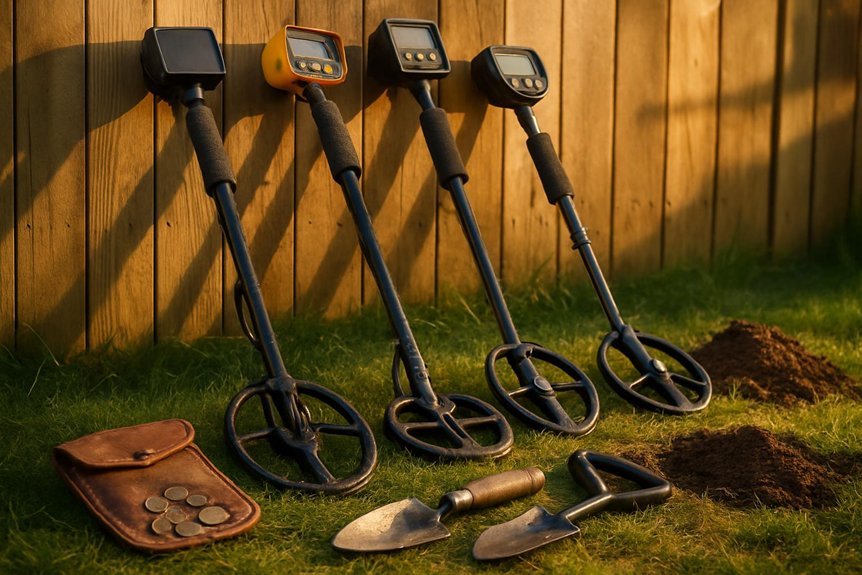
If you’re hunting for coins, lost tools, or family treasures in your yard, the right detector makes the difference between frustration and finds you’ll brag about, and I’ve tested models that cover beginners to seasoned hobbyists. You’ll appreciate the Bounty Hunter’s simplicity, the NOKTA MAKRO’s clever features, Garrett’s solid all-round performance, and Dr. ÖTEK’s advanced modes — each fits different styles and budgets — so keep going to match one to your needs and terrain.
Bounty Hunter TK4 Tracker IV Metal Detector
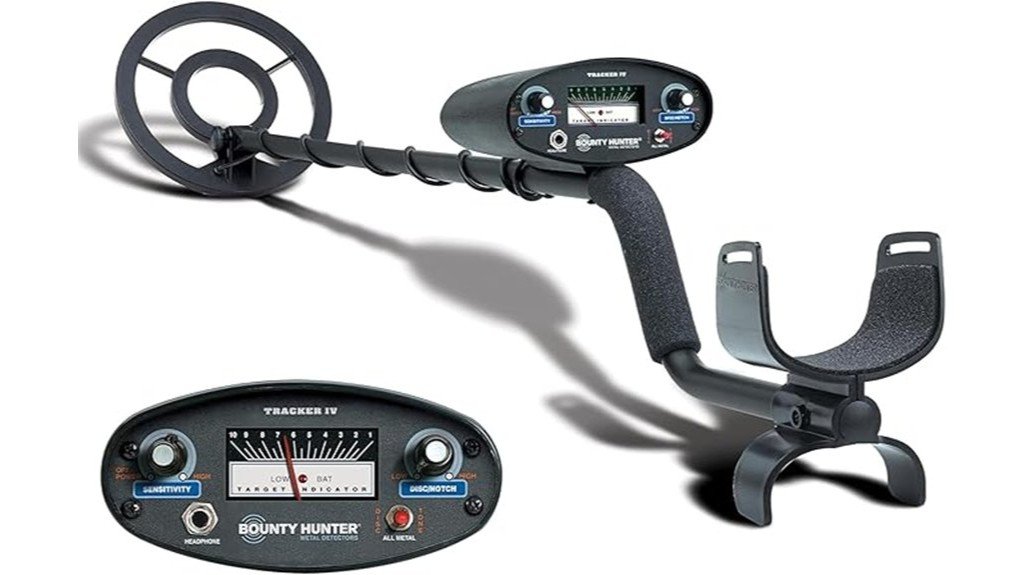
If you’re looking for a reliable starter detector that won’t overwhelm you with bells and whistles, the Bounty Hunter TK4 Tracker IV is a solid pick because it pairs simple, intuitive controls with real detecting power—three modes (all-metal, tone, discrimination) let you zero in on coins, jewelry, or relics while filtering out trash, and the lightweight design makes it easy to carry on long walks in the yard or park. You’ll appreciate the waterproof 8-inch coil for shallow water searches, adjustable sensitivity for tricky soil, and analog simplicity that gets kids involved fast, making finds feel like small victories.
Best For: Beginners and hobbyist treasure hunters (including teens and adults) who want a simple, lightweight, and affordable metal detector for parks, beaches, and shallow-water searches.
Pros:
- Easy-to-use analog controls with three modes (all-metal, tone, discrimination) ideal for newcomers.
- Lightweight and portable with adjustable sensitivity for long detecting sessions and varied soils.
- 8-inch waterproof search coil enables shallow water and beach detecting.
Cons:
- Basic feature set lacks advanced discrimination and digital target ID found on higher-end models.
- Not suited for deep-search or professional-level gold prospecting compared with specialized detectors.
- Battery-powered operation may require frequent replacements during extended use.
NOKTA MAKRO Findx Metal Detector (11000875)
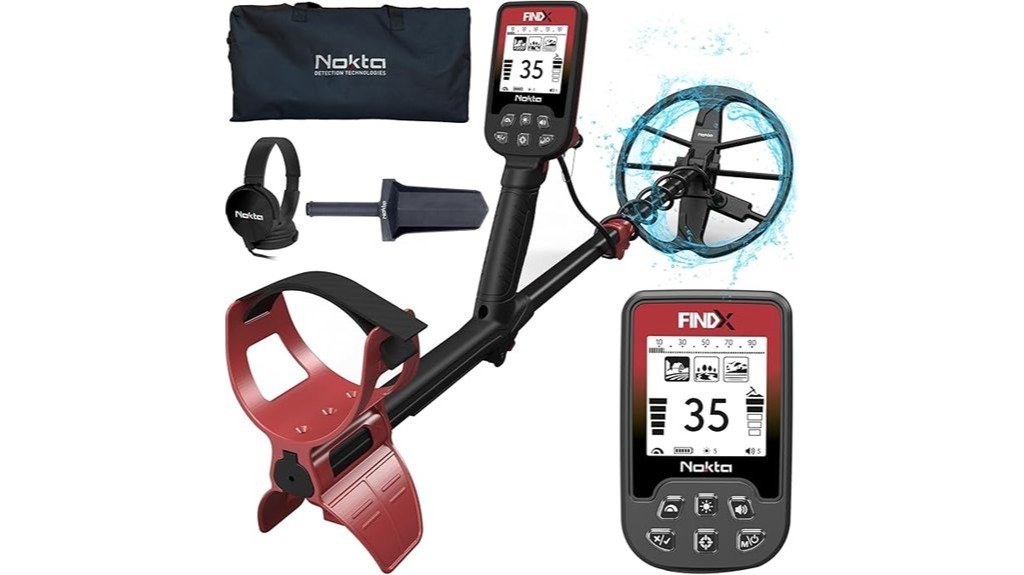
The NOKTA MAKRO Findx (11000875) is a great pick for backyard hunters who want a lightweight, no-nonsense detector that’s easy to learn and gets you finding stuff fast — think of it as the friendly first tool in your treasure-hunting kit. You’ll appreciate its 1.2 kg aluminum build, 27.94 cm coil, and 12-hour lithium battery life, which keep you searching without fuss; IP68 protection means it handles wet grass and puddles too. Beginners praise its quick learning curve and accuracy — I found my first coin within minutes — though audio can hiss sometimes, and some want extra manuals.
Best For: backyard and beginner treasure hunters who want a lightweight, easy-to-use metal detector that delivers quick results without a steep learning curve.
Pros:
- Lightweight (1.2 kg) and easy to assemble, making it comfortable for extended searches.
- 12-hour lithium battery life and IP68 protection for use in wet conditions and long sessions.
- 27.94 cm search coil and simple controls provide reliable performance for beginners.
Cons:
- Speaker audio can produce static or hiss, affecting sound clarity.
- Limited advanced features compared with higher-end models (users sometimes prefer the FindX PRO).
- Some users desire more multilingual documentation or detailed manuals.
Garrett ACE 300 Metal Detector for Adults with Waterproof Coil and Headphones
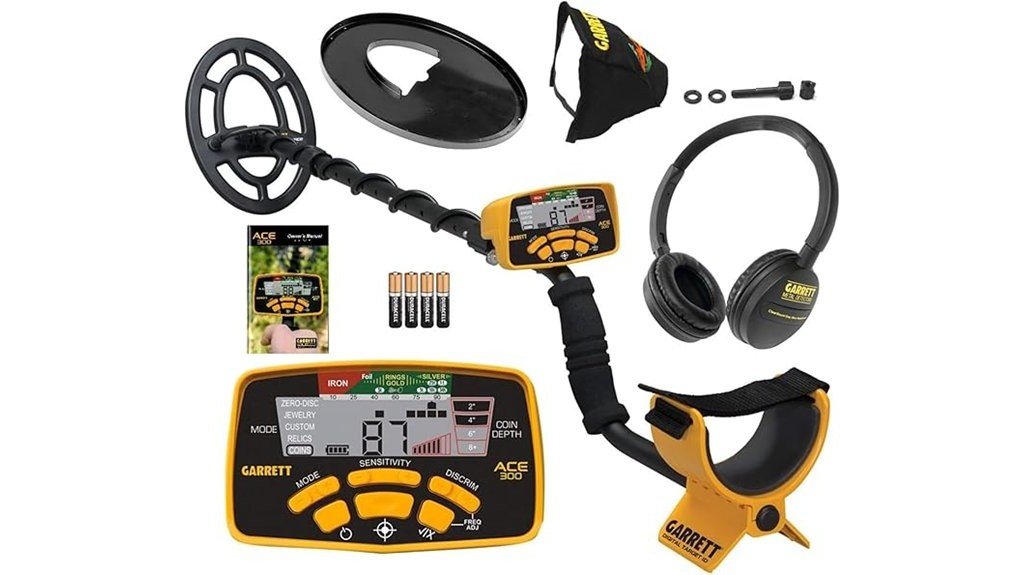
With its numeric Digital Target ID and improved iron resolution, the Garrett ACE 300 is a great pick for adults who want clear, dependable feedback when hunting in a backyard or park, and you’ll appreciate how the waterproof coil and included ClearSound headphones make sessions less fiddly and more focused. You’ll read targets easily on the 0–99 scale, use improved iron discrimination to ignore junk, and switch to electronic pinpointing for precise digs without guessing. The adjustable frequency helps when neighbors’ gear interferes, and the ACE cover-up plus searchcoil protector keep the detector clean — I’ve relied on it for seasons.
Best For: Adults and hobbyist treasure hunters who want a reliable, easy-to-read detector with good discrimination and included accessories for backyard and park detecting.
Pros:
- Numeric 0–99 Digital Target ID and improved iron resolution provide clearer target identification and less digging of junk.
- Waterproof coil with searchcoil cover and ACE Environmental Cover-Up protects the unit and expands use in damp conditions.
- Included ClearSound Easy Stow headphones and electronic pinpointing make sessions more focused and accurate.
Cons:
- Designed for adults—may be less comfortable or adjustable for younger users or those needing a compact size.
- Not fully waterproof (coil is waterproof but control housing may not be), limiting underwater use.
- Lacks some advanced features found on higher-end models (e.g., multi-frequency operation or wireless headphones).
Dr. ÖTEK Metal Detector for Adults (MTXR-Red)
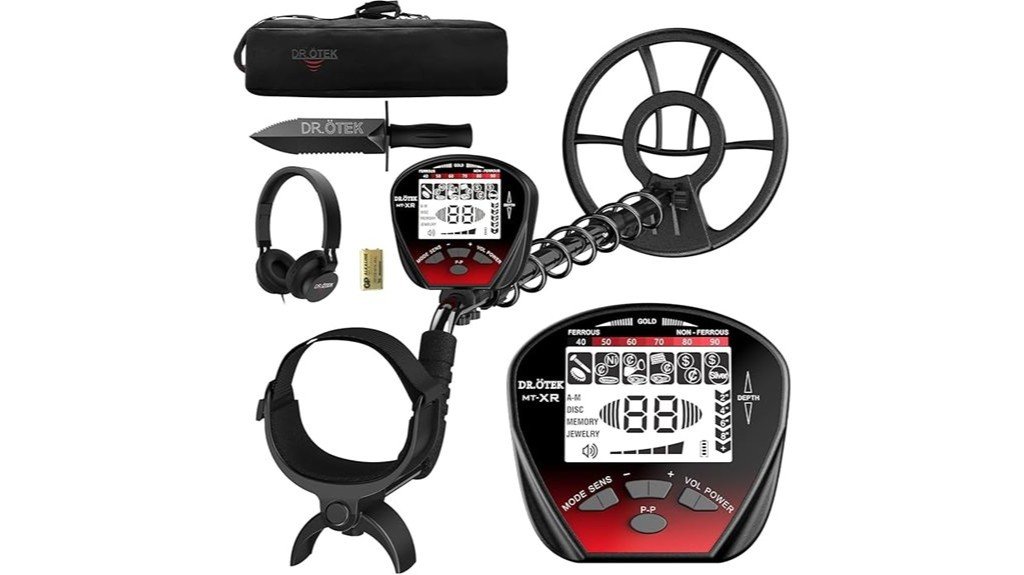
You’ll find the Dr. ÖTEK MTXR-Red is a great pick for beginners and casual hobbyists who want a capable, easy-to-use detector without getting overwhelmed by complex settings. You’ll appreciate five advanced modes—All Metal, DISC, Memory, Jewelry, and Pinpoint—that help you separate coins from trash, and a DSP chip that boosts accuracy and response by about 80%, so you’ll get clearer signals. The 10″ IP68 coil works in shallow water, the backlit screen shows depth and metal type, and the kit includes headphones, shovel, bag, and a 9V battery. It’s light, comfy, and earns solid user praise.
Best For: Beginners, casual hobbyists, and families looking for an easy-to-use, portable metal detector for beach, backyard, and shallow-water treasure hunting.
Pros:
- 5 versatile modes (All Metal, DISC, Memory, Jewelry, Pinpoint) plus a new-generation DSP chip for improved accuracy and faster response.
- 10” IP68 waterproof coil, backlit LCD, adjustable stem, and lightweight design make it comfortable and effective in wet environments.
- All-in-one kit includes headphones, digging shovel, carrying bag, and 9V battery — great value for beginners and as a gift.
Cons:
- Control box is not waterproof, requiring caution and reduced sensitivity in seawater to avoid interference.
- Discrimination can be less reliable in areas with high metal trash, causing false signals.
- Plastic frame may be less durable in very cold conditions; serious hobbyists may prefer a more advanced model.
Factors to Consider When Choosing Metal Detectors for Backyard Hunting
When you’re picking a metal detector for backyard hunting, focus on how deep it can find targets and how accurately it tells you what those targets are, since a shallow or fuzzy read can turn a fun afternoon into frustrating guesswork. Pay attention to discrimination settings and detection modes so you can ignore junk, choose the right coil size and type for lawns versus tight spots, and think about weight and comfort because you’ll be swinging it for a while—I’ve learned that a light, well-balanced unit keeps hunting enjoyable. With those factors in mind, you’ll make smarter choices that save time and help you actually recover the good stuff.
Detection Depth Range
Although depth specs can look simple on paper, they’ll mean different things depending on what you’re hunting and where you hunt, so it’s worth understanding how detection depth really works before you buy a detector. Detection depth usually ranges from about 6 to over 12 inches, but that number depends on target size and metal type, soil makeup, and your detector’s frequency settings. You’ll reliably find coins and small items around 6–8 inches with many beginner-friendly units, while larger relics can show up deeper, especially when you use a bigger coil. I remember digging a rusty buckle that surprised me by showing through mineralized, wet soil—conditions like that can cut depth. Pick a detector with the right coil and frequency for your backyard’s conditions.
Target Identification Accuracy
Good target ID can save you hours of pointless digging and a lot of frustration, so it’s worth paying attention to how a detector tells you what’s under the soil. You’ll want a machine with a clear digital target ID scale, because those numbers show conductivity and help you decide whether to dig, and I’ve learned that trusting the display beats guessing from vague beeps. Accurate ID reduces wasted digs by separating likely treasures from junk, and detectors that keep accuracy at greater depths help you avoid missing coins or jewelry buried deeper. Listen for distinct audio cues too—different tones or steady/static sounds often match different metals—so you can act fast and enjoy more successes in your backyard hunts.
Discrimination & Modes
You’ve already seen how a clear target ID save you from hours of blind digging, and discrimination and mode options are the next tool in that same toolbox — they let you shape what the detector actually listens for so you’ll spend more time finding rings and coins and less time wrestling with bottle caps. You can switch between all-metal, discrimination, and tone modes to suit a yard and your patience level, and advanced units give finer discrimination so coins and jewelry jump out from iron and aluminum. Pinpoint modes help you zero in without tearing up the lawn, and adjustable frequency settings cut interference in trashy or mineralized spots. I once skipped a week of junk finds after tweaking discrimination — game changer.
Coil Size & Type
When you pick a coil, you’re choosing how your detector listens to the ground, and that choice shapes what you’ll find and how fast you’ll cover your yard; larger coils sweep more ground and reach deeper targets but often miss tiny coins, while smaller coils tease out fine details in shallow soil and are great for tight spaces around trees and garden beds. You’ll also choose coil type: concentric coils give sharp pinpointing for isolated targets, while double-D coils cover better and handle mineralized soil more steadily — I once swapped to a double-D near a garden and found more hits with fewer false signals. Higher-frequency coils catch small jewelry, lower frequencies reach deep relics, and waterproof coils let you hunt puddles or creek edges for more possibilities.
Weight & Comfort
After you pick the right coil for the kinds of finds you want, the next big question is how comfortable you’ll be while actually searching the yard, because a detector that’s hard to hold will shorten even the most exciting hunt. Weight matters: lighter models around 1.2 to 2.2 pounds are easier to use for hours, so you won’t feel like you’re carrying a treasure chest. Look for an adjustable stem so you can set the detector to your height, which helps your back and arms. Ergonomic grips and armrests make long sessions pleasant, and a well-balanced, neither front-heavy nor awkwardly tipped machine reduces fatigue. I learned this after a long afternoon when a heavier unit made my arm protest—switching helped immediately.
FAQ
How Do I Clean Coins Recovered With a Metal Detector?
FAQs on Cleaning Coins Recovered with a Metal Detector
1. How should I start cleaning my detector-recovered coins?
Begin by rinsing the coins gently with distilled water to remove loose dirt and debris. This initial step helps prevent scratching during the cleaning process.
2. What should I do if there’s stubborn dirt on the coins?
Soak the coins in soapy water for a few minutes to loosen any stubborn dirt. After soaking, use a soft brush to gently scrub the surface without causing damage.
3. Are there any cleaning products I should avoid?
Yes, avoid harsh chemicals and abrasives that can scratch or damage the coin’s surface. Stick to mild soap and distilled water for safe cleaning.
4. What type of brush is best for cleaning coins?
A soft-bristled brush, such as a toothbrush, is ideal for cleaning coins. It allows you to gently remove dirt without scratching the metal.
5. How do I dry my cleaned coins?
After cleaning, pat the coins dry with a soft, lint-free cloth. Avoid rubbing, as this can create scratches.
6. What should I do to prevent future corrosion?
Store your cleaned coins in acid-free holders or flip cases. This helps protect them from environmental factors that can lead to corrosion.
7. Is it safe to soak coins for an extended period?
It’s best to limit soaking to a short time, usually around 10-15 minutes, to prevent any potential damage. Check the coins frequently during soaking.
8. Can I use tap water for rinsing coins?
It’s recommended to use distilled water rather than tap water, as tap water can contain minerals and chemicals that may harm the coins.
9. How can I tell if a coin has been cleaned properly?
A properly cleaned coin should look visibly clearer without any remaining dirt or grime. However, be cautious not to over-clean, as this can diminish its value.
10. What if I find a rare or valuable coin?
If you suspect a coin may be rare or valuable, consider consulting a professional conservator before cleaning. They can provide guidance on the best preservation methods.
Can Metal Detectors Detect Gold Nuggets in My Backyard?
1. Can I find gold nuggets in my backyard?
Yes, it is possible to find gold nuggets in your backyard, depending on the area’s geology and your metal detector’s capabilities.
2. What type of metal detector is best for finding gold?
A metal detector that operates on high frequency or uses pulse induction technology is best suited for detecting gold nuggets.
3. How important is ground balancing when searching for gold?
Ground balancing is crucial as it helps your metal detector differentiate between valuable targets like gold and unwanted minerals in the soil.
4. What should I learn to improve my chances of finding gold?
Familiarizing yourself with target signals and understanding how your metal detector responds to different materials will enhance your gold-finding skills.
5. How should I search for gold nuggets?
Search slowly and methodically to ensure you don’t miss any targets, as gold nuggets can be small and easily overlooked.
6. What role does patience play in finding gold?
Patience is essential since searching for gold can be time-consuming, and rushing may lead to missed opportunities.
7. Do different coils affect my ability to find gold?
Yes, using the right coil can significantly enhance your detection capabilities; larger coils cover more area, while smaller coils are better for pinpointing targets in cluttered areas.
8. How can practice help me find gold with a metal detector?
Regular practice allows you to become more familiar with your detector’s sounds and responses, improving your ability to recognize true gold signals.
9. Are there specific techniques for backyard searches?
Focus on areas where soil has been disturbed, like around old trees or construction sites, as these may be more likely to yield hidden gold nuggets.
10. Is it necessary to have prior experience to find gold?
While prior experience can help, beginners can still find gold by following basic techniques, learning about their detector, and being persistent.
Are Metal Detecting Clubs Open to Beginners?
FAQs about Metal Detecting Clubs for Beginners
1. Are metal detecting clubs beginner-friendly?
Yes, most clubs actively welcome beginners and provide a supportive environment for learning.
2. What kind of assistance can beginners expect?
Beginners often receive hands-on help from experienced members, making it easier to learn the basics of metal detecting.
3. Is equipment available for beginners?
Many clubs offer loaner gear for newcomers, allowing them to try out the hobby without investing in expensive equipment right away.
4. Do clubs organize group hunts?
Yes, clubs frequently organize group hunts, which provide a fun way for beginners to practice detecting with others and gain experience.
5. Will I receive mentoring as a beginner?
Mentoring is common in metal detecting clubs, with experienced members willing to share tips and techniques to improve your skills.
6. Can I ask questions during meetings?
Absolutely! Clubs encourage questions during meetings, making it a great opportunity to learn from others’ experiences.
7. What are the benefits of attending club meetings?
Attending meetings helps beginners build skills and confidence, while also connecting with fellow enthusiasts who share similar interests.
8. Is there a membership fee for beginners?
Most clubs have a nominal membership fee, but this varies by club. It’s worth checking with your local club for specific details.
9. Are there any age restrictions for joining?
Most metal detecting clubs are open to all ages, though some may have specific guidelines for younger members.
10. How can I find a metal detecting club near me?
A simple online search or checking local community boards can help you locate a metal detecting club in your area.
Do I Need Permission to Detect in Public Parks?
FAQs on Detecting in Public Parks
1. Do I need permission to metal detect in public parks?
Yes, most public parks require you to obtain permission before metal detecting. Always check with local authorities or park management.
2. How can I get permission to detect in a public park?
Contact your local park management or authorities directly. They can provide information on whether permits are needed and the application process.
3. Are there specific rules for metal detecting in parks?
Yes, many parks have specific rules regarding metal detecting. It’s important to follow any posted regulations to avoid issues.
4. What should I do if I find something valuable while detecting?
If you discover valuable items, you may need to report them to the authorities, depending on local laws. Always check the rules regarding found items.
5. Can I detect in protected areas within a public park?
No, detecting in protected or restricted areas is generally prohibited. Always respect these zones to avoid fines or legal issues.
6. What are the consequences of detecting without permission?
Detecting without permission may result in fines or confiscation of your equipment and finds. It’s crucial to obtain written consent to avoid these consequences.
7. Are there parks that allow metal detecting without a permit?
Some parks may allow metal detecting without a permit, but this varies by location. Always verify the specific regulations of each park.
8. What are the best practices for responsible detecting in parks?
Always fill in any holes you dig, avoid damaging park property, and respect the environment. Following these practices helps maintain good relations with park authorities.
9. Is there a specific time when detecting is allowed in parks?
Timing can vary by park; some may have designated hours for detecting. Always check with local management for any time restrictions.
10. What equipment do I need to bring for detecting in parks?
Basic equipment includes a metal detector, digging tools, and a pouch for finds. Ensure your tools comply with park regulations to avoid issues.
11. How can I find out about local metal detecting clubs?
Local metal detecting clubs often have resources and information about permissions and detecting areas. Search online or check community boards for club details.
How Do Weather Conditions Affect Detector Performance?
1. How does wet soil impact detector performance?
Wet, mineralized soil can lead to increased false signals, making it more challenging to identify true targets. This can affect the overall sensitivity of the detector.
2. What effect does dry, compact ground have on detection?
In dry, compact ground, detectors may experience reduced depth capability. This means valuable targets could be missed if the ground conditions are not optimal.
3. How should I adjust my detector during storms?
During storms, it is advisable to reduce the sensitivity of your detector. This adjustment helps minimize false signals caused by turbulent weather conditions.
4. Why is ground balance important in varying weather conditions?
Ground balance is crucial as it helps the detector differentiate between target signals and ground mineralization. Properly adjusting it can enhance detection accuracy, especially in challenging soil conditions.
5. How does saltwater spray affect detector performance?
Saltwater spray can interfere with the detection process, causing false signals or erratic behavior. It is best to avoid areas where saltwater spray is prevalent to ensure optimal performance.
6. What should I do if I encounter mineralized soil?
In mineralized soil, regularly adjust your detector’s ground balance to compensate for the mineral content. This helps reduce the chances of false signals and improves detection clarity.
7. Can weather changes affect the depth at which I can detect targets?
Yes, weather changes can significantly impact detection depth. For example, dry conditions may limit depth, while wet conditions may enhance it but complicate signal clarity.
8. Are there specific weather conditions that are best for detecting?
Generally, mild and dry weather conditions are optimal for detecting. These conditions help maintain soil stability and reduce the effects of mineralization.
9. How often should I adjust my detector settings while detecting?
It’s good practice to frequently assess and adjust your detector settings based on changing ground conditions. Pay attention to soil moisture and mineralization levels as you move.
10. What precautions should I take when detecting in wet weather?
When detecting in wet weather, be cautious of increased false signals and ensure your detector is waterproof or adequately protected from moisture. Regularly check and adjust settings as necessary.
Final Thoughts
When it comes to backyard hunting, you’ve got four solid options that cater to various skill levels and budgets. Imagine standing in your yard, the sun shining down, each beep of the detector hinting at buried treasures waiting to be unearthed. I remember starting with the TK4, a trusty companion that led me to discover a charming pocket watch nestled beneath a patch of daisies. That little find ignited my passion and prompted me to upgrade to a model that offered more discrimination features, allowing me to sift through the clutter of metal more effectively.
As you explore your options, pay attention to the specs—coil size, discrimination, and ground balance are all essential elements to consider. Picture yourself in your backyard, practicing your technique, each swing of the detector becoming more confident as you hone your skills. It’s often the steady technique that yields the best results, even more so than the fanciest features, when you’re on the hunt for real treasures. So, choose the detector that fits your style and what you’re willing to carry, and get ready to uncover the hidden stories your yard holds!