
If you want to hunt gold nuggets in 2025, you’ll want a detector that’s sensitive, reliable, and easy to handle; I’ve tested top models like the Minelab Manticore and several Noktas and found clear winners for different skill levels and ground types. You’ll get pros and cons on power, coils, battery life, and waterproofing, plus tips that actually help you find more targets — so keep going to see which tool fits your style.
Minelab Manticore High-Power Multi-IQ+ Waterproof Metal Detector (11″ Double-D Coil)
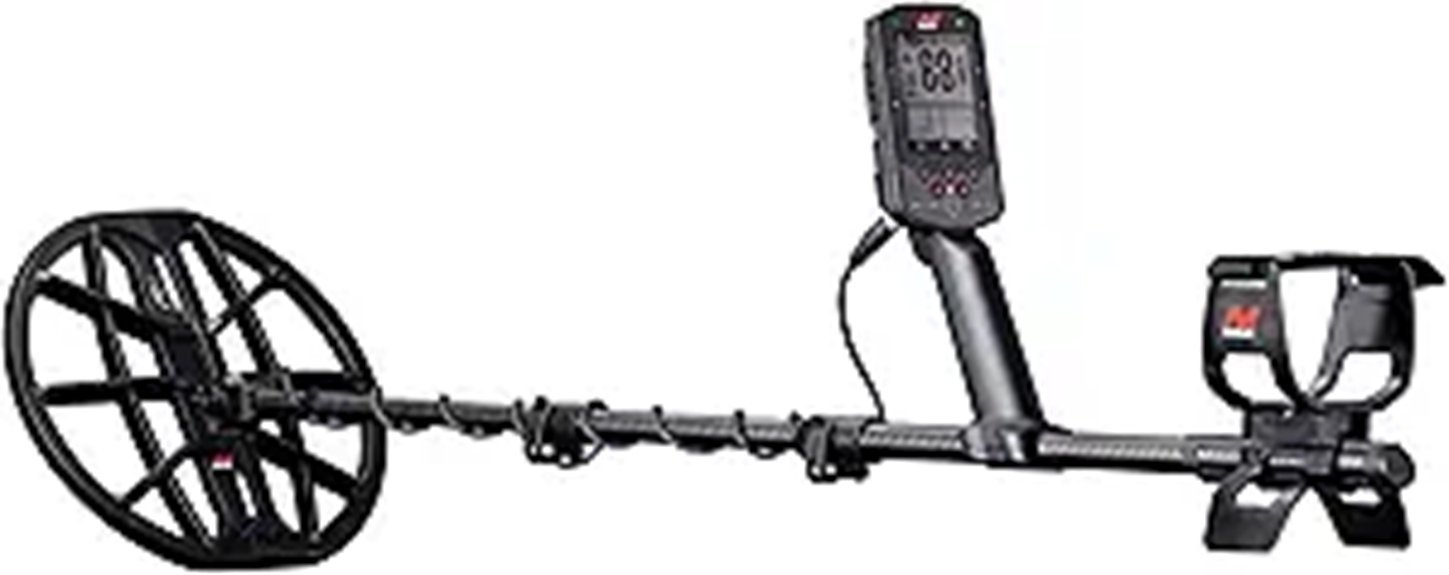
If you’re serious about finding gold and want a detector that feels like a pro tool without being impossible to learn, the Minelab Manticore is a strong pick — especially for hobbyists who want power and portability in one package. You’ll like its Multi-IQ+ tech, which gives 50% more power and runs multiple frequencies at once, so small nuggets don’t hide. It’s light at 2.9 pounds, waterproof to 16 feet, and collapses small for hikes, yet offers rich audio and a 2D target map to help you decide whether to dig. I’ve found it quick to learn and reliably precise.
Best For: Serious hobbyist metal detectorists who want a powerful, portable, and easy-to-learn device for finding small gold and valuable targets across varied terrains.
Pros:
- Multi-IQ+ delivers 50% more power with simultaneous multi-frequency operation for improved small-nugget sensitivity.
- Lightweight (2.9 lbs), collapsible, and waterproof to 16 ft (IP68) for comfortable all-terrain use and portability.
- Advanced target ID with 2D mapping and customizable audio helps discriminate good targets from trash.
Cons:
- Higher price point compared with entry-level detectors, representing a larger upfront investment.
- Some users may need time watching tutorials and adjusting settings to maximize performance.
- 11″ Double-D coil may limit extreme-depth detection compared with larger coils for big deep targets.
Nokta The Legend Waterproof Metal Detector for Adults (12″ Coil)
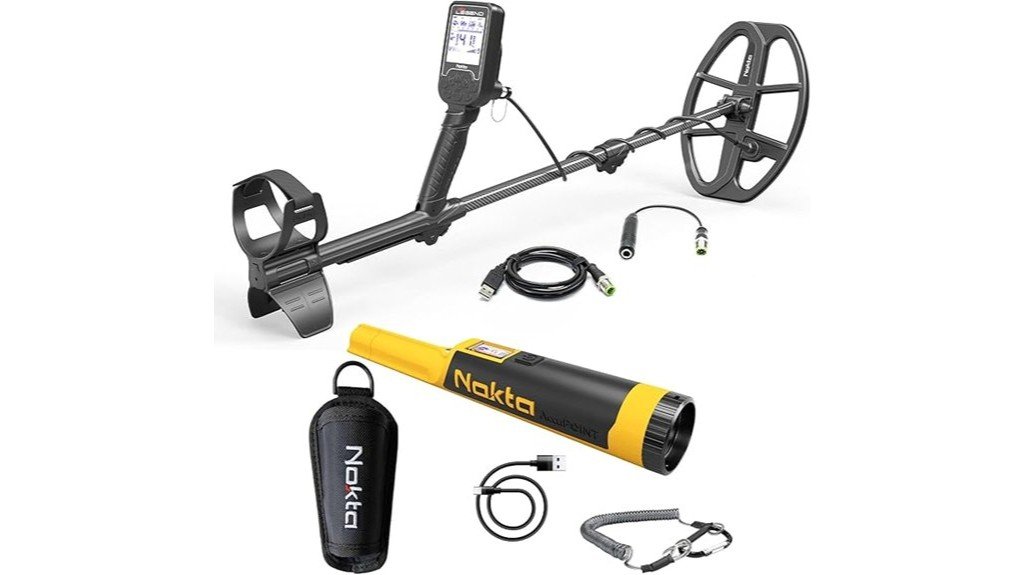
For treasure hunters who want a tough, all-around detector that handles both beach dives and mineral-rich hills, the Nokta The Legend is a standout choice, especially when you’re after small gold nuggets or relics in tricky ground. You’ll appreciate its 12-inch DD coil and the first simultaneous multi-frequency tech from Nokta, which adapts to different targets and soils without constant tweaking. It’s IP68 waterproof to 10 ft, light at 3 pounds, and runs up to 20 hours on USB-charge — handy on long trips. Packaged with an Accupoint pinpointer, it’s user-friendly, though watch for occasional quality-control dust behind screens.
Best For: Treasure hunters who need a versatile, waterproof detector that excels on beaches and in mineralized ground, especially when searching for small gold nuggets and relics.
Pros:
- Waterproof to 10 ft (IP68) and lightweight (3 lb), making it ideal for beach and shallow diving use.
- Simultaneous multi-frequency technology and 12″ DD coil provide strong performance across varied ground conditions and target types.
- Long USB-rechargeable battery life (up to 20 hours) and includes Accupoint pinpointer for easier recovery.
Cons:
- Some users report occasional quality-control issues, such as dust behind the screen.
- Higher-end features may come with a steeper price compared with basic detectors.
- 12″ coil size trades some fine-target sensitivity and maneuverability in tight areas compared with smaller coils.
Nokta Triple Score PRO Pack Metal Detector for Adults
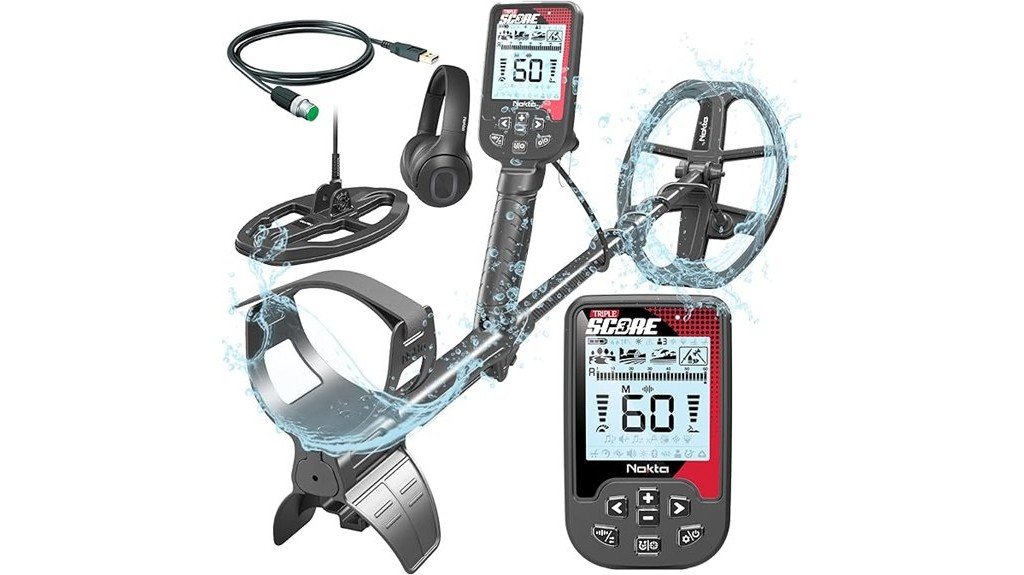
One standout reason you’ll want the Nokta Triple Score PRO Pack is its fully waterproof, multi-frequency design that makes it one of the most versatile detectors for finding gold whether you’re scanning wet sand, a muddy creek, or dry ground. You’ll appreciate its 2.6 lb carbon-fiber build, which feels light during long hunts, and the IP68 rating that lets you dive to 16 ft without worry. Bluetooth connects to devices for clearer signals, three search modes suit varied terrains, and the 3250 mAh rechargeable battery runs up to 12 hours. Some users note battery-access issues, so inspect units carefully.
Best For: Ideal for hobbyists and serious treasure hunters who want a versatile, fully waterproof, lightweight multi-frequency detector for beach, underwater, and land searches.
Pros:
- Fully waterproof (IP68 to 16 ft) and multi-frequency for reliable performance in wet sand, streams, and dry ground.
- Lightweight 2.6 lb carbon-fiber build with up to 12 hours of rechargeable battery life (3250 mAh).
- Bluetooth connectivity, three search modes, and included accessories (extra coil, headphones, hat) enhance usability and value.
Cons:
- Some users report quality-control issues and occasional defective units.
- Battery access and replacement can be difficult; battery lifespan subject to heat exposure and 300–500 charge cycles.
- Higher-end features may be more than novices need, adding complexity for new users.
Nokta Simplex Ultra Waterproof Metal Detector
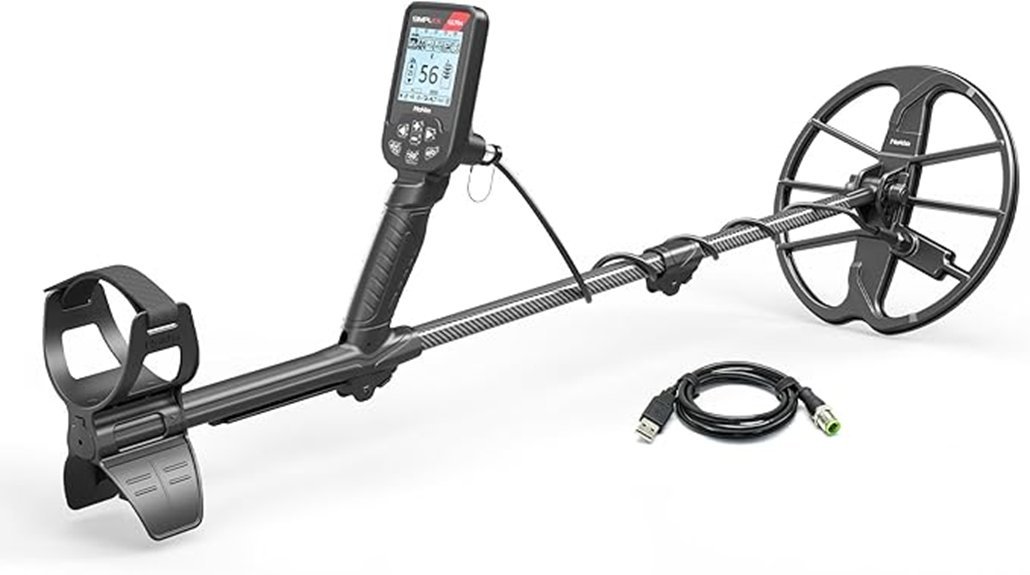
Think of the Nokta Simplex Ultra as the reliable sidekick you’d want on a gold hunt, especially when you need a lightweight, waterproof machine that won’t slow you down. You’ll appreciate its 2.6 lb carbon fiber shaft that retracts to 25 inches for easy travel, and its full waterproofing to 16 ft lets you hunt streams or dive without worry. The vivid color LCD and simple interface make target ID and settings quick, so you stay focused on finds, not menus. Firmware updates via USB keep features current, and its balance means longer sessions with less fatigue — I’ve found more targets that way.
Best For: Outdoor enthusiasts and hobbyist treasure hunters who need a lightweight, fully waterproof metal detector for beach, river, and shallow diving use.
Pros:
- Fully waterproof to 16 ft (5 m) with a retractable 25 in (63 cm) carbon-fiber shaft for easy travel and diving.
- Very light (2.6 lbs / 1.2 kg) and well-balanced for comfortable, extended detecting sessions.
- Vivid color LCD, simple interface, and USB PC firmware updates keep the detector easy to use and up to date.
Cons:
- Carbon fiber shaft and waterproofing may increase replacement/repair costs if damaged.
- Advanced users may find some high-end features or customization options limited compared with more expensive pro models.
- Reliance on USB/PC for firmware updates can be inconvenient if a computer is not readily available.
Factors to Consider When Choosing Metal Detectors for Gold
When you’re choosing a metal detector for gold, you’ll want to focus on a few key features—how deep it can find targets, the frequency range it runs on, and how well it handles mineral-rich ground—because those factors directly affect what you actually recover in the field. Coil size and type also matter since a larger coil covers more ground but a smaller coil often finds tiny nuggets better, and you’ll appreciate a lightweight, portable machine on long hunts, trust me I’ve carried heavy gear up hills more than once. Keep these points in mind and you’ll be able to compare models more clearly, saving time and increasing your chances of striking real gold.
Target Depth Capability
Although it might seem like a simple number on a spec sheet, target depth capability is one of the most important things to understand before you buy a gold detector, because it tells you how deep a machine can reliably find nuggets and how factors like coil size, frequency, and ground conditions change that promise. You’ll want to compare manufacturers’ depth specs, knowing they’re estimates that assume ideal soil. Bigger coils usually reach deeper and sweep more ground, while smaller coils help you tease apart targets in trashy areas — I learned that the hard way on my first prospection trip. Also, soil mineralization and moisture can cut effective depth, so choose detectors with strong discrimination and realistic expectations.
Operating Frequency Range
Because frequency is basically the language your detector uses to talk to metal, picking the right operating range changes what kinds of gold you’ll actually hear, and how well the machine handles messy, mineral-rich ground where gold hides. You’ll want higher frequencies—above about 15 kHz—if you’re chasing tiny flakes and small nuggets, since they’re more sensitive to small targets, while lower frequencies under 10 kHz work better for larger pieces and deeper finds. Many modern gold machines use multi-frequency modes, which let you switch or blend ranges so the detector adapts to different soils and target sizes. Common operating bands run from about 12 kHz up to 70 kHz, with 19 kHz often praised for striking a practical balance.
Ground Mineralization Handling
You’ve already seen how frequency shapes what your detector can hear, but the ground you search on can be just as loud — and a whole lot messier — than the targets themselves, so learning how a machine handles mineralized soil can make or break a hunt. Highly mineralized soil throws false signals and buries small nuggets in noise, so you’ll want a detector with good ground balancing or simultaneous multi-frequency tech to cut through the clutter. Advanced ground balance lets you tune out iron-rich dirt, and multi-frequency units adapt across varying soils, improving target separation. Know the site’s mineralization before you start, pick settings that match it, and you’ll find more real gold — trust me, it works.
Coil Size and Type
Pick the right coil and you’ll notice the difference almost immediately: larger coils sweep more ground and pull signals from deeper targets, while smaller coils hug the soil and tease out tiny nuggets that bigger coils simply miss. You’ll usually find 10–12 inch coils work well for general gold hunting, giving a good balance of depth and coverage, whereas 5–8 inch coils shine when the ground is heavily mineralized or crowded with small targets. Elliptical coils often make handling easier and help separate signals in trashy spots, while round coils can be simpler and tougher. For gold you’ll want to favor double-D designs for stability and small-nugget sensitivity, and pick waterproof coils if you plan to search riverbeds.
Portability and Weight
When you’re planning long days of glassing riverbeds or hiking ridgelines, the portability and weight of your detector can make the difference between an all-day adventure and an early exit from the field, so it’s worth thinking through carefully; lighter models — often around 2.6 to 3 pounds — let you swing longer with less arm and back strain, while a well-balanced design keeps the machine feeling like an extension of your arm instead of dead weight. You’ll want a collapsible shaft so the unit shrinks for transport, often down to about 25 inches or less, and materials like carbon fiber give you durability without bulk. Compact, well-balanced detectors help when you’re climbing steep trails or covering miles, so pick one that matches your terrain and stamina.
Battery Life and Charging
Because long days in the field can turn a promising hunt into a waiting game if your detector dies, battery life and charging deserve as much thought as coil size or sensitivity, and you’ll want to match the power system to how you hunt. Aim for detectors that run up to 20 hours so you can chase more leads without hunting for outlets, and prefer rechargeable lithium-ion packs that handle 300–500 cycles before replacing. USB charging is a big convenience, letting you top up from a power bank or car, and lighter rigs around 2.6 lbs help when you’re on your feet all day. Check how easy batteries are to reach and whether heat exposure could shorten their lifespan; some designs hide the pack.
Audio and Target ID
Good audio and clear target ID can turn a noisy, confusing hunt into a fast, confident dig—you’ll hear what matters and see whether it’s worth your time, which is huge when gold nuggets hide near junk. You want advanced audio controls so you can tweak tones, thresholds, and filters to cut background noise and make faint signals pop, which I learned on a cold morning when a tweak saved a promising beep. A 2D target ID map gives visual clues about metal type and depth, speeding decisions and cutting wasted digs. Multi-frequency machines boost identification by using different frequencies for different metals, and combining sound with on-screen ID makes choosing when to dig quicker and much less guesswork.
FAQ
Can Metal Detectors Find Gold in Saltwater Beaches?
1. Can metal detectors find gold on saltwater beaches?
Yes, metal detectors can successfully locate gold on saltwater beaches with the appropriate equipment.
2. What type of metal detector is best for finding gold in saltwater?
Using a metal detector specifically designed for beach use, which includes features for saltwater environments, increases your chances of finding gold.
3. Is a waterproof coil necessary for beach detecting?
Yes, a waterproof coil is essential for detecting in wet sand and shallow water where gold may be found.
4. Do I need headphones while using a metal detector on the beach?
Using headphones is recommended as they allow you to hear faint signals better, especially in noisy beach environments.
5. What is discrimination in metal detecting?
Discrimination allows you to filter out unwanted trash signals, helping you focus on valuable targets like gold.
6. How important is ground balancing when detecting in saltwater?
Ground balancing is crucial because it helps the detector cope with mineralization in wet sand, improving its sensitivity to gold.
7. What tools do I need for recovering gold on the beach?
In addition to a metal detector, you should have a sand scoop for digging and a small container for holding your finds.
8. How often should I sift through the sand while searching?
Frequent sand sifting is recommended to recover small nuggets and ensure you don’t miss buried targets.
9. What kind of patience is needed while metal detecting on beaches?
Finding gold can take time, so being patient and persistent during your search is key to success.
10. Are there specific beach locations that are better for finding gold?
Yes, popular beaches with heavy foot traffic, areas near old piers, and places where people often gather are ideal for finding gold items.
How Do Weather Conditions Affect Gold Detecting Performance?
1. How does wet ground affect gold detecting?
Wet ground increases conductivity, allowing for better signal transmission and deeper detection of gold. This can enhance your chances of finding buried treasures.
2. What impact does humidity have on gold detecting?
Higher humidity levels can improve conductivity, similar to wet ground, resulting in better detection performance. It’s beneficial to detect in humid conditions for deeper searches.
3. How does extreme heat influence gold detecting?
Extreme heat can negatively affect the battery life of your detecting equipment, resulting in shorter operating times. Additionally, it may cause electronics to function less efficiently.
4. What are the effects of cold weather on gold detecting?
Cold temperatures can also shorten battery life and may lead to electronic issues. It’s important to manage your equipment carefully to ensure optimal performance in chilly conditions.
5. Should I adjust my detecting settings in different weather conditions?
Yes, you should adjust sensitivity, discrimination, and search techniques based on the weather. Making these adjustments helps to maintain consistent detection results.
6. What adjustments should I make in rainy conditions?
In rainy conditions, you may want to increase sensitivity to take advantage of the wet ground. This will help you detect deeper signals that might otherwise be missed.
7. Is it advisable to detect during extreme weather conditions?
It’s generally not advisable to detect in extreme weather, such as heavy storms or extreme temperatures, as it can impact both your safety and the performance of your equipment.
8. How does soil temperature affect gold detecting?
Soil temperature can affect the conductivity of the ground. Warmer soil often leads to better conductivity, improving detection depth and accuracy.
9. What weather conditions are best for gold detecting?
Mild, humid conditions with moist ground are typically the best for gold detecting. These factors enhance the conductivity of the soil and improve the performance of detection equipment.
10. Can wind impact gold detecting performance?
While wind itself may not directly affect the detection process, it can create challenges such as noise and distractions. It’s best to choose calm days for focused detecting efforts.
Are Special Licenses Required for Metal Detecting on Private Land?
1. Do I need permission to metal detect on private land?
Yes, you must obtain the landowner’s written permission before metal detecting on their property.
2. Are there any permits required for metal detecting?
Depending on the local laws, you may need permits for significant finds or for digging on the land.
3. Can I assume I have rights to dig if I find something?
No, you cannot assume discovery rights; explicit approval from the landowner is necessary.
4. What if the landowner is not present?
You must still have written permission from the landowner, even if they are not physically present on the property.
5. Are there any specific laws I should be aware of?
Yes, laws regarding metal detecting can vary significantly by location, so it’s essential to check local regulations.
6. What constitutes a significant find?
A significant find typically refers to items of historical, archaeological, or monetary value, but this can vary by jurisdiction.
7. What should I do if I find something valuable?
If you discover something valuable, consult local authorities and the landowner about the next steps, including any necessary reporting.
8. Can I metal detect in public spaces?
Metal detecting in public spaces may also require permits or adherence to specific regulations; always check local laws.
9. What happens if I metal detect without permission?
Metal detecting without permission can lead to legal consequences, including fines or confiscation of equipment.
10. Is verbal permission sufficient for metal detecting?
No, verbal permission is not enough; always secure written consent from the landowner to avoid disputes.
11. Can I remove items I find on private land?
You can only remove items if you have the landowner’s permission and any necessary permits for significant finds.
What Safety Gear Is Recommended for Gold Prospecting Trips?
1. What type of footwear is recommended for gold prospecting?
Sturdy boots are essential for gold prospecting as they provide support and protection against rough terrain and sharp objects. Look for waterproof options if you’ll be near water.
2. Why should I wear gloves while prospecting?
Gloves protect your hands from cuts, scrapes, and exposure to harsh chemicals or sharp tools. They also provide a better grip on equipment.
3. What type of hat is best for gold prospecting?
A wide-brim hat is recommended to shield your face and neck from the sun. This helps prevent sunburn and keeps you cooler during hot days.
4. Are sunglasses necessary for prospecting?
Yes, polarized sunglasses are important for reducing glare from water and protecting your eyes from UV rays. They improve visibility and reduce eye strain.
5. How can I protect my skin while gold prospecting?
Applying sunscreen is crucial to protect your skin from harmful UV rays. Choose a broad-spectrum sunscreen with a high SPF and reapply regularly.
6. Should I use insect repellent during my prospecting trip?
Absolutely, insect repellent is important to ward off mosquitoes and other biting insects. This helps ensure a more comfortable and enjoyable experience.
7. What safety equipment should I have when near water?
If you’re prospecting near water, having a flotation device is vital for safety. This provides an extra layer of protection in case of unexpected slips or falls.
8. Why is a first-aid kit important for prospecting?
A first-aid kit is essential for addressing minor injuries, cuts, or scrapes that may occur while prospecting. It ensures you’re prepared for emergencies.
9. What lighting equipment should I carry?
A headlamp is useful for illuminating your work area, especially during early morning or late evening hours. It allows for hands-free operation while you work.
10. When should I use a respirator while prospecting?
A respirator is recommended in dusty areas to protect your lungs from inhaling harmful particles. This is particularly important if you’ll be digging or sifting in dry, dusty conditions.
11. How important is hydration and communication during prospecting?
Carrying plenty of water is crucial to stay hydrated, especially during long hours outdoors. Additionally, having a charged phone can be critical for communication and emergency situations.
Can Detectors Be Used to Find Gold Flakes in Streams?
FAQs on Finding Gold Flakes in Streams Using Detectors
1. Can I use a metal detector to find gold flakes in streams?
Yes, metal detectors can be used to find gold flakes in streams. However, a sensitive unit is necessary for effective detection.
2. What type of metal detector is best for finding gold flakes?
A Very Low Frequency (VLF) or Pulse Induction (PI) metal detector is recommended for locating gold flakes due to their sensitivity.
3. Do I need any specific accessories for detecting gold in streams?
Yes, using fine coils and ensuring your detector is waterproof will enhance your chances of successfully finding gold flakes in wet environments.
4. How deep can gold flakes be found in streams?
Gold flakes can often be found buried deep or embedded in the streambed, requiring patience and careful digging.
5. Is it necessary to pan after using a metal detector?
Yes, after detecting gold, panning is essential for carefully recovering the tiny flakes you may find.
6. What techniques should I use when searching for gold flakes?
Employ a methodical approach, using your detector to scan areas thoroughly and then using a pan to separate and collect the flakes.
7. How important is patience when searching for gold flakes?
Patience is crucial as finding gold flakes can be a slow process, often requiring extensive searching and digging.
8. Can I use a regular metal detector to find gold flakes?
Regular metal detectors may not be sensitive enough; specialized detectors designed for gold prospecting are more effective.
9. What conditions are best for detecting gold in streams?
Searching during low water levels can improve visibility and accessibility to streambeds, making it easier to detect gold flakes.
10. Are there any legal considerations when detecting for gold in streams?
Yes, it’s important to check local regulations regarding gold prospecting in streams, as permissions and restrictions may apply.
Final Thoughts
In the quest for gold, choosing the right metal detector can feel a bit like picking the perfect hiking boots for a long trek. Each of the four top choices for 2025 offers unique strengths tailored for different terrains and conditions. I remember the first time I swapped out my heavy-duty rig for the nimble Simplex Ultra; it was like shedding a backpack full of rocks. Suddenly, I was able to cover more ground and, to my surprise, I started uncovering targets I had previously missed.
The Manticore stands out for its cutting-edge technology—think of it as the sleek, high-tech smartphone of metal detectors. It’s perfect for those who thrive on innovation. Then there’s The Legend, which provides a level of comfort that feels like slipping into your favorite pair of jeans. It’s the kind of detector you could spend all day with, exploring new sites without feeling fatigued.
For those who love features, the Triple Score is your go-to. Packed with options, it’s like having a Swiss Army knife in your hands—ready for whatever the hunt throws at you. And let’s not forget the Simplex, known for its ease of use; it’s the perfect choice for beginners or anyone who simply wants to enjoy the hunt without the fuss.
Ultimately, picking the right detector is about finding what resonates with your own style and needs. Choose what keeps you searching longer and smarter, just like I did when I embraced that lighter gear. Happy hunting!