
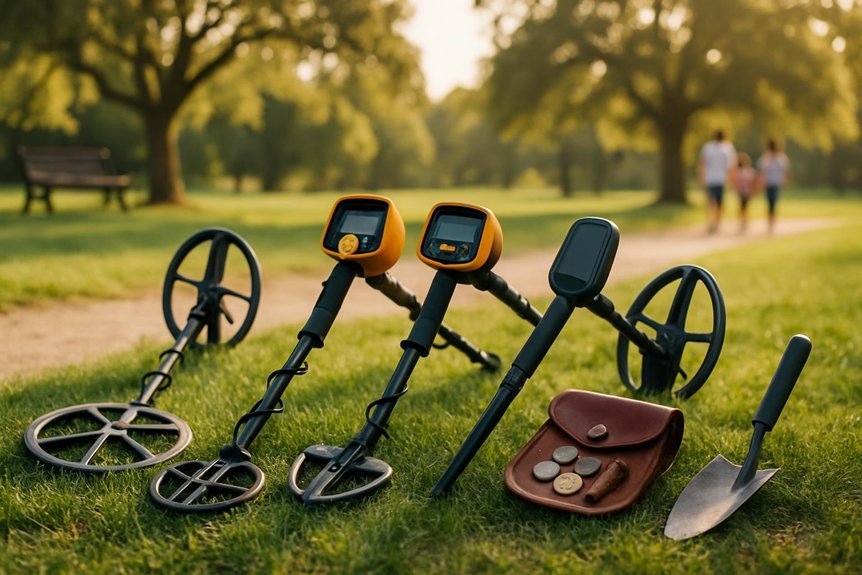
If you like the idea of uncovering coins, relics, or a forgotten token in your local park, these four metal detectors give you simple, reliable ways to start—each one suits a different skill level and budget, from the beginner-friendly Bounty Hunter to the tech-packed NOKTA MAKRO Findx. You’ll get waterproof coils, clear target ID, and long battery life, plus tips that’ll help you avoid common mistakes—so stick around to see which model matches your style.
NOKTA MAKRO Findx Metal Detector (11000875)
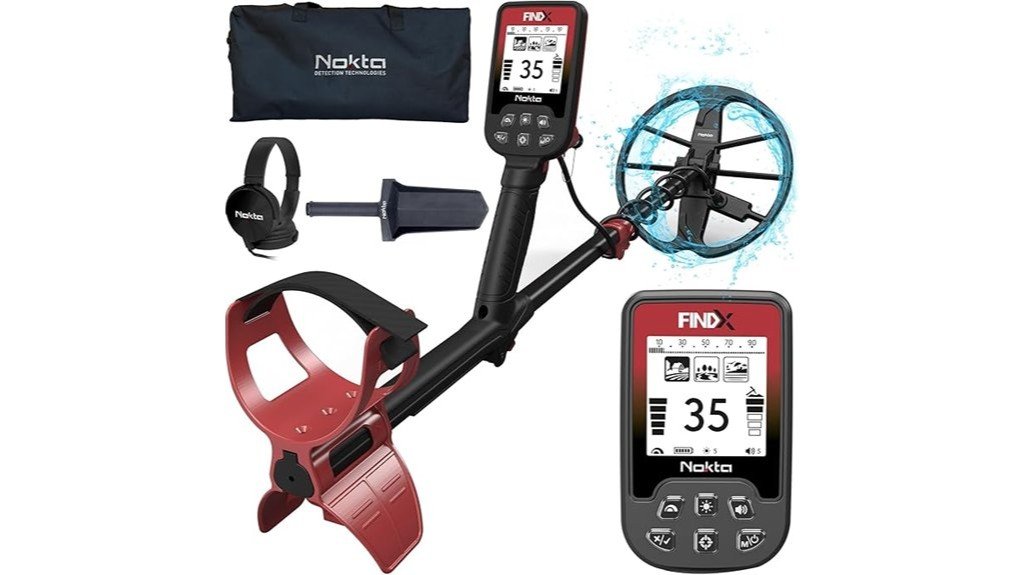
If you’re new to park detecting or want something light you can carry all afternoon, the NOKTA MAKRO Findx stands out because it pairs a slim 1.2‑kg aluminum build with a long 12‑hour battery life, so you won’t be cutting a hunt short—plus it’s rated IP68, which means a little mud and rain won’t stop you. You’ll appreciate its 27.94 cm coil and intuitive controls that let you find coins or relics fast; beginners report hits within minutes. It’s sturdy, easy to assemble, and comes in a handy storage bag, though audio static and limited languages are noted.
Best For: Beginners and casual park detectorists who want a lightweight, long‑battery, weather‑resistant metal detector for easy all‑day use.
Pros:
- Lightweight 1.2 kg aluminum build and simple assembly make it easy to carry and use for hours.
- 12‑hour battery life and IP68 rating allow extended hunts in varied conditions (rain/mud).
- Intuitive controls and 27.94 cm search coil help beginners find coins and relics quickly.
Cons:
- Audio performance can include static noise from the speaker for some users.
- Limited multilingual documentation may frustrate non‑English speakers.
- Lacks some advanced features and coil options found on higher‑end or PRO models.
Bounty Hunter TK4 Tracker IV Metal Detector (All-Terrain, Waterproof 8″ Coil)
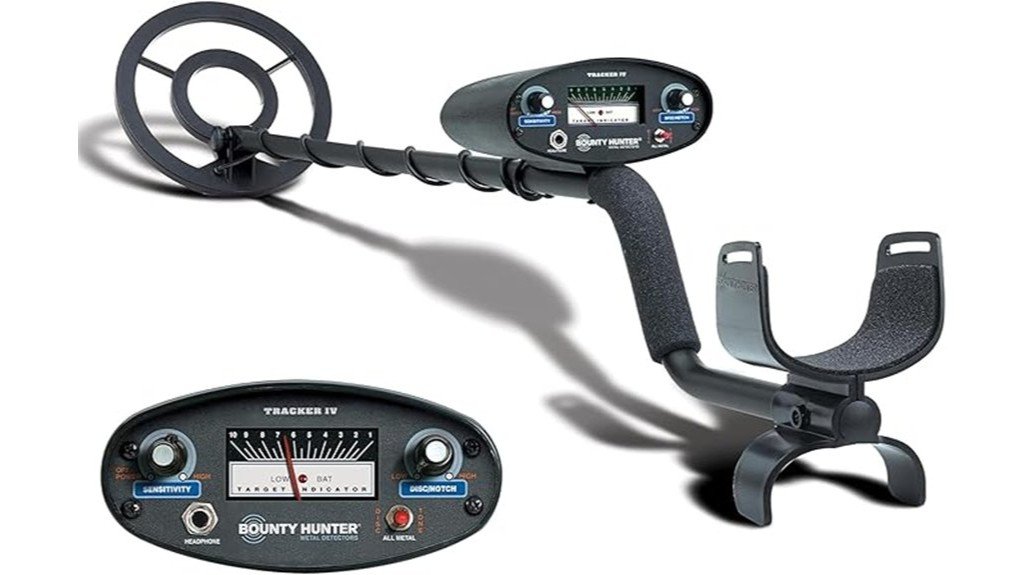
The Bounty Hunter TK4 Tracker IV makes a great choice for anyone who wants a straightforward, tough detector for parks, beaches, and backyard adventures, because its combination of all-terrain build and an 8‑inch waterproof coil means you can hunt in grass, sand, or shallow water without worrying about gear failure. You’ll appreciate three detection modes—all-metal, tone, and discrimination—that help you pull silver coins, jewelry, and relics from trashy ground. It’s lightweight, battery-powered, and uses simple analog controls so both kids and adults can learn fast. Made in the USA, it pairs well with pinpointers and headphones for complete kits.
Best For: anyone—beginners to hobbyist pros—seeking a rugged, easy-to-use all-terrain detector for parks, beaches, backyards, and shallow-water hunting.
Pros:
- Simple, intuitive analog controls and lightweight design make it great for kids and first-time users.
- 8″ waterproof coil and all-terrain build allow searching in grass, sand, damp soil, and shallow water.
- Three detection modes (all-metal, tone, discrimination) help locate coins, jewelry, and relics while filtering trash.
Cons:
- Analog features lack advanced discrimination and pinpointing found on higher-end digital detectors.
- Small 8″ coil limits coverage compared with larger coils for deep-target searching.
- Battery-powered operation may require frequent battery changes during extended use.
Nokta Simplex Ultra Waterproof Metal Detector with Carbon Fiber Shaft and 11” Search Coil
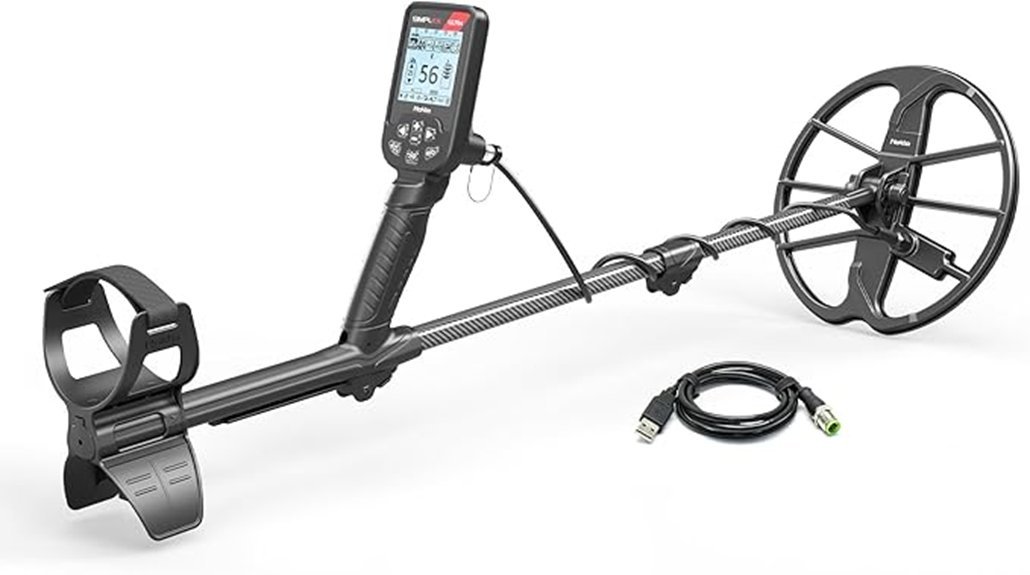
For parks hunters who want a rugged, easy-to-handle detector that won’t quit when you chase a signal into a puddle or shallow pond, the Nokta Simplex Ultra stands out with its full waterproofing to 16 feet and a lightweight carbon fiber shaft that shrinks down to 25 inches for easy transport. You’ll appreciate the 11” coil’s balance and the whole unit’s 2.6 lb weight, which lets you search longer without sore arms. The colorful LCD and simple controls make pinpointing targets straightforward, and USB firmware updates keep features fresh — I’ve updated mine between trips, and it’s made a real difference.
Best For: Enthusiasts and hobbyist detectorists who want a lightweight, fully waterproof metal detector for park, beach, and shallow-water hunting that’s easy to transport and keep up-to-date.
Pros:
- Lightweight (2.6 lbs) and well balanced for long detecting sessions without fatigue.
- Fully waterproof to 16 ft (5 m) with a retractable carbon fiber shaft that compacts to 25 in for easy transport and diving.
- Color LCD and simple controls plus USB firmware updates for ongoing feature improvements.
Cons:
- 11″ search coil may be less optimal for deep-target recovery compared with larger coils.
- Advanced users may find some high-end features or discrimination options limited compared with pro-grade models.
- Requires a PC and USB connection for firmware updates, which may be inconvenient for some users.
Garrett ACE 300 Metal Detector for Adults
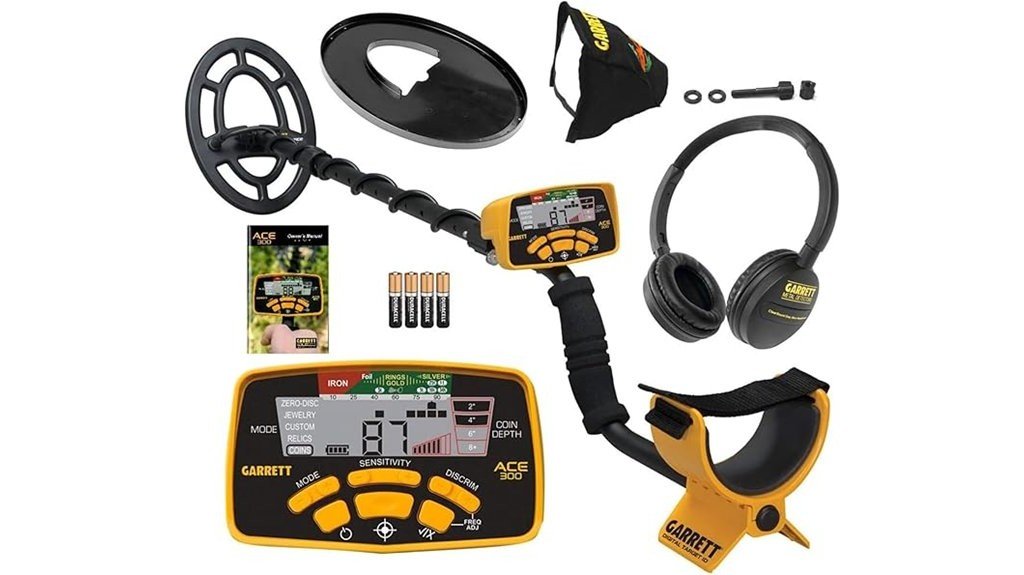
Garrett’s ACE 300 is a solid pick for adults who want a reliable, user-friendly detector when you’re scanning park lawns or under picnic tables for lost treasures; it’s built in the USA and pairs a waterproof coil with easy-to-wear ClearSound headphones so you can hunt in damp grass without missing a beep. You’ll like the numeric Digital Target ID (0–99), which tells you what kind of metal you’ve found, and improved Iron Resolution helps separate coins from junk. Use Electronic Pinpointing to zero in on targets, switch frequency to avoid interference, and enjoy included covers and headphones for a cleaner, quieter hunt.
Best For: Adults and hobbyist treasure hunters who want a reliable, user-friendly metal detector for parks, lawns, and general relic/coin hunting with waterproof coil and included headphones.
Pros:
- Waterproof coil and included ClearSound headphones let you search damp areas comfortably without missing signals.
- Numeric Digital Target ID (0–99) and improved Iron Resolution make it easier to identify coins and separate trash.
- Electronic Pinpointing and adjustable frequency improve target location accuracy and reduce interference.
Cons:
- Designed for adults, so may be less suitable for children without adjustments or supervision.
- Lacks some advanced features and accessories found on higher-end models for serious detectorists.
- Battery life and accessories beyond those included (e.g., carry bag, extra coils) may require additional purchases.
Factors to Consider When Choosing Metal Detectors for Public Parks
When you’re choosing a metal detector for public parks, you’ll want to think about how deep it can search and whether different coil sizes let you switch between wide sweeps and focused checks, since that changes what you’ll find. Also pay attention to waterproof performance and target ID accuracy so you won’t miss items near puddles or waste time on junk, and consider weight and portability because you’ll be carrying the detector for hours. I once lugged a heavy unit across a whole park and swore off anything over three pounds, so trust me—balance power with comfort for the best outings.
Search Depth Capability
Many metal detectors claim impressive numbers, but search depth capability is what really determines whether you’ll find a shallow soda-can pull tab or a hidden pocket watch buried inches below the grass, and you’ll want to understand how several factors work together to set those limits. You’ll usually see effective depths around 8–12 inches for average targets, but real results depend on target size, soil mineralization, and moisture — clay or salty soils often cut depth. Detector technology matters too; models with adjustable frequency and sensitivity let you push deeper or back off to reduce chatter. You’ll balance depth against small-target sensitivity and discrimination, and in my own park hunts I tweak settings until the detector quiets while still pinging deeper signals.
Coil Size Options
Pick the right coil size and you’ll cover more ground with better results: larger coils, around 8–11 inches, push deeper and sweep wider swaths of turf so you can find buried items faster, while small coils, 4–6 inches, sniff out tiny targets and slip between trashy spots and tree roots with ease. You’ll want an 8–11 inch coil for general park work because it balances depth and target separation, yet keep a small coil on hand for playground edges or congested picnic areas. Remember coil size affects weight and how easily you swing the detector during long hunts, so choose what feels comfortable. If you’re indecisive, pick a model with interchangeable coils — I did, and it changed my detecting.
Waterproof Performance
Because parks can hide treasures in puddles, creek edges, and damp turf, you’ll want a detector that handles wet conditions without complaint — waterproof performance is more than a nice-to-have, it’s a way to double where you can search. Pick a model with a waterproof search coil so you can sweep muddy banks and shallow water without fear, and check the IP rating — IP68 or similar means the unit resists full submersion, which matters if you’re probing streams or chasing targets after rain. Also note the depth rating; some detectors work down to about 16 feet, opening small ponds and wading spots for finds. I learned this after a rainy afternoon turned up a coin by a soggy path.
Target Identification Accuracy
Good target ID can turn a long day of digging into a string of quick, satisfying finds, so you’ll want a detector that tells you more than just “there’s something here.” Digital target ID systems give you a number that hints at a target’s conductivity — helping you decide if it’s a coin, a pull tab, or something in between — while discrimination modes let you filter out common iron trash so you’re not wasting time on bottle caps. You’ll appreciate electronic pinpointing, which narrows a signal so you can pry up a coin without creating a crater, and adjustable frequency options that cut interference when parks are busy. I’ve saved hours by trusting clear numbers and fine-tuning settings, and you will too.
Weight and Portability
A lighter detector can make a long afternoon in the park feel like a breeze rather than a marathon, so aim for models around 1.2 kg (2.6 lbs) if you expect to walk and sweep for hours; I learned this the hard way after a three-hour hunt with a heavier unit left my shoulders sore for two days. You’ll want a well-balanced, lightweight machine with an ergonomic grip and adjustable shaft, so it fits your height and keeps strain off your arms. Retractable or collapsible designs make transport and storage simple, so you can hop between parks or toss the detector in a trunk without fuss. Choose a model that feels steady in your hand, portable without compromising comfort, and easy to carry on long, rewarding searches.
Battery Life Expectancy
Battery life matters more than you might think when you’re planning a day of detecting in public parks, since nothing kills the thrill of a promising sweep like a dead battery halfway through a find; aim for units that give you at least 10–12 hours for casual outings, and consider rechargeable lithium polymer models if you plan to hunt frequently because they tend to hold steady power and save money over time. You’ll want a detector that keeps you searching without constant battery swaps, and many entry-level models hit that 10–12 hour sweet spot. Look for power-saving modes to stretch runtime, and balance battery size against overall weight—no one enjoys fatigue from a heavy rig even if the battery lasts all day.
Ease of Use
Because you’ll be carrying and sweeping the detector for hours, ease of use should come first when you’re picking a model for public parks; lightweight, well-balanced designs make long sessions feel less like a workout and more like an adventure, and they let you keep steady control so you don’t miss faint signals. Choose a detector with simple, clearly labeled controls and an intuitive display so you can learn fast and get detecting within minutes, not days. Adjustable sensitivity helps filter trashy signals, saving time and reducing frustration when a soda can keeps buzzing. I once switched to a lighter unit with a shoulder strap and hunted twice as long without sore arms. Portable designs and built-in carrying options make spontaneous trips easier, so you actually use the detector more.
Price and Value
You’ll want to think about price and value as soon as comfort and controls are squared away, since what you spend will shape the features you get and how long the detector stays useful. Start by setting a realistic budget: entry-level machines around $100 give you the basics for park hunts, while advanced units over $1,000 add waterproofing, finer discrimination, and extra detection modes that matter on varied ground. Factor in warranty and customer support, because reliable service can keep your detector working for years and protect that investment. I’ve owned a cheap starter and later upgraded to a name-brand model that held resale value, proving sometimes it’s smarter to pay a bit more upfront.
FAQ
Can Metal Detectors Damage Buried Utilities or Pipelines?
1. Can a handheld metal detector damage buried utilities?
No, typical handheld metal detectors emit low-energy signals that do not cause damage to buried utilities or pipelines.
2. What should I do before digging in an area with buried utilities?
Before digging, it’s essential to contact local utility-marking services to identify the location of buried utilities and prevent accidental damage.
3. Are metal detectors safe to use near pipelines?
Yes, metal detectors are safe to use near pipelines as they do not emit harmful signals that could damage the infrastructure.
4. What are the risks associated with digging without utility marking?
Digging without utility marking can lead to accidental damage to buried utilities, which can result in costly repairs and potential legal issues.
5. How do utility-marking services work?
Utility-marking services locate and mark underground utilities using specialized equipment, ensuring that you can dig safely without encountering buried lines.
6. Do metal detectors signal the presence of utilities?
Metal detectors can signal the presence of metal objects, but they do not specifically identify or locate buried utilities.
7. What types of utilities should I be concerned about when digging?
You should be concerned about various utilities, including water, gas, electricity, and telecommunications lines when planning to dig.
8. Is it necessary to call utility services every time I dig?
Yes, it is recommended to call utility services each time you plan to dig, even for small projects, to ensure safety and compliance with regulations.
9. What can happen if I hit a buried utility while digging?
Hitting a buried utility can cause service disruptions, lead to injury, and result in significant financial liability for repairs and fines.
10. Are there any legal ramifications for damaging buried utilities?
Yes, damaging buried utilities can result in legal issues, including fines and liability for repair costs, depending on local regulations.
Do I Need Permits to Metal Detect in Public Parks?
1. Do I need a permit to metal detect in public parks?
Yes, usually you will need a permit or permission to metal detect in public parks.
2. How do I find out if I need a permit?
Check local regulations specific to your city, county, or park authority to determine if a permit is required.
3. Who should I contact for permission to metal detect?
Reach out to park officials or the local authorities managing the public park where you intend to metal detect.
4. Are there specific rules for different parks?
Yes, rules can vary significantly from one park to another, so it’s essential to verify the regulations for each location.
5. What should I do if archaeological sites are present?
If the area has archaeological significance, you must respect any restrictions in place and may need to refrain from metal detecting.
6. Are there any reporting requirements for found items?
Some parks may have reporting requirements for items you find while metal detecting, so be sure to inquire about this.
7. Can I metal detect in all public parks?
No, not all public parks allow metal detecting; some may have outright bans or specific areas where it’s prohibited.
8. What happens if I metal detect without permission?
Metal detecting without permission can lead to fines, confiscation of equipment, or even legal action depending on local laws.
9. Is there a designated area for metal detecting in parks?
Some parks may have designated areas for metal detecting; check with park officials for guidance.
10. Can I metal detect in state or national parks?
Typically, metal detecting in state or national parks is more restricted and often requires special permits, if allowed at all.
Can I Keep Items Found on Public Land Legally?
FAQs on Keeping Items Found on Public Land
1. Can I keep items I find on public land?
It depends on the local, state, and federal laws governing that area. Always check specific regulations before taking anything.
2. What types of items are usually not allowed to be kept?
Archaeological artifacts, historical items, and protected species are often prohibited from being removed. These finds should be reported to the appropriate authorities.
3. Do I need a permit to take items from public land?
Yes, in many cases, you will need to obtain a permit. Each jurisdiction may have different requirements regarding what you can keep and how.
4. What should I do if I find something valuable?
Report your find to the relevant local or state authorities. They can provide guidance on whether you can keep it or if it needs to be preserved.
5. Are there different rules for different types of public land?
Yes, rules can vary significantly between national parks, state parks, and other public lands. Always verify the specific regulations for the area you are in.
6. What happens if I take something illegally?
Taking items without permission can result in legal penalties, including fines or other sanctions. It’s important to understand the laws before removing anything.
7. Can I keep items found while hiking or camping?
Generally, items found while hiking or camping are subject to the same regulations as other public lands. Always check local rules before taking anything.
8. Are there any exceptions to the rules?
Some areas may allow the collection of small, non-historic items, like rocks or seashells, under specific conditions. Verify the local regulations to be sure.
9. What if I find something I believe is valuable?
If you believe your find has significant value, consult with a local expert or authority. They can help determine its status and the appropriate next steps.
10. Can I search for items on public land?
Metal detecting or treasure hunting may be allowed but typically requires a permit. Always research local laws and obtain necessary permissions before engaging in such activities.
How Do I Clean Fragile or Corroded Finds Safely?
FAQ 1: How should I rinse fragile finds?
Rinse fragile finds gently using distilled water to avoid further damage. This helps remove dirt without causing harm.
FAQ 2: What type of brush is best for cleaning corroded items?
Use a soft brush or a toothpick to carefully remove debris from corroded items. This minimizes the risk of scratching or damaging the surface.
FAQ 3: Are harsh chemicals safe for cleaning delicate artifacts?
No, harsh chemicals should be avoided when cleaning delicate artifacts. They can cause irreversible damage to the material.
FAQ 4: How should I dry cleaned finds?
After rinsing, pat the items dry with a soft cloth. Avoid rubbing to prevent scratches or further damage.
FAQ 5: When should I consult a conservator?
Consult a conservator if you have valuable or severely corroded items before attempting any cleaning or preservation. They can provide expert guidance tailored to the specific item.
FAQ 6: Is distilled water necessary for rinsing?
Yes, distilled water is recommended because it lacks impurities that could harm fragile items. Tap water may contain minerals or chemicals that can cause damage.
FAQ 7: Can I use a regular toothbrush for cleaning?
It’s best to avoid regular toothbrushes as they can be too stiff. Opt for a softer brush to prevent scratching fragile surfaces.
FAQ 8: What should I do if I’m unsure about cleaning an item?
If you are unsure about how to clean an item, it’s wise to seek professional advice from a conservator. They can help you avoid damaging the find.
FAQ 9: How do I handle extremely corroded items?
Handle extremely corroded items with extra care, as they may be more fragile. Consult a conservator for the best cleaning methods.
FAQ 10: What are the signs that an item is too fragile to clean?
Signs that an item may be too fragile to clean include flaking material, significant corrosion, or a delicate structure. If you notice these signs, consult a professional before proceeding.
Are There Community Clubs or Events for Detectorists Nearby?
1. Are there local detectorist clubs I can join?
Yes, many local detectorist clubs exist. You can find them through social media platforms like Facebook or dedicated community sites.
2. How can I find detectorist meetups?
Detectorist meetups can be located on platforms such as Meetup.com. Look for events specifically listed under metal detecting or treasure hunting.
3. What are coin shoots?
Coin shoots are organized events where detectorists gather to search for coins and other treasures in a designated area. They are a fun way to meet others in the hobby and practice your skills.
4. Can I participate in workshops for detectorists?
Yes, many clubs and organizations host workshops to teach new techniques and share tips. These workshops often cover topics like equipment use, site selection, and treasure recovery.
5. Where can I find information on detectorist events?
Information about detectorist events can usually be found on local club websites, social media groups, or through national metal detecting organizations’ chapters.
6. What is the etiquette for joining detectorist clubs?
Etiquette can vary by club, but generally, members are expected to respect others, follow site rules, and share finds. It’s a good idea to familiarize yourself with club guidelines before attending an event.
7. Are there age restrictions for detectorist clubs?
Many detectorist clubs welcome members of all ages, but some may have specific age requirements for certain events. Always check with the club to see if there are any restrictions.
8. Do detectorist clubs charge membership fees?
Most detectorist clubs do require a membership fee, which can vary depending on the club. Fees often go towards maintaining club activities, events, and resources.
9. Can I participate if I’m a beginner?
Absolutely! Many clubs welcome beginners and offer resources to help you get started. Participating in a supportive community can significantly enhance your learning experience.
10. What should I bring to a detectorist event?
It’s advisable to bring your metal detector, digging tools, and appropriate outdoor gear. Additionally, consider bringing water, snacks, and a notebook for taking notes or recording your finds.
11. How do I stay updated on future detectorist events?
To stay updated, regularly check social media groups, club newsletters, and community bulletin boards. Engaging with local detectorists will also help you learn about upcoming events and opportunities.
Final Thoughts
As you embark on your adventure into the world of metal detecting, you’ve come across four solid choices perfect for park detecting. Each option has its unique strengths, much like the variety of experiences you might encounter on a sunny afternoon stroll in the park. Imagine the thrill of finding a lightweight and waterproof detector, ready to dive into those unexpected puddles or explore the edges of a serene pond. Perhaps you’re just starting out and want something budget-friendly; these picks are like that first bicycle you rode as a child—simple, reliable, and incredibly exciting.
For those with a taste for technology, the higher-tech models can feel like having a treasure map in your hands, offering better target identification and depth capabilities. Picture yourself standing in the park, listening intently as your detector beeps with excitement. You can almost hear the stories waiting to be uncovered beneath your feet.
As you choose the detector that fits your budget and comfort—whether that’s a lightweight model for easy carrying or a more advanced version for deeper digs—remember to take your time practicing your sweeping technique. Each swing of the detector is a step closer to your next discovery. Learning the tones is like mastering a new language, one that will help you differentiate between the pull tabs and the coins.
And don’t forget to be patient. The anticipation of what lies beneath the surface can be just as thrilling as the find itself. Before long, you’ll be unearthed treasures and hidden relics, and trust me, that first cool find—a shiny coin or a forgotten trinket—will bring a smile to your face that you won’t soon forget. Happy hunting!