
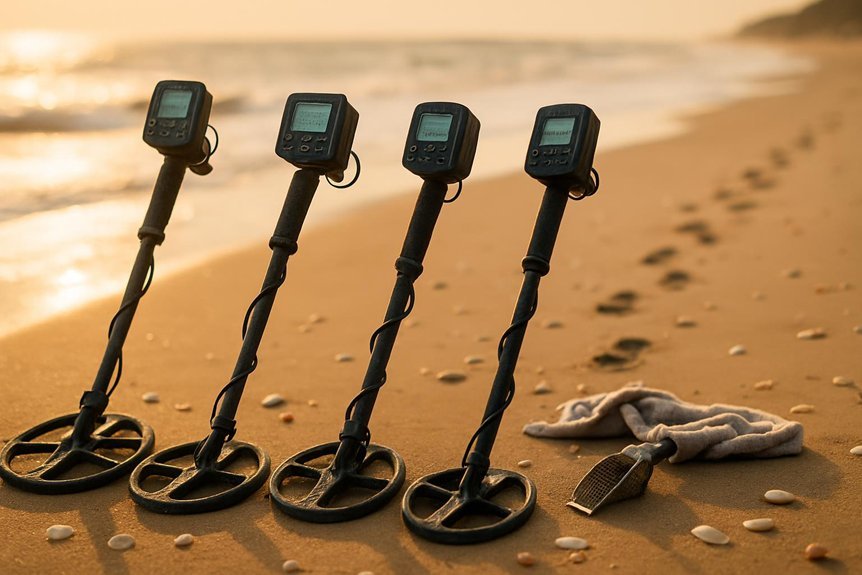
If you hunt beaches or surf, you’ll want gear that handles salt, sand, and waves without letting you down, and these four detectors do just that: the Minelab X-Terra Elite Expedition, Nokta The Legend, Nokta Simplex Ultra, and Minelab Manticore each bring waterproofing, strong saltground performance, and user-friendly features—I’ve tested similar models in rough surf and seen how much difference the right ground balance and coil make—keep going to see which one fits your style and budget.
Minelab X-Terra Elite Expedition Metal Detector with Coils, Headphones, Charging Cable & PRO-FIND 40 Pinpointer
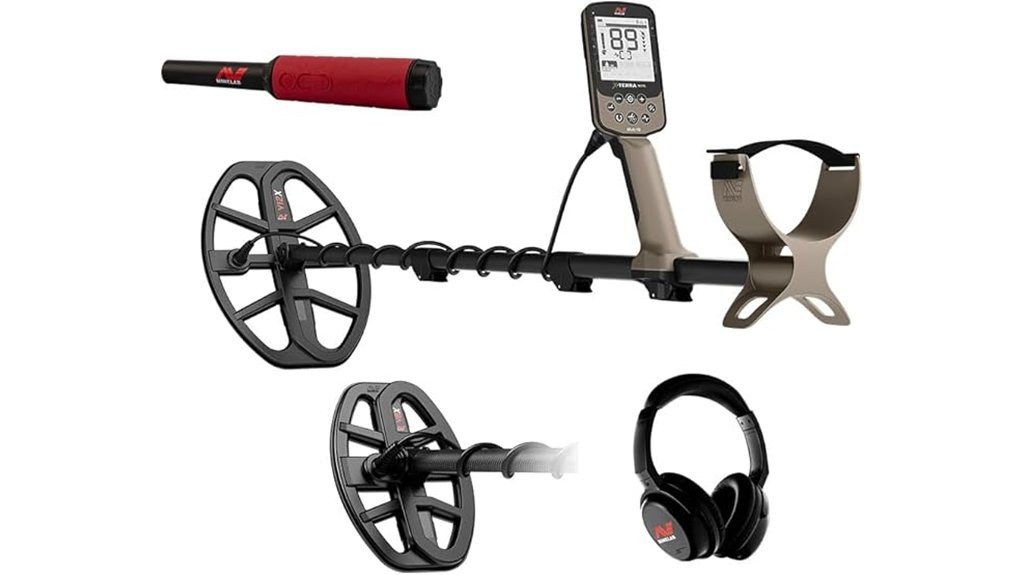
If you love beach hunts or plan to plunge into shallow wrecks, the Minelab X-Terra Elite Expedition is built for saltwater seekers who want pro-level tech without a pro-only learning curve; its Multi-IQ multi-frequency system lets you hunt across mixed, mineralized sand with confidence, and the included PRO-FIND 40 pinpointer makes that telltale beep feel like a small victory when you’re brushing sand away. You’ll get coils, headphones, and a charging cable, plus 119 target IDs to separate trash from treasure. It’s waterproof to 5 m, light enough for long walks, and reviewers praise its accuracy and ease once you learn ground balance.
Best For: Beach and shallow-water treasure hunters who want pro-level multi-frequency performance and easy-to-use features for hunting in mineralized sand and surf.
Pros:
- Waterproof to 5 m and lightweight (1.3 kg), ideal for long beach sessions and shallow wreck dives.
- Multi-IQ multi-frequency tech with 119 target IDs improves detection in mixed/mineralized ground and helps separate trash from treasure.
- Includes useful accessories (V8X & V12X coils, ML85 headphones, charging cable, PRO-FIND 40 pinpointer) for a ready-to-use setup.
Cons:
- Some users report a learning curve for optimal ground balancing and settings adjustment.
- Premium features and accessories may come at a higher price compared with basic detectors.
- Lithium-ion battery replacement/availability and warranty details require checking with the manufacturer.
Nokta The Legend Waterproof Metal Detector for Adults with 12″ Coil
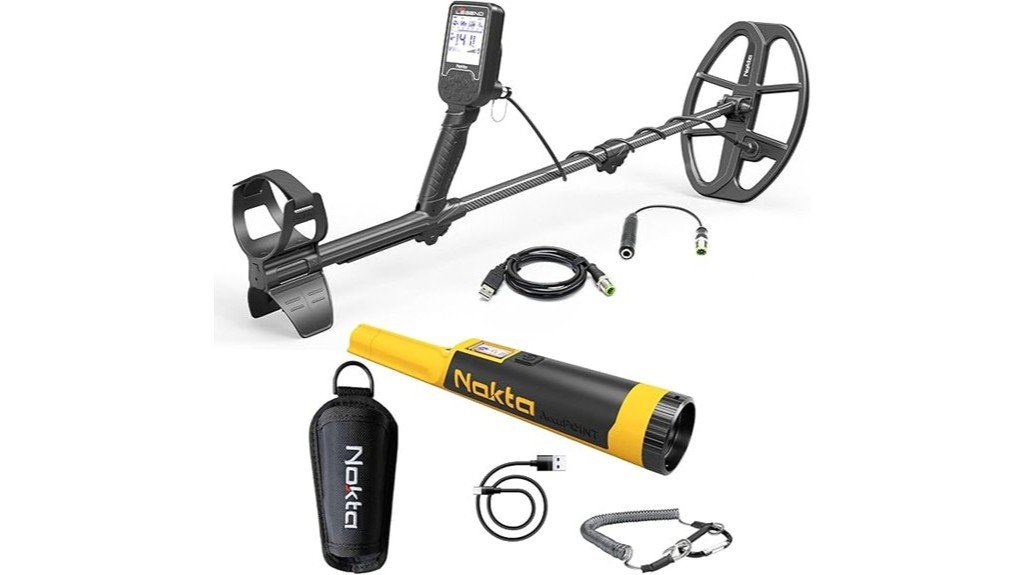
For saltwater beach hunters who want a rugged, dive-ready machine that still feels light enough to carry all day, the Nokta The Legend stands out with its IP68 waterproofing and a 12-inch DD coil that balances depth and sensitivity, so you can hunt surf lines and shallow reefs without worrying about a sudden wave or a wet sleeve. You’ll appreciate the simultaneous multi-frequency tech that adapts to salt, trashy beaches, and mineralized pockets, plus gold-mode for tiny nuggets. At three pounds with about 20 hours battery life and a handy Accupoint pinpointer, it’s a serious, user-friendly tool.
Best For: Saltwater beach hunters, snorkelers, and recreational treasure seekers who need a lightweight, fully waterproof detector with multi-frequency performance for trashy or mineralized coastal conditions.
Pros:
- Waterproof to 10 ft (IP68) with a 12″ DD coil — excellent for surf, shallow dives, and wet conditions.
- Simultaneous multi-frequency and gold mode provide strong performance on salt beaches and for small gold nuggets.
- Lightweight (3 lb), long battery life (~20 hours), plus included Accupoint pinpointer for efficient recovery.
Cons:
- Some users reported quality-control issues (e.g., dust behind the screen) on a minority of units.
- 12″ coil is a balance between depth and sensitivity but may miss deeper targets compared with larger coils.
- As an advanced, feature-rich detector, there can be a learning curve for optimal settings in varied ground conditions.
Nokta Simplex Ultra Waterproof Metal Detector with Carbon Fiber Shaft and 11″ Search Coil
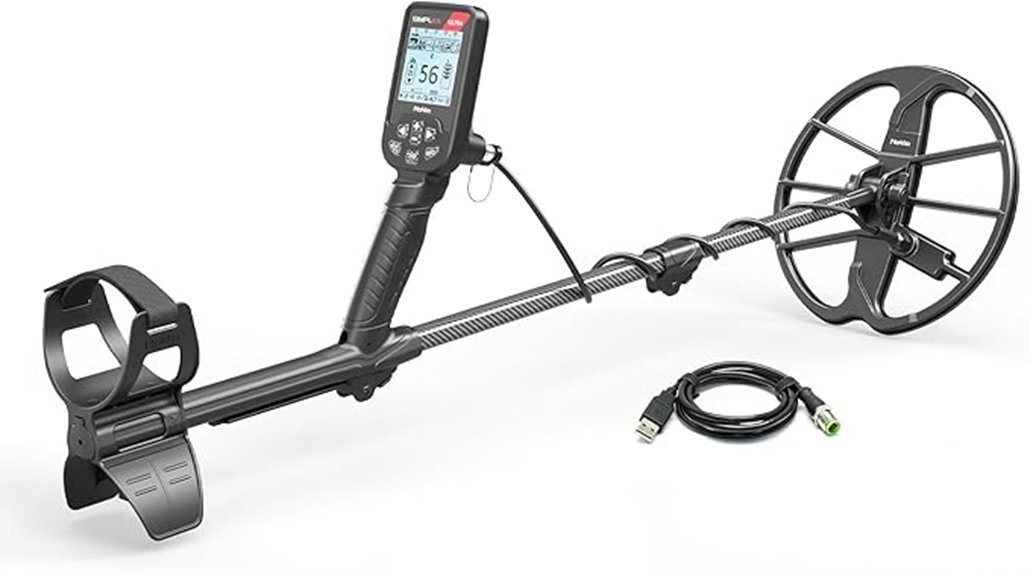
Think of the Simplex Ultra as your go-anywhere detector, built for beachcombers and shallow-water divers who want a capable, no-fuss machine that won’t quit when the tide comes in. You’ll appreciate its full waterproofing to 16 feet, letting you hunt in surf and shallow dives without worries, while the carbon fiber shaft keeps things light and tough. At 2.6 pounds it won’t tire your arm during long walks, and the shaft collapses to 25 inches for easy transport. A vivid color LCD and simple controls make settings clear, and USB firmware updates keep your detector current.
Best For: beachcombers and shallow-water divers who want a lightweight, fully waterproof, easy-to-use metal detector for all-tide detecting and travel.
Pros:
- Fully waterproof to 16 ft (5 m) for confident surf and shallow diving use.
- Lightweight (2.6 lbs / 1.2 kg) with a carbon fiber shaft that collapses to 25 in (63 cm) for comfortable, fatigue-free detecting and easy transport.
- Vivid color LCD and simple controls plus USB PC firmware updates for easy maintenance and clear target info.
Cons:
- 11″ search coil may limit extreme deep-target detection compared with larger coils.
- Advanced users may find feature set less customizable than high-end pro models.
- Requires a PC and USB cable for firmware updates (no mobile app update option).
Minelab Manticore High-Power Multi-IQ+ Waterproof Metal Detector (11″ Double-D Coil Included)
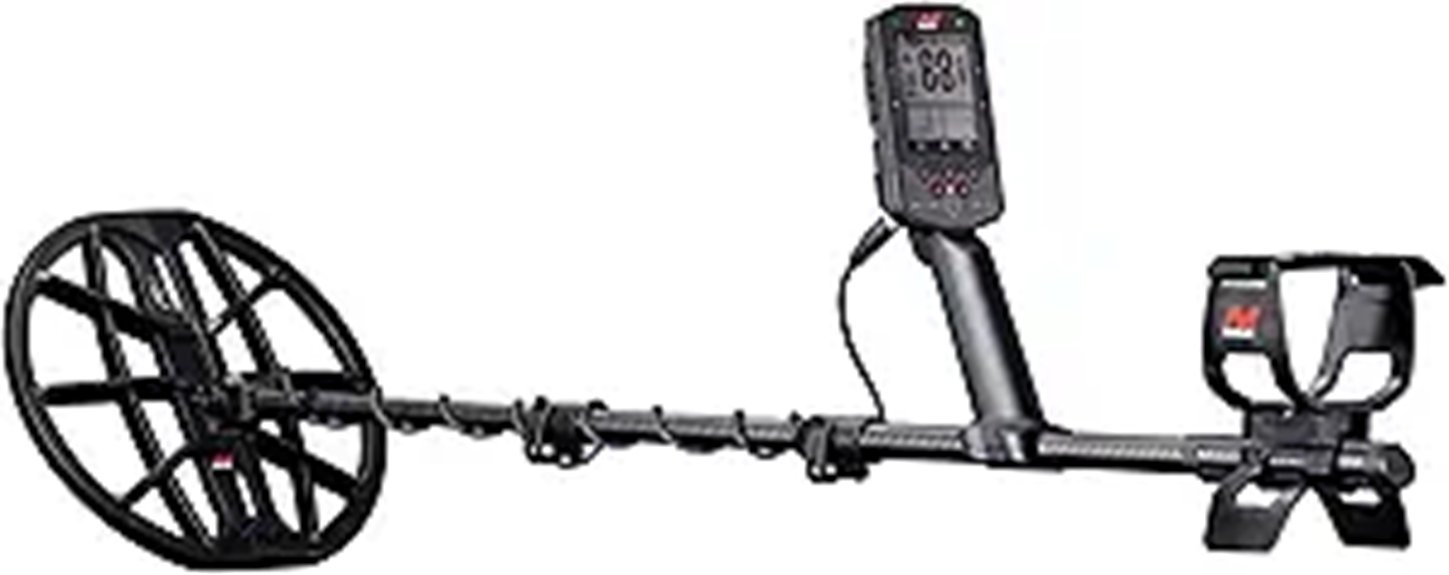
You’ll want the Minelab Manticore if you’re serious about saltwater hunting and need a detector that packs extra power without weighing you down, because its Multi-IQ+ system delivers about 50% more power than many older multi-frequency machines and helps you punch through mineralized wet sand and salt spray with greater consistency. You’ll notice the 11″ Double-D coil slices through trashy beaches, the 2D target ID and rich audio help you decide whether to dig, and the IP68 waterproofing to 16 ft means surf hunting is no problem. At 2.9 pounds it’s comfy for long days.
Best For: Serious saltwater and beach hunters who want a lightweight, high-power multi-frequency detector that penetrates mineralized wet sand and surf while offering advanced target ID and audio controls.
Pros:
- Multi-IQ+ system delivers ~50% more power for better performance in mineralized salt and wet sand.
- Lightweight (2.9 lbs) and collapsible design makes it comfortable for long detecting sessions and travel.
- IP68 waterproof to 16 ft with advanced 2D target ID and rich audio options for confident target discrimination.
Cons:
- Premium features and performance come with a higher price compared with entry-level detectors.
- 11″ Double-D coil may still struggle with very deep targets compared with larger coils (at the cost of maneuverability).
- Advanced settings and customization may require time with tutorials to optimize for specific beach or goldfield conditions.
Factors to Consider When Choosing Metal Detectors for Salt Water
When you’re picking a metal detector for salt water, you’ll want to focus on a few key features that really matter out on the sand or in the surf: corrosion resistance to handle salt spray, precise ground balance to ignore mineralized sand, multi‑frequency capability for finding varied targets, a solid waterproof depth rating, and the right coil size and type for your search style. Think of corrosion protection like a raincoat for electronics, and remember I once ruined a good machine by leaving it unwashed after a beach day — lesson learned. I’ll walk you through each factor so you can choose gear that lasts and actually finds stuff.
Saltwater Corrosion Resistance
Because saltwater attacks metal and electronics far faster than freshwater, you’ll want to prioritize corrosion resistance when choosing a detector for beach or surf use, and a few key features will make a big difference in how long your gear lasts. Pick machines with corrosion-resistant parts like stainless steel, anodized aluminum, and durable plastics that stand up to salt spray and sand. Check waterproof ratings — models with higher IP ratings (IP67, IP68) seal electronics better and cut the risk of short-circuits. After a day on the beach, rinse your detector with fresh water and dry it thoroughly; I learned this the hard way after one salty outing. Good seals and routine care will keep your detector finding treasures for years.
Ground Balance Precision
Ground balance precision is one of the most important features to check if you plan to hunt on beaches or in surf, because salt and mineralized sand can create a noisy background that hides small targets; I learned this on my first salty day out, when a shiny ring kept disappearing into a wash of false signals until I fine-tuned the detector’s ground balance. You’ll want a detector that lets you match its settings to changing salinity and mineralization, either automatically or with manual control, so tiny rings or gold won’t vanish in noise. Precise ground balancing cuts false signals, boosts small-target sensitivity, and keeps your sessions productive even as tides, weather, or wet sand shift beneath your feet.
Multi‑Frequency Capability
You’ve just learned how tuning ground balance keeps salt, wet sand, and shifting tides from turning every beep into a tease, and now it helps to look at what happens when a detector can use more than one frequency at once. Multi‑frequency capability means your machine listens on several channels simultaneously, so it picks up tiny coins, big jewelry, and tricky targets that a single frequency might miss. In saltwater, where mineralization and conductivity confuse plain detectors, multi‑frequency helps separate ferrous rust from non‑ferrous silver or gold, cutting false signals from bottle caps and foil. Advanced models even shift frequencies automatically to match ground conditions, improving depth and pinpointing. I once swapped my single‑freq for a multi‑freq and found more real targets and fewer wild goose chases.
Waterproof Depth Rating
A solid waterproof depth rating can make or break your saltwater hunts, so start by checking how deep you want to go and match the detector to those limits—I’ve seen beginners get excited about a shiny new coil only to ruin a machine by wading deeper than it was rated for. Aim for at least 3 meters (about 10 feet) if you plan to hunt around surf and shallow reefs, but if you envision serious underwater searching, choose models rated 5 meters (around 16 feet) or more so you won’t be limited. Higher ratings usually mean tougher construction, better seals against corrosion, and longer life in salty conditions. Also confirm the coils and internal parts are made specifically for underwater saltwater use to keep performance sharp.
Coil Size & Type
Pick the right coil size and type, and you’ll cover more sand, find deeper targets, and enjoy fewer false signals when hunting around saltwater; I learned that lesson the hard way after swapping from a small concentric coil to a 12-inch DD and suddenly started pulling up long-buried coins I’d been walking past for months. You’ll want larger coils, around 12 inches or more, to scan faster and reach deeper targets, but remember they can be heavier and less nimble around debris. DD (double-D) coils handle mineralized wet sand better than concentric designs, giving cleaner signals and improved separation. Choose coils with at least IP68 waterproofing, consider multi-frequency detectors for salty conditions, and prioritize a lightweight, well-balanced coil for long beach sessions.
Battery Life & Charging
Because long days on the beach can drain batteries fast, you’ll want a detector that keeps going as long as you do, and that means paying close attention to battery life, charging speed, and power type before you buy. Aim for models that offer long runtimes — some run up to 20 hours on a single charge — so you won’t cut short a promising hunt when tide and light are right. Prefer rechargeable detectors with USB charging for convenience; I’ve unplugged a phone charger and kept hunting without hunting for special adapters. Lithium-ion batteries are a smart choice, being light and reliable in changing temperatures, and quick charge times plus a clear battery-level indicator let you plan sessions without surprises.
Audio & Target ID
When you’re hunting on a noisy beach, good audio and target ID can make the difference between digging up bottle caps and finding something worth keeping, so you’ll want a detector that talks to you clearly and smartly; crisp all-tone audio and adjustable sound filters help you judge a target’s depth and size by ear, while a detailed visual ID reduces guesswork before you dig. You’ll want detectors with multi-frequency tech so signals stay strong in mineralized saltwater, and with customizable audio settings you can tune out wind and waves—I’ve done this when surf was loud and it saved time. Look for models offering 100+ target IDs and clear displays or target maps, they help you tell ferrous from non-ferrous and decide whether to dig.
FAQ
Can These Detectors Find Buried Relics Deeper Than 3 Feet?
1. Can metal detectors find relics deeper than three feet?
Yes, it is possible for metal detectors to locate relics deeper than three feet, although it is quite rare.
2. What type of detector is needed for deep searches?
A very sensitive detector, such as a low-frequency or VLF/PI hybrid, is recommended for detecting deeper relics.
3. How important is the coil size for depth detection?
Using a larger coil can help maximize depth potential when searching for buried relics.
4. What ground conditions are ideal for deep detecting?
Ideal ground conditions, such as low mineralization and stable soil, significantly enhance the ability to detect deeper targets.
5. Is patience important when searching for relics?
Yes, patience is crucial; deep detecting often requires more time and careful searching to yield results.
6. Are all metal detectors capable of deep detection?
No, not all metal detectors are designed for deep detection; specific features and technologies are necessary for optimal performance.
7. Does the type of relic affect depth detection?
Yes, the size and composition of the relic can influence how deep it can be detected, with larger and conductive objects being easier to find.
8. Can environmental factors impact detection depth?
Absolutely, environmental factors such as moisture levels and soil composition can affect the detection depth of buried relics.
9. How can one enhance their chances of finding deep relics?
To enhance chances, use the right equipment, choose optimal ground conditions, and take your time during searches.
10. Is deep relic detection a common practice among treasure hunters?
While some treasure hunters do focus on deep relic detection, it is less common due to the challenges involved and the rarity of success.
11. What should a beginner know about deep detecting?
Beginners should understand that detecting deeper relics requires specialized equipment, knowledge of site conditions, and a lot of patience.
How Do Metal Detectors Affect Marine Wildlife?
FAQ 1: Do metal detectors harm marine wildlife?
Metal detectors generally have minimal direct impact on marine wildlife. They do not emit harmful radiation, making them safe for the environment.
FAQ 2: What type of disturbance do metal detectors cause?
The main disturbance caused by metal detectors is related to sound and activity during their use. This can briefly stress marine animals in the vicinity.
FAQ 3: How can I minimize my impact on marine wildlife while using a metal detector?
To reduce your impact, avoid sensitive habitats and refrain from noisy digging. This helps lessen stress on local wildlife.
FAQ 4: Are there specific habitats I should avoid when using a metal detector?
Yes, sensitive habitats such as coral reefs, seagrass beds, and breeding areas should be avoided to protect marine life.
FAQ 5: Can metal detectors affect the behavior of marine animals?
While the effects are generally minimal, the sound and activity from metal detecting can lead to temporary changes in behavior for some marine animals.
FAQ 6: Is there any radiation emitted from metal detectors?
No, metal detectors do not emit harmful radiation, making them safe for use in marine environments.
FAQ 7: How long do disturbances from metal detectors last?
Disturbances are usually brief and temporary, typically lasting only as long as the activity is occurring nearby.
FAQ 8: Should I take any precautions before using a metal detector in marine areas?
Yes, it is advisable to educate yourself on local wildlife and habitats to ensure you are not disturbing sensitive areas.
FAQ 9: Can metal detecting lead to long-term effects on marine ecosystems?
Generally, the short-term disturbances caused by metal detectors do not lead to long-term effects on marine ecosystems if used responsibly.
FAQ 10: Are there regulations regarding metal detecting in marine environments?
Yes, regulations may vary by location, so it’s important to check local laws and guidelines before using a metal detector in marine areas.
Are There Legal Permits Required for Surf Metal Detecting?
1. Do I need a permit for metal detecting at the beach?
Yes, many beaches require specific permits for metal detecting. It’s essential to check local regulations before you start.
2. Where can I find information about metal detecting permits?
Check with your local or state government websites, or contact the beach management office for details on permits.
3. Are there specific areas where metal detecting is banned?
Yes, some protected areas, such as historical sites or nature reserves, may have bans on metal detecting. Always verify the rules for the specific location you plan to search.
4. What should I do if I find an artifact while metal detecting?
If you discover an artifact or significant historical item, you should report it to the relevant authorities promptly. This helps preserve historical integrity.
5. Can I metal detect in national parks?
Metal detecting is generally prohibited in national parks. Always check the specific regulations for the park you are visiting to avoid fines.
6. Do state parks allow metal detecting?
Policies vary by state, but many state parks have strict rules regarding metal detecting. Obtain a permit if required and confirm the park’s guidelines.
7. What types of items am I allowed to keep if found while metal detecting?
Typically, you can keep modern coins or personal items found in public areas, but laws may differ regarding historical artifacts. Always check local regulations.
8. Is there a fee for obtaining a metal detecting permit?
Some locations may charge a fee for metal detecting permits, while others may not. Check with the issuing authority for specific details.
9. How can I ensure I’m following local metal detecting laws?
Research local regulations, consult official resources, and connect with local metal detecting clubs for guidance on legal practices.
10. What are the consequences of not having a metal detecting permit?
Not having a required permit can lead to fines, confiscation of your equipment, or being banned from the location. Adhering to local laws is crucial for a smooth experience.
Can Saltwater Corrosion Void Manufacturer Warranties?
1. Can saltwater corrosion affect my warranty?
Yes, saltwater corrosion can potentially void your warranty if maintenance requirements are not met.
2. What maintenance should I perform to avoid voiding my warranty?
Regular rinsing of your gear with fresh water and ensuring all components are dried properly are essential maintenance practices.
3. Are there specific exclusion clauses I should be aware of?
Yes, manufacturers typically include exclusion clauses in their warranties that outline conditions under which coverage may be voided due to neglect or misuse.
4. How can I document my care for the equipment?
Keep a log of maintenance activities, including dates of rinsing, drying, and any repairs performed, to support warranty claims.
5. What happens if I don’t maintain my gear properly?
Failure to follow recommended maintenance can lead to denied warranty claims, especially if saltwater corrosion is involved.
6. Is it enough to rinse my equipment only occasionally?
No, consistent rinsing after exposure to saltwater is crucial to prevent corrosion and maintain warranty coverage.
7. Does the type of equipment affect warranty terms regarding corrosion?
Yes, different manufacturers and types of equipment may have varying warranty terms, so it’s important to review the specific conditions for your product.
8. Can I still claim warranty if I notice corrosion but have maintained my gear?
If you’ve documented proper maintenance and the corrosion is due to a material defect, you may still be eligible for warranty coverage.
9. What should I do if my warranty claim is denied due to corrosion?
Review the warranty terms carefully to understand the denial reasons and gather your documentation to potentially appeal or discuss further with the manufacturer.
10. Are there any products designed to help prevent saltwater corrosion?
Yes, there are various anti-corrosion products and coatings available that can help protect your equipment from saltwater damage and support warranty compliance.
What Accessories Prolong Detector Life on Saltwater Beaches?
1. What type of protective covers should I use for my detector?
Using protective covers specifically designed for your metal detector can shield it from sand, salt, and moisture. This helps prevent corrosion and damage to sensitive electronic components.
2. Why are waterproof coil and control box caps important?
Waterproof caps for the coil and control box prevent water and salt intrusion, which can lead to corrosion and malfunction. These caps ensure that your detector remains functional in wet conditions.
3. What is a sacrificial anode and how does it help?
A sacrificial anode is a metal component that corrodes instead of your detector’s metal parts. By attaching it to your detector, you can protect it from saltwater corrosion.
4. How does silicone grease protect my detector?
Applying silicone grease to threaded connections creates a seal that prevents moisture from entering. This simple step can significantly reduce the risk of rust and damage.
5. Why should I use stainless hardware on my detector?
Stainless steel hardware is resistant to rust and corrosion, making it an ideal choice for use in saltwater environments. Replacing standard hardware with stainless options can extend the life of your detector.
6. What is the benefit of using sealed battery packs?
Sealed battery packs prevent moisture and salt from damaging the battery and the internal components of your detector. They help ensure reliable performance in harsh conditions.
7. How can a rinse bucket help maintain my detector?
A rinse bucket filled with fresh water allows you to quickly clean off salt and sand after using your detector on the beach. Regular rinsing helps prevent corrosion and keeps your equipment in top shape.
8. How frequently should I clean my detector after beach use?
It’s best to rinse your detector with fresh water immediately after each use on the beach. This routine maintenance minimizes the buildup of salt and sand that can cause long-term damage.
9. Are there any specific storage tips for my detector?
Store your detector in a dry, cool place away from direct sunlight to prevent heat and moisture damage. Ensure that all protective covers are in place and that it’s clean before storage.
10. What should I do if I notice corrosion on my detector?
If you notice any signs of corrosion, address it immediately by cleaning the affected areas with a gentle brush and a suitable cleaner. Consider applying a protective coating or replacing corroded parts to prevent further damage.
Final Thoughts
After putting these four metal detectors through their paces, you’ll find the one that perfectly aligns with your beach hunting style and financial comfort zone. Imagine standing on the shoreline, the salty breeze tousling your hair, as you decide between Minelab’s impressive multi-frequency capabilities or Nokta’s sleek, lightweight design that feels like an extension of your arm.
You’ll soon come to appreciate the convenience of waterproofing during those spontaneous wading sessions when the tide catches you off guard. Picture yourself knee-deep in the surf, excitedly digging up treasures while your detector effortlessly cuts through the saltwater noise. And let’s not forget about battery life—those long, sun-soaked afternoons searching for hidden gems can be exhausting, but the last thing you want is for your detector to give up on you just when you’re about to uncover something special.
Trust your instincts as you get hands-on with each machine. After a few enthusiastic outings, you’ll begin to notice the little things that matter most to you—the way a detector feels in your hands, how intuitive the controls are, and how it responds to the unique challenges of the beach. With each hunt, your personal preferences will shine through, and before you know it, your best finds will become cherished stories, adding to your growing collection of beach adventures.