
If you want precise target separation without wrestling with false signals, these four detectors are worth a close look: the Minelab Manticore for power and multi-frequency clarity, Nokta’s Legend with AccuPoint for pinpointing, the Triple Score PRO Pack for versatility in clutter, and the Simplex Ultra for a lightweight, user-friendly option — each brings different strengths in recovery speed, ground balance, and audio tuning, so you’ll quickly see which fits your style and search…
MINELAB MANTICORE High-Power Multi-IQ+ Waterproof Metal Detector (11″ Double-D Coil Included)
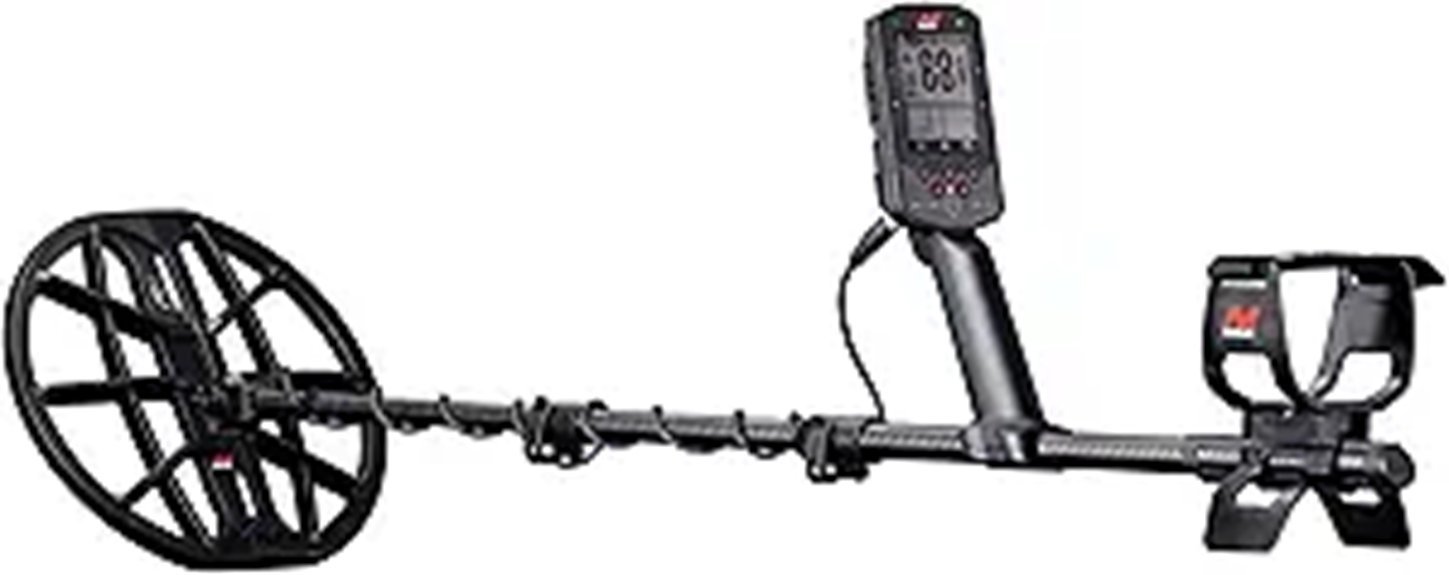
If you want a detector that slices through trash and finds what matters, the MINELAB Manticore is built for you — it packs Multi-IQ+ power that gives you clearer separation between good targets and junk, so you’ll spend more time digging treasures and less time digging bottle caps. You’ll notice its extra power and 2D target ID help pinpoint coins and relics even in noisy ground, and the customizable audio lets you tune what you hear. It’s lightweight, waterproof to 16 ft, and folds small, so you can hunt longer; I switched from an older unit and felt the upgrade immediately.
Best For: Enthusiasts and serious hobbyists who want a powerful, lightweight, waterproof multi-frequency detector that reliably separates valuable targets from trash in varied terrain.
Pros:
- Multi-IQ+ delivers high-power simultaneous multi-frequency performance for superior target separation and depth.
- Lightweight, compact, and waterproof to 16 ft (IP68), making it comfortable and versatile for beach, freshwater, and all-terrain hunting.
- Advanced 2D target ID and customizable audio options improve discrimination and user control.
Cons:
- Higher-end investment compared with basic entry-level detectors.
- Some users may need time or tutorial guidance to optimize advanced settings.
- 11″ Double-D coil may be less ideal in extremely trashy areas compared with smaller coils for pinpointing.
Nokta The Legend Waterproof Metal Detector for Adults (The Legend + Accupoint)
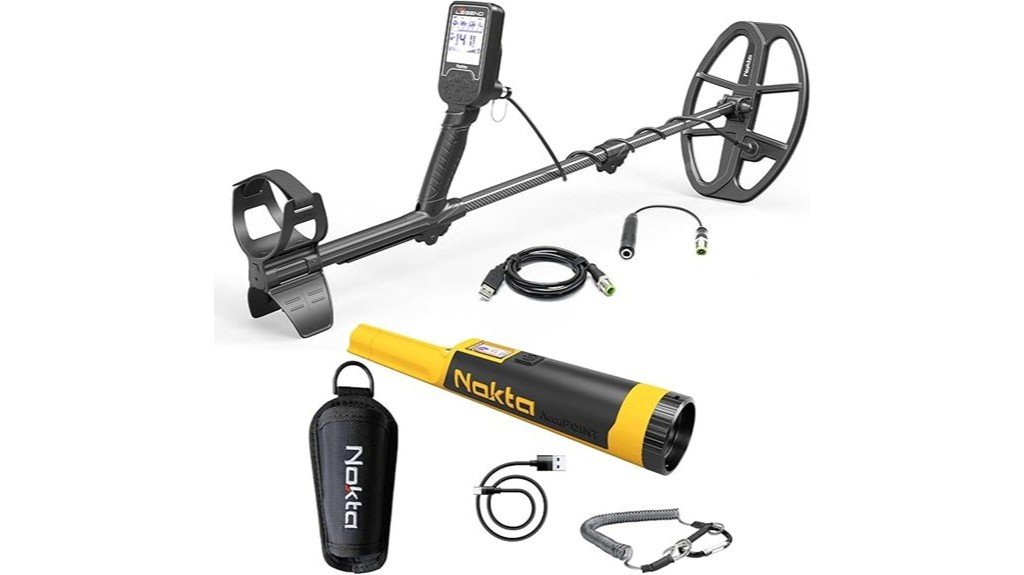
Think of the Legend as your go-anywhere treasure-hunting partner: it’s a waterproof, multi-frequency detector that’s built for adults who want reliable target separation whether they’re beachcombing, gold hunting, or poking around old homesteads. You’ll appreciate its 12-inch DD coil and IP68 waterproofing to three meters, so wet sand or shallow water won’t slow you. The Legend handles mineralized soils and small gold well, runs up to 20 hours on USB-rechargeable power, and includes an Accupoint pinpointer for precise digs. At three pounds it feels light in hand, though some buyers noted occasional quality-control quirks like dust behind screens.
Best For: adults and serious hobbyists who want a lightweight, waterproof multi-frequency detector for beach, shallow-water, gold-nugget, and general relic hunting.
Pros:
- Waterproof IP68 to 3 m and comes with a 12″ DD coil, ideal for beach and shallow-water detecting.
- Simultaneous multi-frequency performance handles mineralized ground and small gold well.
- Long USB-rechargeable battery life (up to 20 hours) and includes Accupoint pinpointer for precise recovery.
Cons:
- Some users report occasional quality-control issues (e.g., dust behind the screen).
- At 3 lb and with a 12″ coil, fine-nugget detection in extremely tight areas may be less optimal than smaller-coil setups.
- Higher price point than basic single-frequency detectors, which may be overkill for casual hobbyists.
Nokta Triple Score PRO Pack Metal Detector for Adults
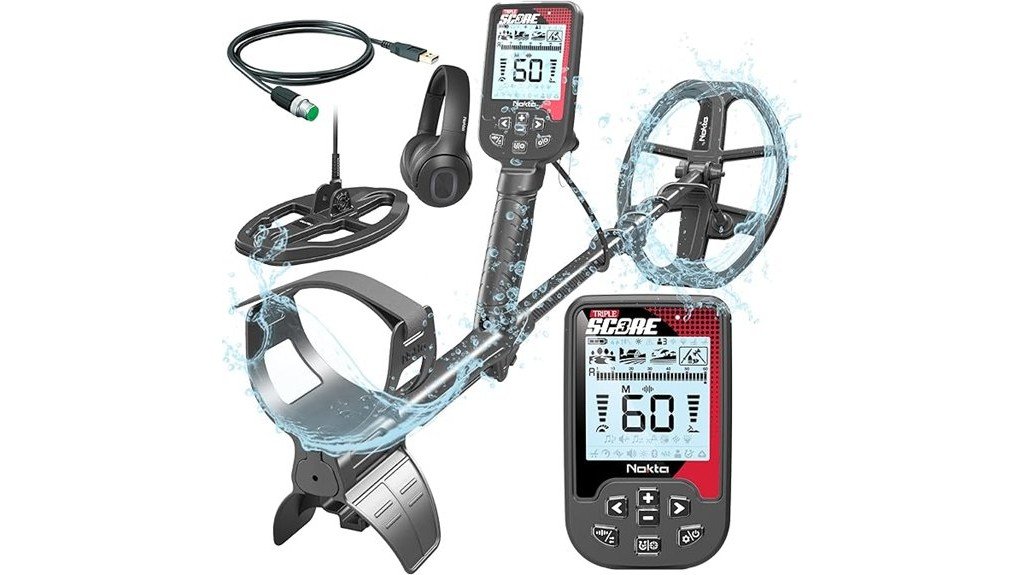
For hobbyists and serious treasure hunters who want a reliable all-rounder, the Nokta Triple Score PRO Pack stands out thanks to its multi-frequency precision and fully waterproof design, so you can hunt sandy beaches, muddy riverbanks, or shallow wrecks without worrying about damaging your gear. You’ll appreciate its light 2.6 lb carbon fiber build, long USB-rechargeable battery life, and IP68 submersion rating to 16 ft. Bluetooth and firmware updates keep features fresh, while three search modes simplify target separation. Users praise value and comfort, though watch for occasional defects and battery-replacement concerns; accessories include an extra coil and headphones.
Best For: Hobbyists and serious treasure hunters seeking a versatile, lightweight, fully waterproof metal detector with multi-frequency precision and long USB-rechargeable battery life.
Pros:
- Fully waterproof IP68 design (submersible to 16 ft) and lightweight carbon-fiber build (2.6 lb) for comfortable use in beaches, rivers, and shallow wrecks.
- Multi-frequency accuracy, Bluetooth connectivity, and firmware updates via USB for improved performance and modern features.
- Includes useful accessories (extra coil, headphones) and offers long battery life (3250 mAh, up to 12 hours) suitable for extended hunts.
Cons:
- Some users report occasional defective units and quality-control issues.
- Battery is not easily user-replaceable and may be sensitive to heat exposure, affecting longevity.
- Ranked #519 with limited review count (29), so long-term reliability beyond reported lifespan (300–500 cycles) is somewhat uncertain.
Nokta Simplex Ultra Waterproof Metal Detector with Carbon Fiber Shaft and 11” Search Coil
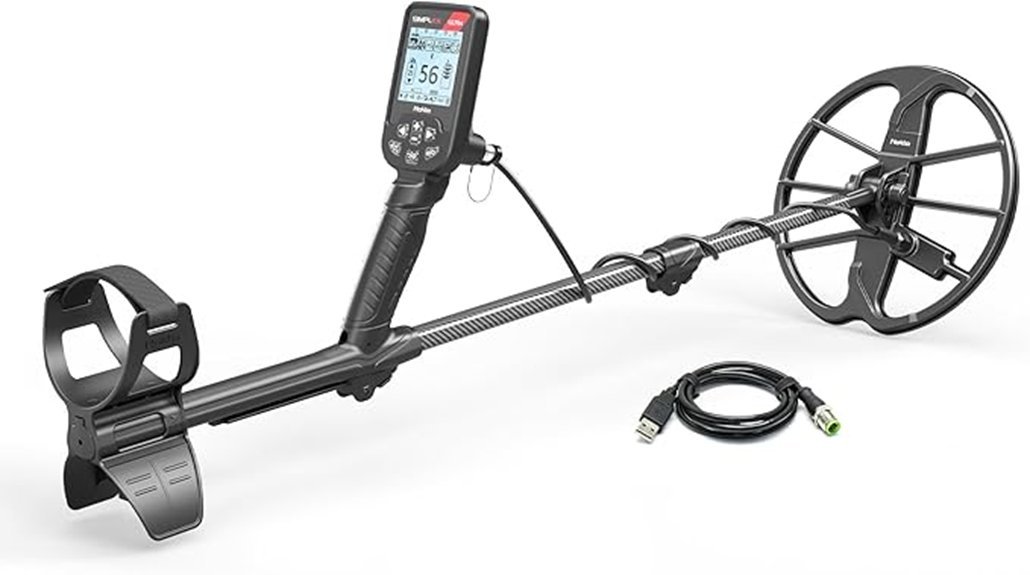
The Nokta Simplex Ultra is a great pick if you want a lightweight, all-purpose detector that won’t slow you down on long beach hunts or shallow dives, and its fully waterproof design to 16 ft (5 m) means you can confidently swing into surf or knee-deep water without worrying about damage. You’ll appreciate the carbon fiber shaft that retracts to 25 inches for easy transport, and at just 2.6 lbs it stays comfortable during marathon searches. The vivid color LCD and simple interface make pinpointing easier, while USB firmware updates keep features current—practical, rugged, and beginner-friendly.
Best For: beachcombers, casual hobbyists and beginner-to-intermediate detectorists who want a lightweight, fully waterproof metal detector for shallow diving and long search sessions.
Pros:
- Lightweight (2.6 lbs / 1.2 kg) and well-balanced for extended use without fatigue.
- Fully waterproof to 16 ft (5 m) with a retractable carbon fiber shaft (25 in / 63 cm) for easy transport and diving.
- Vivid color LCD, user-friendly interface, and USB firmware updates keep features current.
Cons:
- 11” search coil may be less effective than larger coils for deep targets in some conditions.
- Beginner-focused features may lack some advanced options preferred by expert detectorists.
- Carbon fiber shaft and waterproofing can make repairs or service more specialized and potentially costlier.
Factors to Consider When Choosing Metal Detectors for Target Separation
When you’re choosing a metal detector for tight target separation, start by thinking about coil size and shape—smaller coils help you pinpoint items close together while larger coils cover more ground. You’ll want multi-frequency technology and good ground balance so the machine can handle mineralized soil and tell apart signals, and crisp discrimination precision to reduce digging junk. I’ve learned from hours in the field that the right combo of these features makes finding a small coin next to a pull-tab feel a lot less like luck and more like skill.
Coil Size & Shape
How do coil size and shape change the way you hunt for lost coins and relics, and why should you care? Coil size controls depth and separation: big coils reach deeper but can smear signals from closely spaced targets, while small coils zero in on individual items in trashy spots, letting you pick out a single coin amid bottle caps. Shape matters too—round coils are simple and stable, elliptical coils cover more ground and slip between obstacles, improving isolation in tight areas. Match coil choice to terrain and target density: use larger coils on open fields for depth, smaller or elliptical coils in parks or rocky ground for pinpointing. I learned this switching coils on a crowded beach, and the difference was immediate.
Multi-Frequency Tech
Ever wonder why some detectors cleanly separate a buried coin from a ring of bottle caps while others make everything sound like a jumble? Multi-frequency tech is the secret: it runs several frequencies at once, so you’ll pick up both small, high-frequency targets and deeper, low-frequency ones without losing clarity. You’ll notice fewer false signals from mineralized ground, because the detector balances inputs to reduce interference. Higher-powered multi-frequency models—sometimes about 50% stronger than old designs—handle rough terrain and mixed trash better, which I can confirm from a beach morning that turned into a coin harvest. Look for units with 2D target ID maps, rich audio cues, and customizable sound settings so you can mute junk and focus on the finds you want.
Ground Balance Control
Although it’s easy to blame flickering signals on bad luck, getting your ground balance right is the single tweak that’ll make targets sing and junk quiet, so you can focus on real finds. You’ll notice right away that adjusting ground balance tunes the detector’s sensitivity to different soils, cutting down false signals from mineral bits and letting true targets stand out. Many machines give you automatic or manual options, so you can choose convenience or hands-on control depending on conditions. When you dial it in, small and low-conductivity targets stop hiding under chatter, and you’ll separate valuable finds from trash more confidently. I’ve tweaked settings on crowded beaches and smiled when coins popped clearly from the noise.
Mineralization Handling
Getting your ground balance right sets the stage, but when soil itself plays tricks—packed with iron, salt, or other minerals—you’ll need a detector that handles mineralization well so real targets don’t get lost in the static. Choose multi-frequency models that adapt frequencies or process signals simultaneously, because they cut through mineral noise and help separate real finds from mineral clutter. Higher frequencies pick up tiny targets like gold better, though they can be touchy in bad soil, so you’ll want adjustable ground balance to fine-tune response for each spot. Users swear by customizable settings—when you tweak thresholds and frequency mixes, target separation improves noticeably. I once switched frequencies mid-hunt and found a tiny coin I’d almost missed.
Discrimination Precision
Because trashy signals can turn an exciting hunt into a long string of digs, you’ll want a detector with sharp discrimination precision that tells you what’s worth chasing and what’s not, fast. You’ll appreciate features like 2D target ID maps and customizable audio tones, which help you tell coins from bottle caps without guessing. Multi-frequency models improve separation in mineralized or cluttered ground, letting you spot small treasures hiding near junk. Higher-powered units often resolve targets better, so tiny rings don’t get lost next to larger scrap. Pick a machine with an intuitive menu and clear feedback—those are the detectors you’ll learn quickly and trust on long outings. I’ve switched to one and hardly miss good targets anymore.
Recovery Speed
Sharp discrimination helps you avoid digging every bottle cap, but when multiple targets sit close together you still need a detector that reacts fast enough to tell them apart. Recovery speed measures how quickly your machine processes and separates nearby signals, and in cluttered or mineral-rich ground that speed makes the difference between a ring and a rusty nail. Faster recovery, often measured in milliseconds, reduces overlap so you can pinpoint valuables without second-guessing, and modern detectors use smart tech to boost this performance on beaches or crowded parks. I’ve watched a faster unit save a promising hole from becoming a tangle of trash; in competitive hunts, quicker recovery directly raises your success rate. Choose speed that matches your sites.
Audio & Target ID
One key area that makes or breaks target separation is how your detector talks to you—through its audio and target ID features—because clear sounds and smart displays let you decide quickly whether to dig or keep walking. You’ll want advanced audio controls that let you change tone, pitch, and volume so signals from different metals stand out and background noise fades, and I’ve learned to trust a steady tone over a jumpy beep. Look for high-quality 2D target ID maps that show conductivity, helping you tell coins from pull-tabs before you put your shovel in the ground. Multi-frequency tech further sharpens separation across mixed soils, and together these tools save time, reduce trash digs, and make finds more rewarding.
FAQ
What Maintenance Schedule Keeps Coils and Electronics Optimal for Target Separation?
FAQ 1: How often should I clean my coils?
You should clean your coils after every use to ensure optimal performance. This helps remove any dirt or debris that may interfere with target separation.
FAQ 2: How frequently should I inspect my coils for damage?
It is recommended to inspect your coils for damage on a weekly basis. Regular checks can help identify any issues before they affect performance.
FAQ 3: How often should I tighten connections?
Connections should be tightened monthly to maintain a secure and effective electrical connection. Loose connections can lead to inconsistent performance.
FAQ 4: When should I update the firmware of my detector?
You should update the firmware of your detector whenever new updates are released. Keeping the firmware current can enhance performance and introduce new features.
FAQ 5: What is the best way to store my detector?
Store your detector in a dry and cool environment to prevent moisture damage and overheating. Proper storage conditions will prolong the life of the electronics and coils.
FAQ 6: How often should I replace the batteries?
Batteries should be replaced seasonally to ensure reliable power. Using fresh batteries helps maintain optimal performance for target separation.
FAQ 7: What tools do I need for coil cleaning?
You typically need a soft cloth or brush and a gentle cleaning solution. Avoid harsh chemicals that could damage the coil’s surface.
FAQ 8: What signs indicate my coils may be damaged?
Look for visible cracks, dents, or any signs of wear on the coils. Additionally, if you notice inconsistent readings while detecting, it may indicate potential damage.
FAQ 9: Can I use my detector in wet conditions?
Using your detector in wet conditions is not recommended unless it is specifically designed for that purpose. Moisture can damage the electronics and coils.
FAQ 10: What should I do if I encounter performance issues?
If you experience performance issues, first check the coils and connections for damage or looseness. Additionally, ensure that firmware is updated and batteries are fresh.
FAQ 11: Why is regular maintenance important for my detector?
Regular maintenance ensures that your detector operates efficiently, maximizing target separation capabilities. This can lead to increased success in finding desired targets.
Can Target Separation Settings Differ for Beach vs. Freshwater Detecting?
1. Do target separation settings differ between beach and freshwater detecting?
Yes, they differ significantly due to the presence of salt in beach environments.
2. What ground balance is needed for beach detecting?
Beach detecting requires a higher salt-tolerant ground balance to effectively filter out salt noise.
3. How should discrimination settings be adjusted for beach detecting?
Discrimination should be narrower at the beach to help ignore unwanted signals from salt.
4. What sensitivity settings are recommended for beach detecting?
Shallow sensitivity settings are preferred for beach detecting to minimize interference from salt.
5. Can freshwater detecting handle broader separation settings?
Yes, freshwater detecting allows for broader separation settings since there is no salt interference.
6. What sensitivity settings work best for freshwater detecting?
You can open sensitivity settings wider in freshwater environments to detect deeper and subtler targets.
7. Why is target separation important in detecting?
Target separation helps distinguish between valuable targets and unwanted signals, enhancing retrieval efficiency.
8. Does salt affect target detection?
Yes, salt can create noise that complicates target detection, particularly on beaches.
9. Are there any specific challenges with beach detecting?
Yes, the presence of salt can mask valuable targets, requiring specific adjustments to settings.
10. Is it possible to use the same settings for both environments?
No, using the same settings for beach and freshwater detecting can lead to poor detection outcomes due to differing conditions.
How Do Local Soils (Salinity, Mineralization) Affect Separation Accuracy?
FAQs on How Local Soils Affect Separation Accuracy
1. How does soil salinity impact separation accuracy?
Soil salinity can mask the presence of targets, making it difficult to distinguish between them and surrounding materials. This can lead to inaccurate readings and lost detection opportunities.
2. What role does mineralization play in target detection?
Mineralization in the soil can generate false signals that interfere with the detection of actual targets. This can confuse detection devices and result in misleading results.
3. What adjustments should be made to improve detection in saline soils?
To enhance detection accuracy in saline soils, you should adjust the ground balance setting on your detection device. This helps compensate for the effects of salinity on signal clarity.
4. How can sensitivity settings help in mineralized soils?
Increasing sensitivity can improve the detection of small targets in mineralized soils, but it may also amplify false signals. It’s important to find a balance to minimize chatter and unstable readings.
5. What is the importance of discrimination settings?
Discrimination settings allow you to filter out unwanted signals caused by soil mineralization. Properly adjusting these settings can improve the accuracy of target identification.
6. Can improper settings lead to missed targets?
Yes, failing to adjust ground balance, sensitivity, and discrimination can result in missed detection of small targets. This can be particularly problematic in challenging soil conditions.
7. What is “chatter” in the context of metal detection?
Chatter refers to the erratic or unstable readings that can occur when the detection device is overwhelmed by false signals from the soil. This makes it difficult to identify genuine targets.
8. How do I know if my readings are accurate?
Accurate readings typically show stable signals and consistent results when scanning over the same target. Unstable or fluctuating readings may indicate interference from soil conditions.
9. What should I do if I experience unstable readings?
If you encounter unstable readings, consider recalibrating your device by adjusting ground balance and sensitivity settings. This can help reduce the effects of soil mineralization and salinity.
10. Is it possible to detect small targets in challenging soils?
Yes, it is possible to detect small targets in challenging soils by making the necessary adjustments to your detection equipment. Proper tuning can significantly enhance your chances of success.
11. Are there specific techniques for detecting in high salinity areas?
Techniques such as lowering the sensitivity and increasing the ground balance may be beneficial in high salinity areas. These adjustments can help mitigate the impact of salinity on detection accuracy.
Are There Accessories That Significantly Improve Pinpointing Depth Accuracy?
FAQs on Accessories That Improve Pinpointing Depth Accuracy
1. What types of coils can enhance pinpointing depth accuracy?
Concentric or small pinpoint coils are effective accessories that can significantly improve depth accuracy when detecting buried objects.
2. How do stereo headphones contribute to better pinpointing?
Stereo headphones can help by delivering clearer audio signals, allowing users to distinguish subtle differences in tones that indicate the presence of targets.
3. Are noise-isolating headphones beneficial for detecting?
Yes, high-quality noise-isolating headphones effectively minimize external sounds, enabling users to focus on the detector’s signals and improve depth accuracy.
4. What is the purpose of ground balance probes?
Ground balance probes help adjust the detector’s sensitivity to different soil conditions, which can lead to more accurate depth readings and improved pinpointing.
5. How do dug probes assist in pinpointing?
Dug probes are useful for confirming the location of detected targets, allowing users to accurately pinpoint their depth and position before excavating.
6. Can coil size affect pinpointing accuracy?
Yes, the size of the coil can significantly impact pinpointing accuracy; smaller coils are generally better for pinpointing precise locations of targets.
7. What role does signal clarity play in pinpointing?
Clearer signals improve the ability to identify target depth, making it easier for users to determine the depth of buried objects accurately.
8. Is there a specific type of headphone that works best for detecting?
High-quality, over-ear headphones with good sound isolation are recommended for optimal performance in detecting, as they enhance signal clarity and focus.
9. Do all metal detectors support these accessories?
Not all metal detectors are compatible with every accessory; it’s important to check the manufacturer’s specifications to ensure compatibility.
10. How can I choose the right accessory for my detecting needs?
Consider the type of detecting you do, the environment, and the specific features of your metal detector to select the accessory that best meets your pinpointing accuracy needs.
Do Metal Detector Warranties Cover Damage From Saltwater Use?
1. Do metal detector warranties cover saltwater damage?
No, most warranties do not cover damage caused by saltwater unless the metal detector is specifically rated for marine use.
2. What should I check before using my metal detector in saltwater?
Always refer to the user manual to determine if your detector is suitable for saltwater use and if it has any specific ratings.
3. What is an IP rating?
An IP rating indicates how resistant a device is to dust and water ingress. For saltwater use, look for a high IP rating that specifies resistance to marine conditions.
4. Are there metal detectors designed for saltwater use?
Yes, there are models specifically designed for use in saltwater, often labeled as waterproof or marine detectors.
5. Will registering my product affect warranty coverage for saltwater damage?
While product registration is important for warranty claims, it does not change the warranty terms regarding saltwater damage.
6. Can I use a regular metal detector in saltwater?
Using a regular metal detector in saltwater is generally not recommended, as it may lead to damage that is not covered by warranty.
7. What should I do if my metal detector gets damaged by saltwater?
If your detector is not rated for saltwater use and gets damaged, warranty coverage will likely be denied. It’s best to consult the manufacturer for guidance.
8. Are there any precautions to take when using a metal detector in coastal areas?
Always rinse your metal detector with fresh water after exposure to saltwater and avoid prolonged contact to minimize the risk of damage.
9. Do all manufacturers have the same warranty policies regarding saltwater damage?
No, warranty policies can vary between manufacturers. Always check the specific terms and conditions of your detector’s warranty.
10. What models are specifically recommended for saltwater detection?
Research and look for models that are explicitly advertised as waterproof or designed for beach and marine conditions for reliable saltwater use.
Final Thoughts
Imagine walking along a sun-drenched beach, the gentle sound of waves crashing in the background, as you scan the sand with your metal detector. You’ve got four strong picks at your fingertips that make target separation and pinpointing easier, whether you’re on that sandy shore or sifting through the clutter of a trashy park.
The Manticore and Legend come to life with their multi-frequency power, enabling you to uncover hidden treasures that others might overlook. Picture yourself in a bustling park, surrounded by families and picnics, yet with the Manticore’s advanced technology, you’re able to pick out a buried coin even amidst the cacophony of signals from soda cans and foil wrappers.
Then there’s the Triple Score PRO Pack, which offers versatility for different soils. Remember that time you ventured into a friend’s backyard, only to discover a patch of ground that seemed more like a treasure trove than just grass? With the right tools, you can adapt to various terrains and find what lies beneath, whether it’s a lost ring or an old relic.
And for those just starting out or looking for a lightweight option, the Simplex Ultra is a dream. It’s so simple to use that even your young niece could join in on the fun. Imagine her excitement as she digs up her first find—a shiny, forgotten coin that sparkles in the sunlight.
By matching features like ground balance, recovery speed, and audio tweaks to your local conditions, you’ll find targets faster and with fewer false signals. So, whether you’re on a quest for buried treasure or simply enjoying a day outdoors, these metal detectors have your back, making every adventure a little more rewarding.